

If all the ice in the Wilkes Subglacial Basin melted, it would raise global sea levels 3 to 4 metres. It happened before – at temperatures we’re heading towards
Articles on Glaciers
Displaying 1 - 20 of 164 articles

Around half of the glacier ice in the Himalayas (equivalent to about two billion Olympic swimming pools) could melt by the end of this century.

Cascading hazards and entrenched inequalities have led to false starts in reconstruction and ongoing suffering since the 2023 disaster in India’s eastern Himalayas.
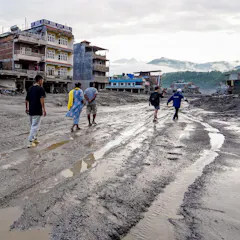
How do you warn people downstream about fast-moving hazards that can change form and cross borders?

Villagers are picking up the pieces after a catastrophic flash flood ripped through the region.
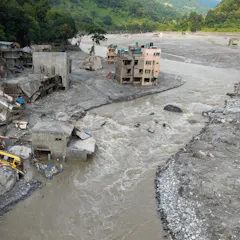
Rock-ice avalanches like the one which caused catastrophe in Nepal and Tibet (China) are not new. But warmer conditions make them more likely.
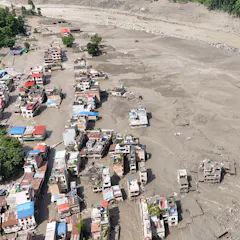
Glacier melt is partly responsible for the disaster along the border with Tibet and Nepal. An expert explains why this is a growing issue for the world.

A catastrophic flash flood ripped through local villages and has claimed hundreds of lives.
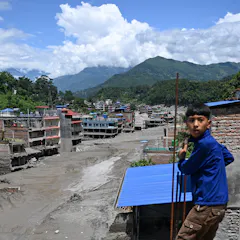
Could more lives be saved if people were trained to act immediately when a flood warning arrives? I believe the answer is yes.
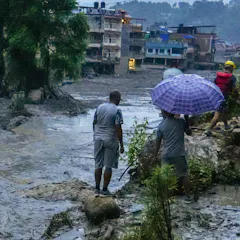
One disaster can create the conditions for the next.
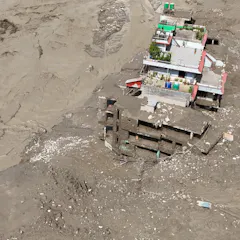
A group of 50 Himalayan hazard experts is providing rapid analysis of the event. Here’s what they’ve found so far.

What responsibilities do governments, researchers, humanitarian organizations, and corporations have for the conditions that repeatedly turn hazards into human catastrophes?

The glaciers of the Himalayas aren’t safe from climate change. The sudden collapse of a glacier looks to have triggered disaster in Nepal.
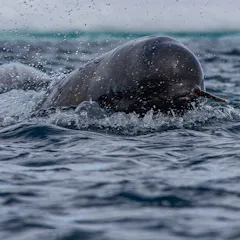
Tags on these deep-diving whales are providing vital data from places research ships struggle to reach.

Mountains of ice far away in the northern hemisphere surely couldn’t change rainfall in Australia – or could they?
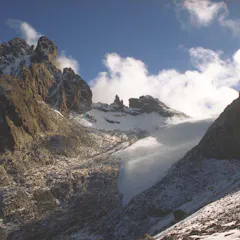
This decrease of snowfall is driven by changing sea surface temperature patterns in the Indian Ocean, which is a signal of global warming.
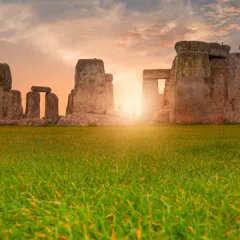
Stonehenge has captured popular imagination for generations.
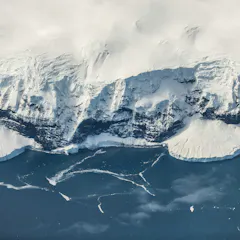
New solutions to two interlinked mysteries reveal how and why the Antarctic’s enormous ice sheet formed.

They’re called rock glaciers, and they might not look like much, but they’ll continue to provide meltwater after the world’s iconic white glaciers are gone.

The tsunami struck just 12 hours after a cruise ship had left the fjord, rattling the tourism industry.
Top contributors
-

Principal Scientist & Programme Leader of Southern Hemisphere Climates and Environments, National Institute of Water and Atmospheric Research (NIWA)
-
Professor of Glaciology and Earth Observation, University of Bristol
-
Research Fellow, Antarctic Research Centre, Te Herenga Waka — Victoria University of Wellington
-
Professor of Geography, University of Aberdeen
-
Professor of Geography and the Environment, School of Geosciences, University of Aberdeen
-
Harold T. Stearns Professor of Earth Science, Wesleyan University
-
Professor of Glaciology, Newcastle University
-
Research Fellow in Glacial Geomorphology, Monash University
-
Professor of Geography, The Ohio State University
-
Reader, Manchester Metropolitan University
-
Senior Lecturer, Glaciology, University of Portsmouth
-
Climate Scientist, British Antarctic Survey
-
Professor of Earth Sciences, Dartmouth College
-
Distinguished University Professor, Earth Sciences, The Ohio State University
-
PhD Researcher, Aberystwyth University