

The Antarctic ice sheet’s future depends how a chain of events plays out. A new study finds the evidence points in one direction.
Articles on Ice sheets
Displaying 1 - 20 of 78 articles
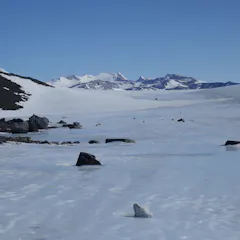
If all glaciers melt, sea level will rise by about 24cm. If the polar ice sheets melt, sea level will rise by more than 65m; almost 300 times more.
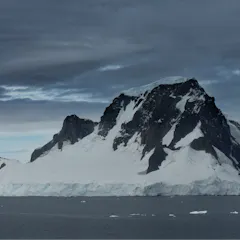
In the Antarctic Peninsula, precipitation is increasingly falling as rain rather than snow, with consequences for glaciers, penguins and even scientists.
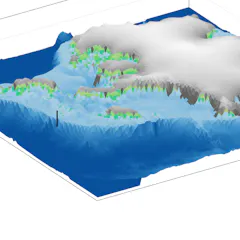
A picture of what West Antarctica looked like when its ice sheet melted in the past can offer insight into the continent’s future as the climate warms.

There could be an irreversible retreat of parts of the ice sheets, raising sea levels much faster than currently planned.
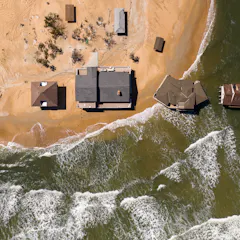
Understanding what happens to Antarctica’s ice matters, because as it melts, sea levels rise, affecting lives and economies around the world.
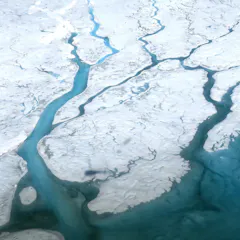
A report warns that coral reefs may have reached their tipping point, and ice sheets, ocean currents and the Amazon are at growing risk. But, what does that actually mean?
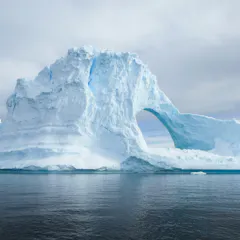
The plans could also unintentionally harm fragile polar ecosystems.
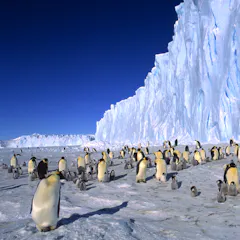
The vast ice of Antarctica has long seemed impregnable. But sudden changes are arriving – from shrinking sea ice to melting ice sheets and slowing ocean currents.
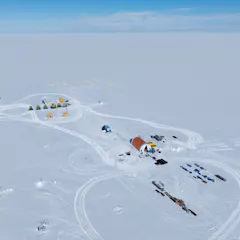
When ice gets trapped on land as giant ice sheets, it causes the sea level to change, but it doesn’t change by the same amount all around the planet.
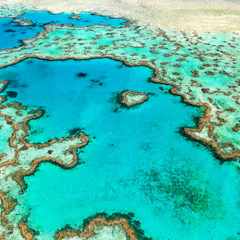
Corals can drown. But a new study shows sea level rise isn’t the only factor at play.
The Trump administration has terminated hundreds of federal grants that support engineering, biology, geology, computer science, STEM education and much more.
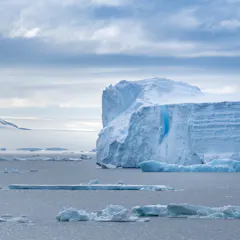
A new study found parts of Antartica could pass a tipping point for mass ice sheet losses as soon as 2050 – pushing sea levels 2 metres higher by 2300 than currently predicted.
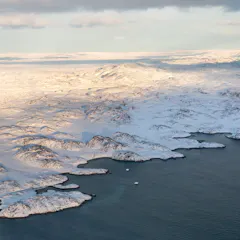
Planners need more reliable projections of future sea-level rise to protect communities and ecosystems. A new method helps produce them.
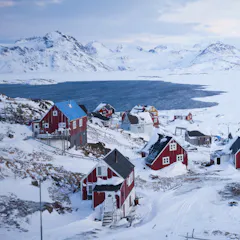
Melting ice, thawing permafrost and crumbling fjord walls are just a few of the risks climate change poses for those living and working in Greenland.
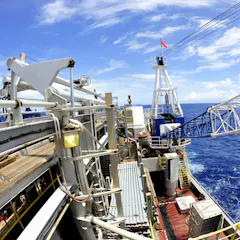
The National Science Foundation says that the JOIDES Resolution has become too costly to fund. But scientists say its $72 million annual budget pales compared with discoveries the ship has enabled.
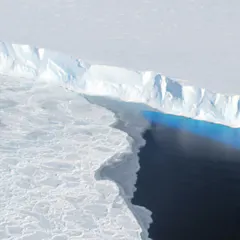
Antarctica’s riskiest glacier is a disaster in slow motion, a polar scientist writes. But in a rare bit of good news, the worst-case scenario may be off the table.

Our discovery of a tundra ecosystem, frozen under the center of Greenland’s ice sheet, holds a warning about the threat that climate change poses for the future.

The scientific and broader community must join together to advance Southern Ocean science and protect this vital natural asset.
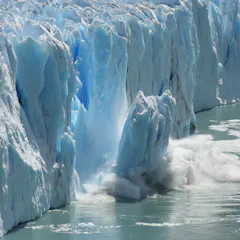
Water is very heavy – and it can move. Until now, changes to water on land have actually offset much of the rising sea level from ice melt. How? Gravity
Top contributors
-

Professor of Natural Resources and Environmental Science, University of Vermont
-
Antarctic Research Fellow and Senior Lecturer, Monash University
-
Professor of Glaciology, Fulbright Scholar, University of Tromsø
-
Professor in the Department of Geography, Durham University
-
Professor of Earth Observation, University of Leeds
-
Associate Professor of Geoscience, University of Arizona
-
Glaciologist, Australian Antarctic Program Partnership, University of Tasmania
-
Professor of Polar Geodesy and ARC Laureate Fellow, University of Tasmania
-
Adjunct professor, UNSW
-
Professor, Scripps Institution of Oceanography, University of California, San Diego
-
Chair Professor, Climate Change Research Centre, UNSW
-
Assistant Professor of Geophysics and Hydrologic Science and Engineering, Colorado School of Mines
-
PhD Candidate in Cryospheric Remote Sensing, Durham University
-
Research Professor of Geography and Director, National Snow and Ice Data Center, University of Colorado Boulder
-
Postdoctoral Scholar, Jet Propulsion Laboratory, California Institute of Technology