
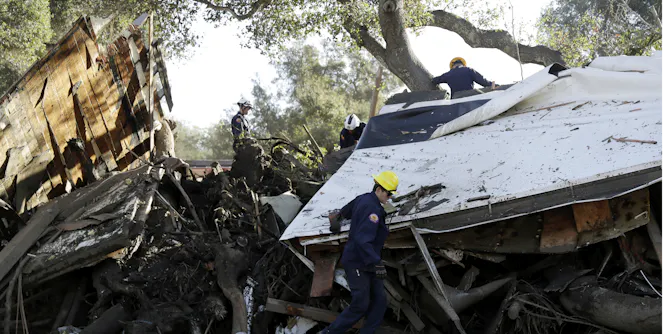
In response to mudslides that have killed at least 20 people in Southern California, a geologist calls for more resources to study and map landslide hazards so residents can understand the risks.
Articles on Geology
Displaying 321 - 340 of 453 articles
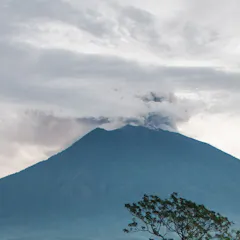
‘Volcano forensics’ involves a mixture of modern day monitoring and analysis of past eruptions. Geologists use volcanic rocks as a kind of time capsule to assess what happened previously.
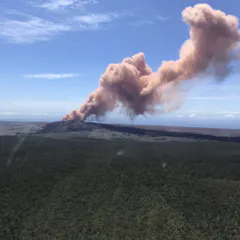
How do scientists predict volcanic eruptions? To do so with accuracy, they need to know the individual volcano and its history very well.
The legacy of the dirtiest of fuels – coal – has the potential to deliver a low carbon energy future.
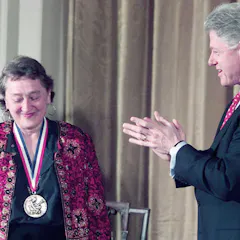
Lynn Margulis (1938-2011) was a courageous scholar whose remarkable work on the role of symbiosis in evolution stands as a magisterial contribution of science.
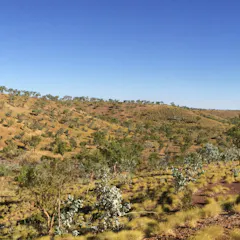
The world’s oldest known material is from Western Australia. But for much of Australia’s geological past, the eastern states simply didn’t exist. They’re relative newcomers to our ancient continent.
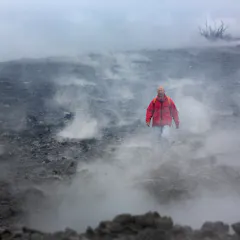
Volcanologists study the formation and eruptions of volcanoes - surely one of the most interesting jobs around. However, it can also be very dangerous.
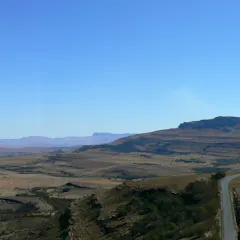
The earth’s own magnetic field offers a useful way to measure the age of rocks - information that can help unpack ancient events and aid our understanding of the present.

Latest development in ‘Crete feet’ find serves as a reminder of the challenges facing dig sites.
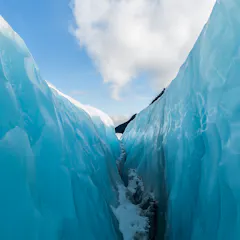
Earth’s thermostat can fail spectacularly at times. Around 700 million years ago, huge volcanic eruptions triggered “Snowball Earth”.
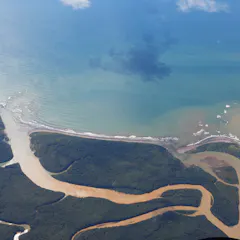
A special combination of rain, rocks and subsea volcanoes makes the sea salty.
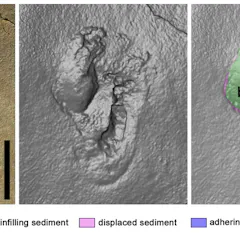
A new study can’t rule out the possibility that human ancestors lived on Crete at the same time as they evolved in Africa.
This sudden, 150,000-year long temperature spike has many parallels with modern climate change.

Humpback whales are deterred from their migration routes by the noise of air guns used to survey the ocean floor for oil and gas deposits, a new study has found.
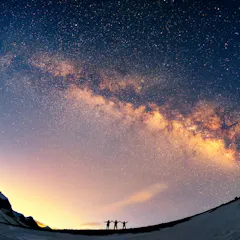
How can life on Earth help us understand life in space? To answer this question, we compare biological clocks and geological rocks and find that they tick uniformly.
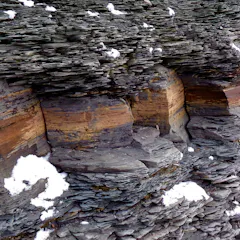
Gas buried in the Northern Territory’s Velkerri Shale was produced in a “slime world” that existed nearly a billion years before the first complex life on Earth evolved.

You would not recognise Earth if you saw it 500 million years ago - the lands, oceans, climate and life were all very different. Scientists now have a new map of the deep history of Earth.
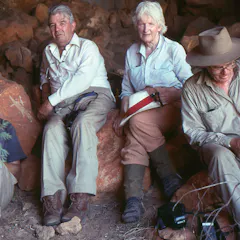
One of Australia’s most distinguished palaeontologists will be farewelled at a funeral in Canberra today.
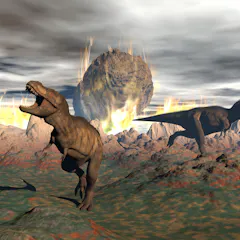
Researchers are looking at whether devastating asteroid strikes are predictable or random.
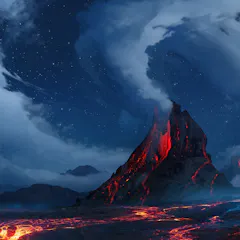
Mercury found in prehistoric rock bolsters the idea that volcanoes caused a mass extinction 200m years ago.
Top contributors
-

Professor of Geochronology, Curtin University
-
Professor of Geology, Adelaide University
-
Professor of Palaeobiology, University of Leicester
-
ARC Future Fellow and Associate Professor in Igneous Petrology/Volcanology, The University of Queensland
-
Professor in Earth Sciences, Nanyang Technological University, Singapore, and Emeritus Professor of Mineral Physics, University of Cambridge
-
Professor of Earthquake Science, The University of Melbourne
-
Professor of Geophysics, University of Sydney
-
Associate Professor, Earth and Planetary Sciences, Curtin University
-
Professor of Planetary Geosciences, The Open University
-
Senior Curator of Geosciences, Museums Victoria Research Institute; Monash University
-
Professor in Earth & Climate Science, University of Southampton
-
Harold T. Stearns Professor of Earth Science, Wesleyan University
-
Adjunct professor, UNSW
-
Redmond Barry Distinguished Professor Emeritus, The University of Melbourne
-
Professor of Earth and Space Sciences, University of Washington