

New research shows gene name autocorrection remains a problem for genomics articles. Here’s why it’s a wake up call for research reproducibility.
Articles on Genomics
Displaying 81 - 100 of 220 articles
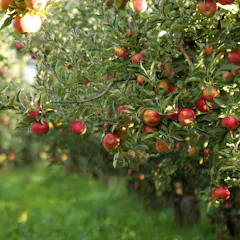
Apple breeders have created crisp, juicy and tasty fruits, but the limited varieties leave crops vulnerable to diseases, pests and climate change. Introducing new traits could improve crop resilience.

Nigeria must increase its testing capacity and do more genomic studies to deal effectively with the Delta variant of COVID-19.
Scientists have been eager to edit genomes to eliminate certain diseases. New WHO reports outlines ethical approaches to research and treatment.
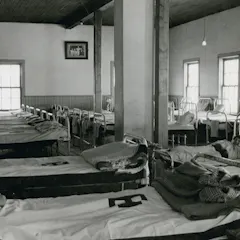
We must recognize and understand the harms that malnutrition and nutrition experiments on Indigenous people caused and the legacy they have left.

Solutions to some of the globe’s most daunting environmental challenges may be closer than you think. Scientists are harnessing nature to clean up toxic chemicals and mining waste.
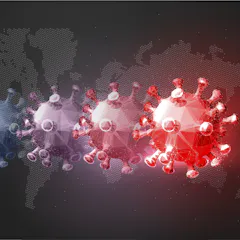
The Delta variant: What it is, where it came from, why it’s different and whether COVID-19 vaccines can prevent it.
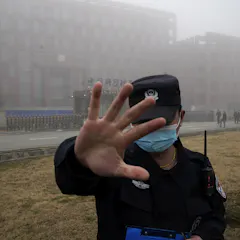
Gain-of-function studies make a natural virus more dangerous or transmissible to humans. Could the Wuhan Institute of Virology be the source of SARS-CoV-2?
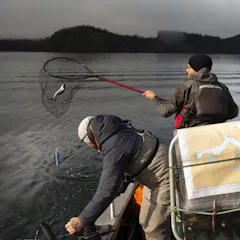
A study of viral variants finds Piscine orthoreovirus continuously spills over from farmed salmon to wild salmon.
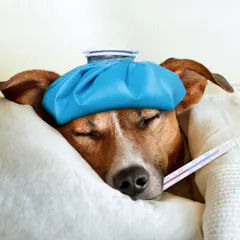
A curious kid asks: Can dogs catch COVID-19?
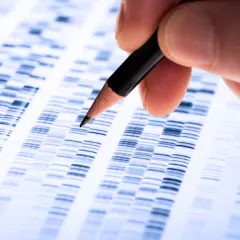
Medical education has not kept up with genetic discoveries — primary care physicians require more genetics and genomics training.
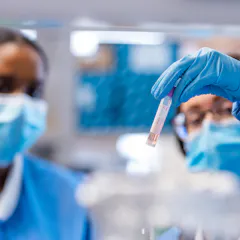
The US lags in testing coronavirus samples from COVID-19 patients, which can help track the spread of the virus and the emergence of new variants. But labs are ramping up this crucial surveillance.
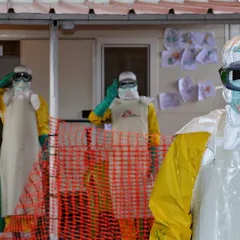
The virus is always present in nature and when circumstances allow, it may jump from one species to another.

Multiple COVID-19 variants are circulating around the world and becoming more common. These mutations can alter the ability of the virus to take hold and replicate within our cells.
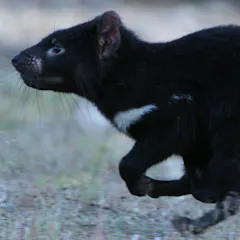
Ten years ago, we feared Tasmanian devils would be wiped out by a bizarre infectious facial cancer transmitted by biting. But new genetic analysis shows they are evolving to live with the disease.

Seabird colonies are thought to be in rapid decline. But knowing just how severe the loss is can be a challenge, so some scientists are turning to bird poop for the answer.
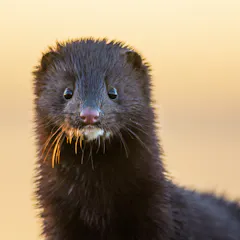
In the disturbing scenario of human-to-mink-to-human COVID-19 transmission, the virus may mutate in mink prior to re-infecting people. That possibility makes vaccine design even more crucial.
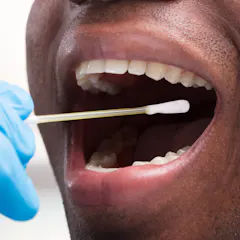
Scientists who work in local companies have acquired local knowledge and are therefore able to work with South Africa’s unique genetic diversity better than anyone else.

Christine Jessop was murdered in 1984 and, 36 years later, DNA evidence finally identified her killer. But the police investigation’s use of genetic genealogical databases raised questions about privacy.
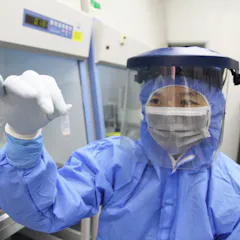
By studying the DNA of people who lived in East Asia thousands of years ago, scientists are starting to untangle how the region was populated.
Top contributors
-

Distinguished Research Professor, Emerita, Dalhousie University
-
Emeritus Robert Reford Professor and Professor of Medicine, McGill University
-
Lecturer, University of Cambridge; Anglia Ruskin University
-
Professor in Molecular Archaeology, Department of Archaeology and Classical Studies, Stockholm University
-
Executive Director, Melbourne Genomics Health Alliance
-
Group Leader, Genomics and Bioinformatics, Australian Centre for Ancient DNA, Adelaide University
-
Professor of English, York University, Canada
-
Professor, Chemistry and Biochemistry, Laurentian University
-
Vanier Scholar and Ph.D. Candidate in Microbiology and Immunology, Dalhousie University
-
Distinguished Research Professor, Dalhousie University
-
Assistant Professor/Canada Research Chair in emerging viruses, University of Manitoba
-
Honorary Fellow, Department of Pathology, The University of Melbourne
-
Associate Professor and Canada Research Chair, Department of Chemistry and Biochemistry, University of Lethbridge
-
Junior Fellow, MacEachen Institute for Public Policy and Governance; Medical Student, Dalhousie University
-
Associate Professor | Director, DNA Zoo Australia, The University of Western Australia