
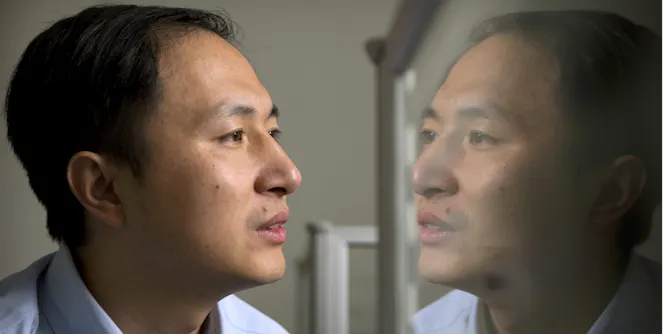
The scientist who announced the world’s first genome-edited twins received a prison sentence and a large fine for his research. But the systems that enabled him have not been held to account.
Articles on Genomics
Displaying 121 - 140 of 220 articles

Legislation as well as academic research governance bodies have failed to safeguard the rights of participants from Africa in genomics research.

DNA testing kits will be a popular gift this holiday season. Before mailing off your saliva, it’s important to understand what these kits can and cannot tell us.
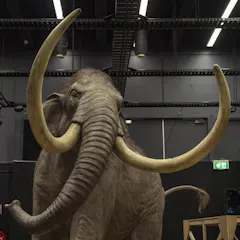
Knowing an animal’s normal lifespan is hugely important for conservation efforts, but it’s harder to find out than you’d think.
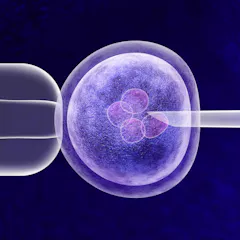
One year after the first CRISPR babies were announced, changes in policies and regulations have meant that there have been no new CRISPR announcements since.

Genetic apps claim to reveal fundamental insights about your health, well-being, and even intellect. But it’s not just spurious science - believing these traits are genetic can have harmful consequences.
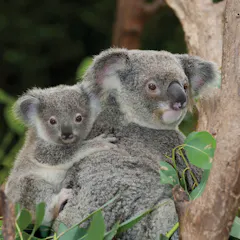
Koala retrovirus is a menace to koalas, but by watching it at work scientists are finding out how the genome defends itself
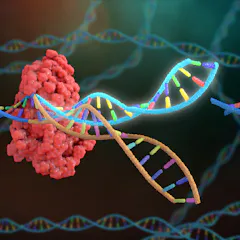
CRISPR technology is continually improving to make it more specific, but serious consideration should be given to when and how CRISPR is safe for gene editing.
Health data gathered without the patient’s consent can provide valuable information; however, transparency is crucial to maintain trust.
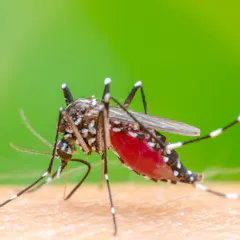
Genetically modified mosquitoes were released in Brazil in an attempt to halt the spread of dengue fever by reducing the mosquito population.

Science communication online is important to the intellectual work of scientists.

Pesticides have become almost essential for agriculture, but their misuse can have negative effects on crops too.

Space missions are dangerous. But when it comes to long missions, radiation may be the greatest threat to astronauts’ health.

Global phosphate production is set to peak in 2030, around the same time the world’s population will reach nine billion. As a finite resource, a phosphate shortage will effect global food production.
Thomas Durcan’s lab is growing 3D mini-brains in the search for a cure for Parkinson’s disease. Over the next year he is giving all his lab’s protocols, methods and results away.
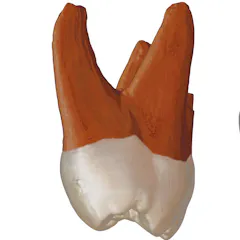
A Neanderthal tooth was discovered in Serbia. This finding helps to fill gaps in the human fossil record of this important geographical region.
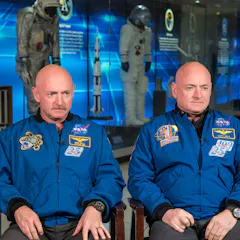
Before sending humans to Mars or the moon, scientists need to understand what long-term space living does to the human body. Now results are coming in from the Kelly brothers in the TWINS Study,
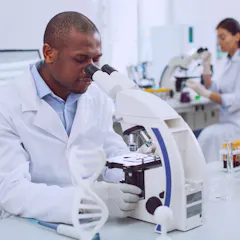
Genomics research is crucial to identify Africa-specific solutions to a range of diseases.

CRISPR gene editing should learn from the Slow Food movement. Scientists must allow time for critical conversations and perfecting of techniques before rewriting the source code of humanity.
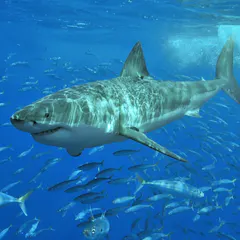
Why do scientists spend so much time and money mapping the DNA of species like white sharks? Single studies may offer insights, but the real payoff comes in comparing many species to each other.
Top contributors
-

Distinguished Research Professor, Emerita, Dalhousie University
-
Emeritus Robert Reford Professor and Professor of Medicine, McGill University
-
Lecturer, University of Cambridge; Anglia Ruskin University
-
Professor in Molecular Archaeology, Department of Archaeology and Classical Studies, Stockholm University
-
Executive Director, Melbourne Genomics Health Alliance
-
Group Leader, Genomics and Bioinformatics, Australian Centre for Ancient DNA, Adelaide University
-
Professor of English, York University, Canada
-
Professor, Chemistry and Biochemistry, Laurentian University
-
Vanier Scholar and Ph.D. Candidate in Microbiology and Immunology, Dalhousie University
-
Distinguished Research Professor, Dalhousie University
-
Assistant Professor/Canada Research Chair in emerging viruses, University of Manitoba
-
Honorary Fellow, Department of Pathology, The University of Melbourne
-
Associate Professor and Canada Research Chair, Department of Chemistry and Biochemistry, University of Lethbridge
-
Junior Fellow, MacEachen Institute for Public Policy and Governance; Medical Student, Dalhousie University
-
Associate Professor | Director, DNA Zoo Australia, The University of Western Australia