
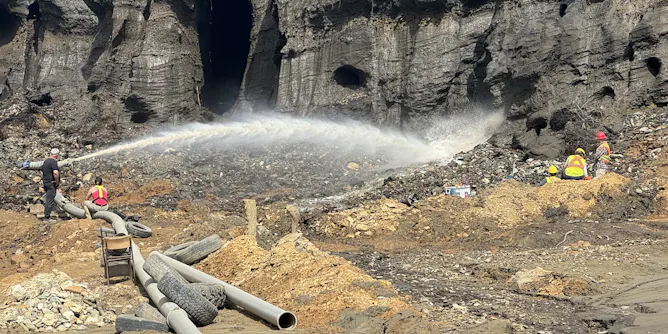
Permafrost holds an extraordinary molecular record of ancient life — and we are only now learning to read it, just as warming begins to erase it.
Articles on DNA sequencing
Displaying 1 - 20 of 60 articles
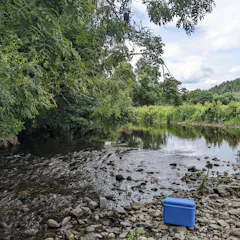
Environmental DNA contained in a small sample of water, sand or even air can reveal the presence of people, wildlife and pathogens, helping researchers track where they’ve migrated.

Most genetic studies focus on people from European ancestry. But Africa has the richest diversity and must be included in genetic databases.
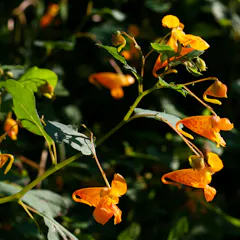
Genetic signatures help uncover the echoes of the past events in the histories of jewelweed populations, and understand their genetic implications for conservation.

A new study isolated DNA from the tumours of 500 cats across 13 different tumour types and mapped the sequence of 1,000 genes often found mutated in human cancers.

Studying ancient genes can tell us more about the evolution of humans’ anatomy, behaviour and thinking.
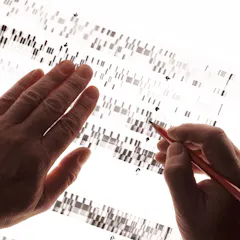
This researcher began writing DNA sequences to compose his own music. He hopes to inspire more people towards the space between STEM and the arts.
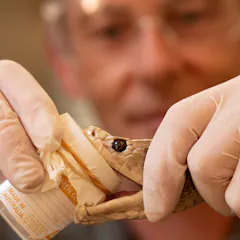
A man spent 18 years injecting himself with venom, almost dying more than once – and now his blood is behind a new snakebite treatment.

New techniques monitor the health of lakes in real time by analyzing their microbiome to anticipate and respond to environmental threats such as cyanobacteria.
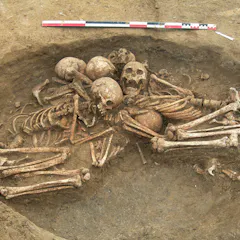
A new study reveals the final stage in the formation of the European genome, which is still present in many people today.
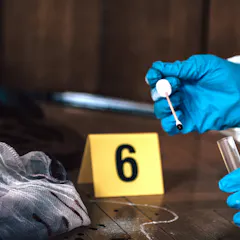
A uniquely identifying population of bacteria can survive on clothes for months after a person wears them.
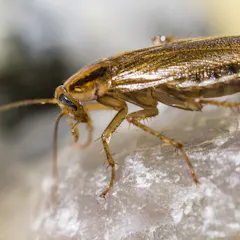
Using DNA sequencing, the origins of one of the world’s most common insects, the German cockroach, have been traced back to Asia. Learning more about this urban pest can help us fight it effectively.

Genealogical and genetic ancestors aren’t the same thing. A DNA match − or a lack of one − may not tell you what you imagine it does about your family tree.
Through a blend of perseverance, technology, and a touch of serendipity, it was possible to solve a decades-old mystery.
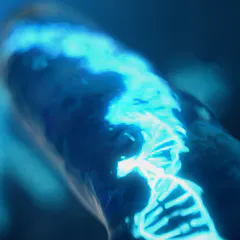
DNA of the male-determining Y chromosome has been completely sequenced end-to-end, and it’s just as weird as we expected. Will we finally be able to understand how it works?
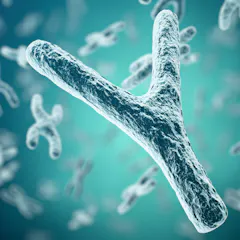
The smallest chromosome in humans, the men-specific Y chromosome, has just been sequenced after considerable hurdles.
Environmental DNA provides a wealth of information for conservationists, archaeologists and forensic scientists. But the unintentional pickup of human genetic information raises ethical questions.

Ancient microbes likely produced natural products their descendants today do not. Tapping into this lost chemical diversity could offer a potential source of new drugs.

Beethoven was afflicted with health conditions for much of his adult life, and wished for their cause to be discovered and made public.
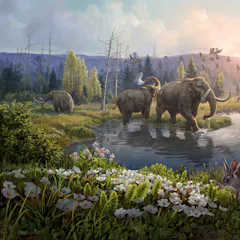
DNA frozen for 2 million years paints a picture of an extinct ecosystem.
Top contributors
-

Postdoctoral researcher in genetics, University of Leicester
-
Adjunct Research Scientist in Marine Bioscience, University of Florida
-
Jenny Graves is a Friend of The Conversation.
Distinguished Professor of Genetics and Vice Chancellor's Fellow, La Trobe University
-
Research scientist, CSIRO
-
Researcher, Centre for the Study of Legacies of British Slave-Ownership, UCL
-
Associate Member, Fred Hutchinson Cancer Research Center and Affiliate Associate Professor of Genome Sciences and Microbiology, University of Washington
-
Professor and Deputy Research Division Leader (Organisms and Environment), Cardiff University
-
Associate Professor of Forensic Science, Murdoch University
-
Junior research fellow in virus evolution, University of Oxford
-
Senior Lecturer in Forensic Genetics, University of Huddersfield
-
Researcher in Biology, University of York
-
Research Fellow, National Institutes of Health
-
Associate professor, Università del Piemonte Orientale
-
Lecturer in Genetics and Archeology, University of Leicester
-
Professor, UCL