
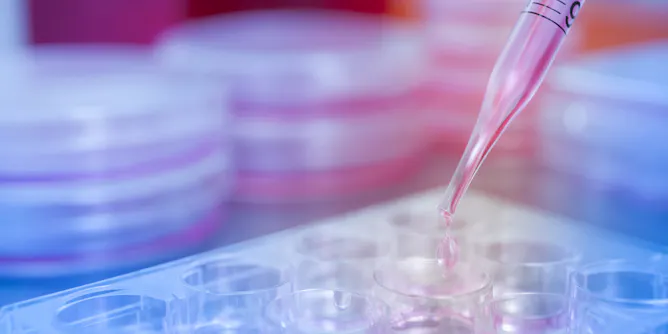
“Precision medicine” is allowing us to analyse a person’s genetic makeup and target treatments based on their specific needs.
Articles on Genomics
Displaying 161 - 180 of 220 articles

It’s exciting to think we’re on the brink of a genomic revolution in health care. But just because new technology becomes available, it doesn’t mean it should automatically be publicly funded.

Politics Podcast: Bill Ferris on Australia’s innovation mission
CC BY46.8 MB (download)
Innovation and Science Australia chair Bill Ferris launched a report this week setting out a plan that seeks to put Australia into the top tier of innovation nations by 2030.

Handedness is the tendency to prefer using one hand over the other to perform certain tasks. But how did we get this way?
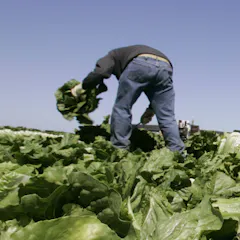
The recent E. coli outbreak in North America was linked to romaine lettuce. Many such outbreaks are often linked to fresh produce. Here’s what you need to know to keep your family safe.

Only one Canadian has ever received the Nobel Prize for medicine, in 1923. But Canadian discoveries have been essential to stem cell research, gene sequencing and treatments for cancer.

Star Wars: The Last Jedi leaves many questions about the saga in a galaxy far, far away unanswered. Fortunately, biology may offer a insights on the Force, midi-chlorians, clones, and Rey’s lineage.
The rapid growth of genetic testing and data-gathering could revolutionize health and medicine if governments work to protect people against privacy and societal risks.

Genome sequencing is transforming the way we diagnose disease. But lack of diversity in genomic data means only some Canadians will benefit from this revolutionary technology.

Treating video like a mutating gene could improve surveillance software.
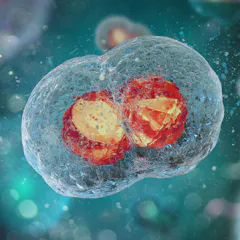
A new gene editing experiment explores human development. With this comes new ethical questions: How do scientists acquire embryos and how are their projects approved?
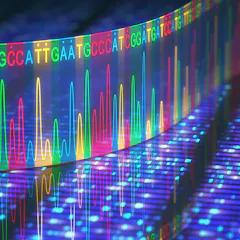
Colin Smith became the first person to donate his genomic data to the Personal Genome Project UK under ‘open consent’ – waiving rights to anonymity.
Some animals seem to have missing genes – but the reality is a lot more intriguing.
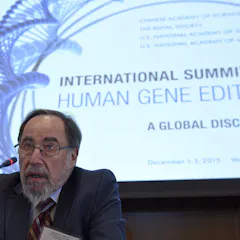
Ability expectations are what people rely upon as they seek out productive and satisfying lives. They need to be a key part of the debate over gene-editing and other major scientific breakthroughs.
Once online, our healthcare data could be used for research long after we’re gone.
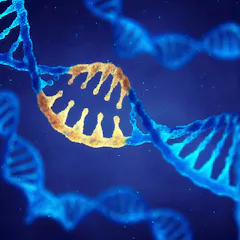
A team in the U.S. is said to have safely and effectively altered human embryos. The news is a reminder that citizens must be consulted on developments potentially affecting the future of the species.
Research laboratories are dominated by men, and that’s not only bad for lab culture, it can be dangerous for science.

A diagnosis of glioblastoma did not keep John McCain from the Capitol to cast a crucial vote that could end Obamacare. His actions are a reminder that stats are one thing but human beings, another.

A freedom of information request reveals that Google wants its AI company DeepMind to get involved in the 100,000 Genomes Project.

A test of all your genes for disease risk is not yet the precision diagnostic and treatment tool we hope it will one day be.
Top contributors
-

Distinguished Research Professor, Emerita, Dalhousie University
-
Emeritus Robert Reford Professor and Professor of Medicine, McGill University
-
Lecturer, University of Cambridge; Anglia Ruskin University
-
Professor in Molecular Archaeology, Department of Archaeology and Classical Studies, Stockholm University
-
Executive Director, Melbourne Genomics Health Alliance
-
Group Leader, Genomics and Bioinformatics, Australian Centre for Ancient DNA, Adelaide University
-
Professor of English, York University, Canada
-
Professor, Chemistry and Biochemistry, Laurentian University
-
Vanier Scholar and Ph.D. Candidate in Microbiology and Immunology, Dalhousie University
-
Distinguished Research Professor, Dalhousie University
-
Assistant Professor/Canada Research Chair in emerging viruses, University of Manitoba
-
Honorary Fellow, Department of Pathology, The University of Melbourne
-
Associate Professor and Canada Research Chair, Department of Chemistry and Biochemistry, University of Lethbridge
-
Junior Fellow, MacEachen Institute for Public Policy and Governance; Medical Student, Dalhousie University
-
Associate Professor | Director, DNA Zoo Australia, The University of Western Australia