
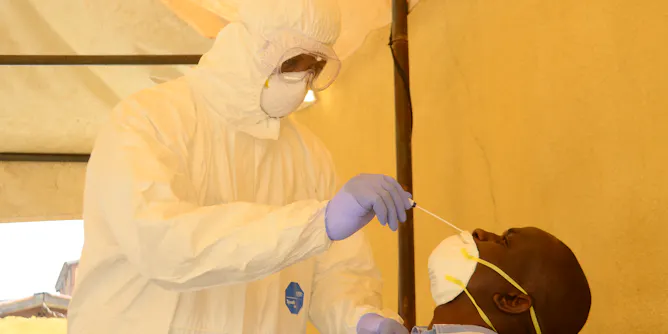
Nigeria must increase its testing capacity and do more genomic studies to deal effectively with the Delta variant of COVID-19.
Articles on Genome
Displaying 41 - 60 of 208 articles
Scientists have been eager to edit genomes to eliminate certain diseases. New WHO reports outlines ethical approaches to research and treatment.

We must recognize and understand the harms that malnutrition and nutrition experiments on Indigenous people caused and the legacy they have left.

Solutions to some of the globe’s most daunting environmental challenges may be closer than you think. Scientists are harnessing nature to clean up toxic chemicals and mining waste.

The Delta variant: What it is, where it came from, why it’s different and whether COVID-19 vaccines can prevent it.

Gain-of-function studies make a natural virus more dangerous or transmissible to humans. Could the Wuhan Institute of Virology be the source of SARS-CoV-2?

A study of viral variants finds Piscine orthoreovirus continuously spills over from farmed salmon to wild salmon.

A curious kid asks: Can dogs catch COVID-19?

By merging genomics with classical epidemiology, researchers are able to predict new disease outbreaks based on which viral variants are on the rise.

The first full human genome was sequenced 20 years ago. Now, a project is underway to sequence 1 million genomes to better understand the complex relationship between genetics, diversity and disease.
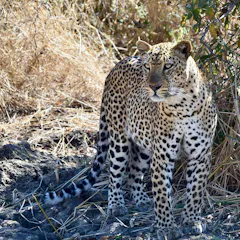
We studied the genomes of African and Asian leopards using specimens from natural history museums.

Genetic ancestry tests may sound like a bit of fun, but in an era marked by increasing xenophobia, it’s important to be aware of the interplay between genetics and ideas of race.
Medical education has not kept up with genetic discoveries — primary care physicians require more genetics and genomics training.

The US lags in testing coronavirus samples from COVID-19 patients, which can help track the spread of the virus and the emergence of new variants. But labs are ramping up this crucial surveillance.

A detailed map of the koala genome is vital to understanding their susceptibility to disease, their genetic diversity, and how they may respond to new environmental pressures.

Multiple COVID-19 variants are circulating around the world and becoming more common. These mutations can alter the ability of the virus to take hold and replicate within our cells.
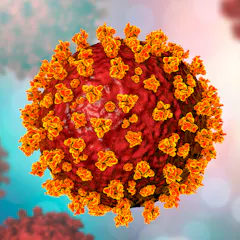
All your questions about the new coronavirus variant, answered by a microbial genomics researcher.
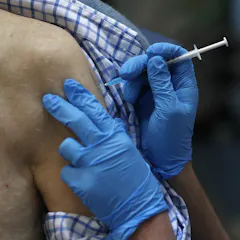
The coronavirus vaccine was developed faster than any vaccine in history. It took just 332 days from the first sequencing of the virus genome to the first vaccines given to the public.

The development of multiple vaccines against the virus that causes COVID-19 has been hailed as the breakthrough of 2020. But there were many more supporting discoveries that made this possible.

Compared with other RNA viruses, the coronavirus is actually quite stable. So don’t believe the scary headlines about the ‘mutant coronavirus’.
Top contributors
-

Distinguished Research Professor, Emerita, Dalhousie University
-
Emeritus Robert Reford Professor and Professor of Medicine, McGill University
-
Professor, Chemistry and Biochemistry, Laurentian University
-
Vanier Scholar and Ph.D. Candidate in Microbiology and Immunology, Dalhousie University
-
Junior Fellow, MacEachen Institute for Public Policy and Governance; Medical Student, Dalhousie University
-
Distinguished Research Professor, Dalhousie University
-
Professor and Chair of Genomic Diversity, Queen Mary University of London
-
Associate Professor and Canada Research Chair, Department of Chemistry and Biochemistry, University of Lethbridge
-
Principal Scientist and Canada Research Chair in Zoonotic Virus and Animal Reservoirs at the Vaccine and Infectious Disease Organization and Co-Lead of One Health at the University of Saskatchewan, University of Saskatchewan
-
Professor in Medicine, Ethics and Society, University of Warwick
-
Masters Student, Biomolecular Interactions and Biophysical Modelling of RNA viruses, University of Lethbridge
-
Reader in Genetics, University of Aberdeen
-
Assistant Professor/Canada Research Chair in emerging viruses, University of Manitoba
-
Professor of Medicine and Vice President, Research, McMaster University
-
Doctoral Student in Biochemistry, University of Washington