
A failed experiment led the researchers to question their assumptions and realize that, contrary to popular belief, chromosomes interact with and affect genetic expression.
Articles on Genome
Displaying 21 - 40 of 208 articles

New research sheds light on the interconnected nature of the human genome and what this means for future gene therapies.

The genetic evidence behind why some people suffer longer term concussion effects is growing. But what are the ethical considerations that flow from that knowledge when it comes to sport?

Ancient microbes likely produced natural products their descendants today do not. Tapping into this lost chemical diversity could offer a potential source of new drugs.
On DNA Day, Canada should be inspired by the lifesaving discoveries of its researchers. However, lack of funding threatens Canadian researchers’ ability to meet the challenges of the future.

DNA analysis sheds light on important societies within Africa that existed before colonialism.

Following the controversial births of the first gene-edited babies, a major focus of the Third International Summit on Human Genome Editing was responsible use of CRISPR.

DNA analysis reveals a large migration of people into Scandinavia during Viking times.

Humanity carries traces of other populations in our DNA – and a new study shows how one of these ancestors has influenced the immune systems of modern Papuans.

People don’t randomly select who they have children with. And that means an underlying assumption in research that tries to link particular genes to certain diseases or traits is wrong.
A new study hopes to produce a catalogue of human genetic variation and assess the burden of noncommunicable diseases in 100,000 adults in Nigeria.

As genetic engineering and DNA manipulation tools like CRISPR continue to advance, the distinction between what science ‘could’ and ‘should’ do becomes murkier.

Instead of minimizing current or future waves of COVID-19, we need strategies to deal with new variants efficiently. Only then can we live with the virus in a healthy way.

Advances in technology have enabled researchers to sequence the large regions of repetitive DNA that eluded the Human Genome Project.
Improving genomic surveillance to better understand new variants as they arise in different parts of the world could prevent threats to vulnerable health systems and populations.

Record-breaking technology can sequence an entire human genome in a matter of hours. The work could be a lifeline for people suffering from the more than 5,000 known rare genetic diseases.
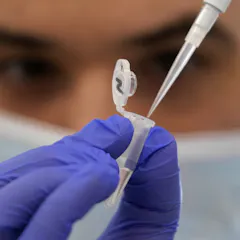
A medical genomics professor reflects on how lab simulations offer some advantages for student learning, but developing the muscle memory of performing hands-on lab work is important.
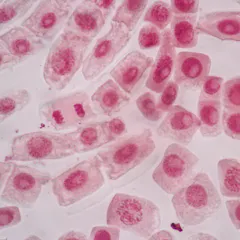
The monumental Earth Biogenome Project has galvanised hundreds of geneticists and bioinformaticists from all over the world.

After a nose swab tests positive for a virus or bacteria, scientists can use the sample’s genetic sequence to figure out where and when the pathogen emerged and how fast it’s changing.

Analyzing the genes that determine hair colour can shed light on other conditions that are affected by melanin production, like vitiligo.
Top contributors
-

Distinguished Research Professor, Emerita, Dalhousie University
-
Emeritus Robert Reford Professor and Professor of Medicine, McGill University
-
Professor, Chemistry and Biochemistry, Laurentian University
-
Vanier Scholar and Ph.D. Candidate in Microbiology and Immunology, Dalhousie University
-
Junior Fellow, MacEachen Institute for Public Policy and Governance; Medical Student, Dalhousie University
-
Distinguished Research Professor, Dalhousie University
-
Professor and Chair of Genomic Diversity, Queen Mary University of London
-
Associate Professor and Canada Research Chair, Department of Chemistry and Biochemistry, University of Lethbridge
-
Principal Scientist and Canada Research Chair in Zoonotic Virus and Animal Reservoirs at the Vaccine and Infectious Disease Organization and Co-Lead of One Health at the University of Saskatchewan, University of Saskatchewan
-
Professor in Medicine, Ethics and Society, University of Warwick
-
Masters Student, Biomolecular Interactions and Biophysical Modelling of RNA viruses, University of Lethbridge
-
Reader in Genetics, University of Aberdeen
-
Assistant Professor/Canada Research Chair in emerging viruses, University of Manitoba
-
Professor of Medicine and Vice President, Research, McMaster University
-
Doctoral Student in Biochemistry, University of Washington