

A mysterious century-old law of genetics may explain the puzzling genetic legacy of our extinct Neanderthal cousins.
Articles on Genetics
Displaying 101 - 120 of 760 articles

A gene can help explain why people who easily trust others have better health.

Giraffes show remarkable genetic differences between populations.

A new theory on the causes of cancer could change our approach to the way we treat the disease.

It may not be obvious to the human ear but birds of the same species sing in different dialects.

The prevalence of certain ancient genome in Northern Europe makes people prone to developing autoimmune conditions.

Genomic research stands to help develop new medical treatments – and we need donations of lots of data for this to work. But people don’t want data on their genes to be exploited for profit.

Your sprinting skills have a lot to do with genetics, but your brain also plays a big role.
Our study turns a common way of thinking about depression on its head, which may influence how people are treated.

Children with childhood dementia progressively lose all previously acquired skills and abilities, such as talking, walking, learning, remembering and reasoning.

The genetic mutations responsible for the unusual physical features in animals can also cause great harm.

Functional precision medicine works to take the guesswork out of deciding which drug to try next for patients with cancers that don’t respond to standard treatments.

No treatments are currently available to cure Parkinson’s disease. Better understanding the genetic foundation of this condition can help researchers find ways to slow or halt its progression.

Calcite, the material making up fossilized eggshells, may preserve amino acids better than bone.

Vegetarian and low-carb diets aren’t ideal for our brains.
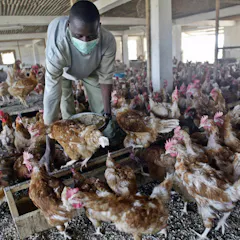
People should minimise contact with birds in areas affected by bird flu viruses, including farms and settings where live animals may be sold or slaughtered.

As New Zealand readies itself for AI-assisted medical treatment targeted to individuals, officials need to ensure the benefits outweigh the risks.

Research has revealed how British otters may have been able to recover from species loss in the 1950s with the help of otters from Asia.

Effective use of genomic identification could revolutionize the control of the illegal timber trade.

Canada needs additional regulation, developed through public consultations, stakeholder collaborations and community partnerships, to help regulate genetic testing and prevent genetic discrimination.
Top contributors
-
 Jenny Graves is a Friend of The Conversation.
Distinguished Professor of Genetics and Vice Chancellor's Fellow, La Trobe University
-
Chair, The Conversation Media Group
-
Deputy Director, Twins Research Australia & Professor in Genetics and Cell Biology, Deakin University
-
Postdoctoral researcher in genetics, University of Leicester
-
Professor of Genetic Epidemiology, King's College London
-
Head, Molecular Medicine Laboratory, WEHI (Walter and Eliza Hall Institute of Medical Research)
-
Emeritus Professor of Animal Genetics, University of Sydney
-
Professor of Marine Biology and Aquaculture, James Cook University
-
Matthew Flinders Professor of Biodiversity Genomics, Flinders University
-
Lecturer, School of Sport, Rehabilitation and Exercise Sciences, University of Essex
-
Professor of Biogerontology, University of Brighton
-
Adjunct Professor, Murdoch University
-
Assistant Professor in Biomedical Ethics, National University of Singapore
-
Director of Bruce Lefroy Centre for Genetic Health Research, Murdoch Children's Research Institute
-
Professor, Chemistry and Biochemistry, Laurentian University