

New data reveals differences in gene activity in the brains of men and women. They start in the womb and evolved millions of years ago
Articles on Human genetics
Displaying 1 - 20 of 45 articles

A study of more than 400,000 people found 1% had never had sex – which was linked to a range of genetic, environmental and other factors.

Humans have roughly the same number of male and female babies, but there may be variation between families. A new genetic analysis of huge human populations explores the reasons why
In the absence of clear-cut regulation, who should decide on where and how a technology that could change the course of human health should be applied?

New research sheds light on the interconnected nature of the human genome and what this means for future gene therapies.

Biobanks collect and store large amounts of data that researchers use to conduct a wide range of studies. Making sure participants understand what they’re getting into can help build trust in science.

Environmental DNA provides a wealth of information for conservationists, archaeologists and forensic scientists. But the unintentional pickup of human genetic information raises ethical questions.

Understanding your genes is a great way to understand certain things about yourself — yet, who we are is determined by so much more than just DNA.

Same-sex sexual behaviour presents a paradox: it’s influenced by genes, but how and why do these genes continue to be passed down the generations? One theory is they have reproductive benefits too.
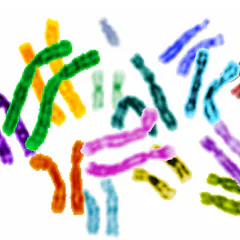
Two decades after the ‘full’ human genetic code was released to global fanfare, researchers have finally filled in the blanks that made up 8% of the sequence, thanks to recent advances in genome sequencing.

Around 1.5 billion people worldwide have this common genetic variant.

A study of more than 1.7 million people has revealed 41 distinct genetic regions associated with left-handedness, and another 7 tied to ambidexterity.

Our approach to controversial technologies shouldn’t be guided by scientists alone, nor by peddlers of misinformation on social media. A citizens’ assembly could walk the line between the two.

Scientists and ethicists have called for a five-year moratorium on editing human genes that will pass on to future generations. Yes, society needs to figure out how to proceed – but is this the best way?

Ancient DNA allows scientists to learn directly from the remains of people from the past. As this new field takes off, researchers are figuring out how to ethically work with ancient samples and each other.
Genetics is influencing more and more of our decisions, but we can’t make the right choices if we don’t understand it.

New techniques for genetic analysis are helping us build more detailed and accurate stories about the ancient histories of the first Australians.

The genes in our cells’ mitochondria are passed on in a different way than the vast majority of our DNA. New studies shed light on how the unique process isn’t derailed by mutations.

Handedness is the tendency to prefer using one hand over the other to perform certain tasks. But how did we get this way?
The rapid growth of genetic testing and data-gathering could revolutionize health and medicine if governments work to protect people against privacy and societal risks.
Top contributors
-

Postdoctoral researcher in genetics, University of Leicester
-
Jenny Graves is a Friend of The Conversation.
Distinguished Professor of Genetics and Vice Chancellor's Fellow, La Trobe University
-
Associate Professor, School of Psychology, The University of Queensland
-
Honorary Associate Professor, UNSW
-
Laboratory Head, Immunology, WEHI (Walter and Eliza Hall Institute of Medical Research)
-
Law Dean; Professor of Law; and Professor of Bioethics & Public Health, Case Western Reserve University
-
Professor of Genetics, The University of Western Australia
-
Associate professor, Queen's University, Ontario
-
Senior Lecturer and Co-Director, Policy Ethics and Life Sciences Research Centre, Newcastle University
-
Director, Institute for Cellular and Molecular Medicine & SAMRC Extramural Unit for Stem Cell Research & Therapy, University of Pretoria
-
Professor of Quantitative Genetics, The University of Queensland
-
Professor of Anthropology, Deakin University
-
PhD candidate in epigenetics, Queen Mary University of London
-
Professor of Quaternary Science, Royal Holloway, University of London
-
Associate Professor, University of Arizona