

We can already tinker with human DNA to treat diseases. But being able to edit RNA allows for even more precision – and fewer risks.
Articles on Genetics
Displaying 81 - 100 of 760 articles
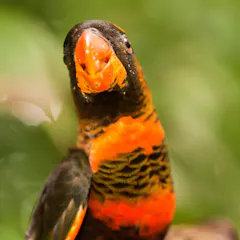
New research reveals how parrots and finches develop their extraordinary colours – and shows that evolution is an ongoing process.
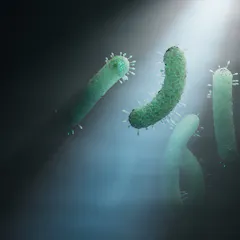
By analyzing the resistance genes and proteins of E. coli, researchers can optimize treatments to address both current and future antimicrobial resistance.

The world’s largest genetic study on the size of specific brain parts has revealed hundreds of clues about how some health conditions develop.

Humans have roughly the same number of male and female babies, but there may be variation between families. A new genetic analysis of huge human populations explores the reasons why

We identified 14 genes that were linked with weight loss from exercise.

Most animals retreated to small, warmer enclaves. But some, like humans, seemed to have stayed where they were.
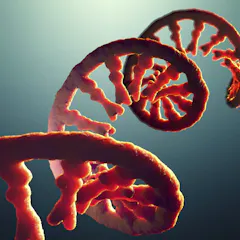
Victor Ambros and Gary Ruvkun won the 2024 Nobel Prize in physiology or medicine for their discovery of microRNAs, molecules that turn genes on and off – and cause disease when they go awry.

Research into the vulnerable Iberian lynx reveals surprising insights into its genetic history.

Until a few years ago, it was impossible to create new lager beer.

Fusarium oxysporum can infect over 120 plant species. Whether it destroys Cavendish bananas as it did their predecessor depends on the agricultural industry and consumers.
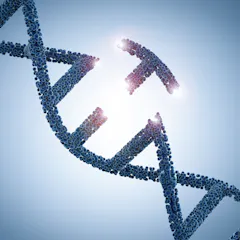
In the absence of clear-cut regulation, who should decide on where and how a technology that could change the course of human health should be applied?
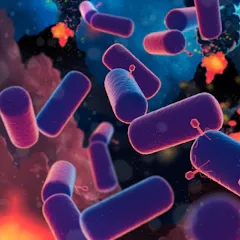
The organism from which all modern life is descended is called the last universal common ancestor - and scientists are still trying to figure out what it was like.

For millennia, we’ve selectively bred our crop species to make the plants stronger and better yielding. But we’ll need a different approach to help our food plants weather the changes to come.
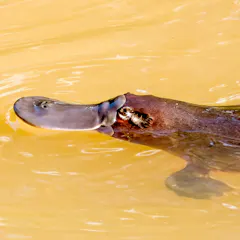
Females have twice as many copies of some genes as males do – and exactly how different species manage this imbalance has puzzled scientists for decades.

Human psychology is influenced by a complex network of genes and environmental factors. Studying how and when genes fail to cooperate could broaden our understanding of behavior.

From fluffy to sleek, straight to curly – what’s the science behind the dog fur on your couch?
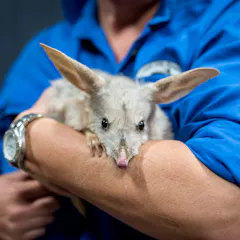
We’ve just published the largest ever marsupial genome – all 3.6 billion pieces of it. Together with Indigenous rangers, we’re applying two-way science to better protect bilbies.

As it is now, the transplant system treats kidneys from all Black donors as if they are at higher risk for failing, even though only some are.

Cell-free DNA prenatal screening, sometimes called ‘the gender test,’ cannot determine gender because gender is more than just genes and genitals.
Top contributors
-
 Jenny Graves is a Friend of The Conversation.
Distinguished Professor of Genetics and Vice Chancellor's Fellow, La Trobe University
-
Chair, The Conversation Media Group
-
Deputy Director, Twins Research Australia & Professor in Genetics and Cell Biology, Deakin University
-
Postdoctoral researcher in genetics, University of Leicester
-
Professor of Genetic Epidemiology, King's College London
-
Head, Molecular Medicine Laboratory, WEHI (Walter and Eliza Hall Institute of Medical Research)
-
Emeritus Professor of Animal Genetics, University of Sydney
-
Professor of Marine Biology and Aquaculture, James Cook University
-
Matthew Flinders Professor of Biodiversity Genomics, Flinders University
-
Lecturer, School of Sport, Rehabilitation and Exercise Sciences, University of Essex
-
Professor of Biogerontology, University of Brighton
-
Adjunct Professor, Murdoch University
-
Assistant Professor in Biomedical Ethics, National University of Singapore
-
Director of Bruce Lefroy Centre for Genetic Health Research, Murdoch Children's Research Institute
-
Professor, Chemistry and Biochemistry, Laurentian University