
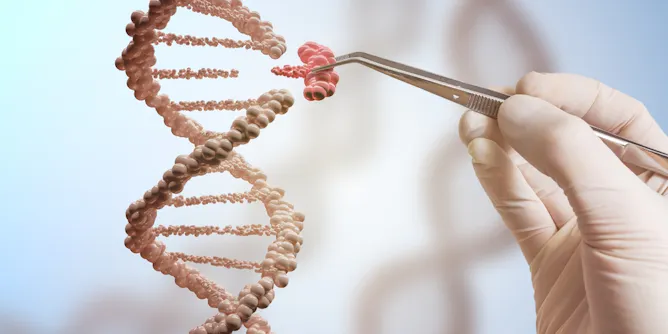
A new study found the Cas9 gene editing scissors don’t stop cutting after we tell them to.
Articles on Gene editing
Displaying 81 - 100 of 116 articles
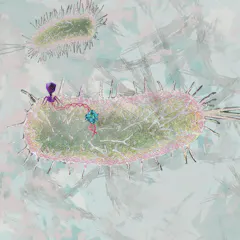
CRISPR harnesses the natural defence mechanisms of some bacteria to cut human DNA strands. Then the DNA strand either heals itself or we inject new DNA to mend the gap. This is gene editing.
Improvements in survival rates for acute myeloid leukaemia have failed to keep pace with other leukaemias. That may be about to change.

A landmark study in the UK discovered the gene that allows cells to form into embryos. If Australian researchers attempted this they could go to jail for 15 years.

With rapid advances in gene editing, states signed up to the Biological and Toxin Weapons Convention need to do more to prevent CRISPR from becoming a dangerous weapon.
The CRISPR gene-editing technique raises new questions about how we measure time and conceptualise history. Here, a cultural theorist takes on the philosophical side of this scientific breakthrough.

Americans have moved on from worrying about ‘test-tube babies’ – but there are still ethical challenges to resolve as reproductive technologies continue to advance.
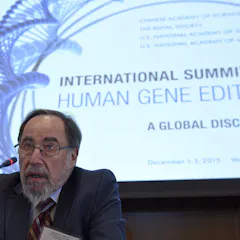
Ability expectations are what people rely upon as they seek out productive and satisfying lives. They need to be a key part of the debate over gene-editing and other major scientific breakthroughs.

Releasing just 100 mice carrying a faulty gene designed to stop them reproducing can remove an entire population of 50,000, a new study shows, paving the way for new eradication efforts.
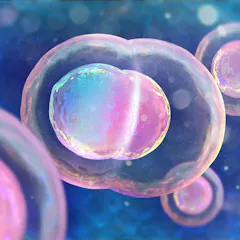
A world first study shows CRISPR can remove a target gene from early stage human embryos. But with the advance in science come weighty ethical dilemmas.
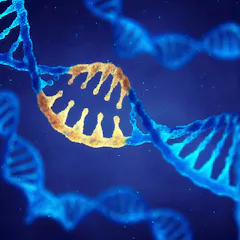
A team in the U.S. is said to have safely and effectively altered human embryos. The news is a reminder that citizens must be consulted on developments potentially affecting the future of the species.
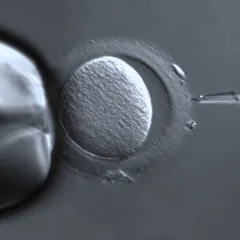
The news may have come as a surprise, but it probably shouldn’t have. A bioethics expert walks through how big a deal this announcement is – and what we should be considering now.
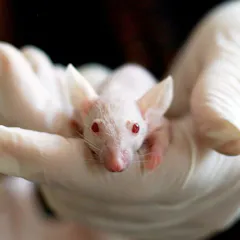
A new research paper reports dangerous side effects in CRISPR-edited mice. Some scientists are pushing back, placing blame for the unwanted mutations on the experiment, not the technique.
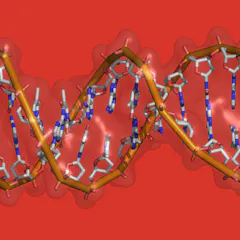
Researchers are starting to harness the potential of this much-hyped gene editing technique – with coming applications in medicine, biology and agriculture.
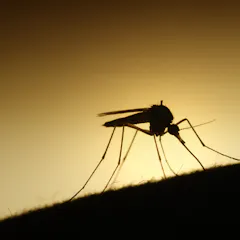
It’s possible to alter the make-up of a species such as a mosquito’s ability to pass on the deadly malaria parasite. But we need to consider the pros and cons of such gene editing technology.
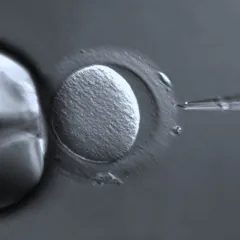
Medical tourism for assisted reproductive technologies raises a host of legal and ethical questions.
Controversy over a Chinese study that used CRISPR-Cas9 gene-editing technology shows how the West still looks at the East through the lens of Orientalism.

A new study has advanced the use of a technique known as ‘CRISPR’ to treat a common inherited form of anaemia.
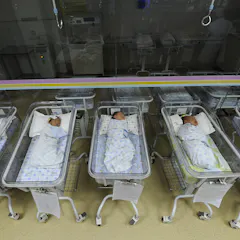
Regulations, funding and public opinion around genetically enhancing future generations vary from country to country. Here’s why China may be poised to be the pioneer.

Smarter plant breeding practices are crucial in a world where climate change, deforestation and species reduction are an increasing problem.
Top contributors
-

Chair, The Conversation Media Group
-
Assistant Professor in Biomedical Ethics, National University of Singapore
-
Head of School (Computer Science) and Co-Director (Centre for Data Science), Queensland University of Technology
-
Geneticist and Group Leader, The John Curtin School of Medical Research, Australian National University
-
Distinguished Research Professor, Emerita, Dalhousie University
-
Professor of Chemistry, Connecticut College
-
Shah Rising Star Assistant Professor of Chemical Engineering, Herbert Wertheim College of Engineering, UF Health Cancer Center, University of Florida
-
Vanier Scholar and Ph.D. Candidate in Microbiology and Immunology, Dalhousie University
-
Senior Lecturer International Law, Bioethics, Emerging Tech, University of KwaZulu-Natal
-
Doctoral Student in Biochemistry, University of Washington
-
Distinguished Research Professor, Dalhousie University
-
Chen Su Lan Centennial Professor in Medical Ethics, National University of Singapore; Distinguished Visiting Professor in Law, University of Melbourne; Uehiro Chair in Practical Ethics, The University of Melbourne
-
Professor of Advanced Technology Transitions, Arizona State University
-
Professor, Australian National University
-
Professor of Ethics and Sports Integrity, KU Leuven