
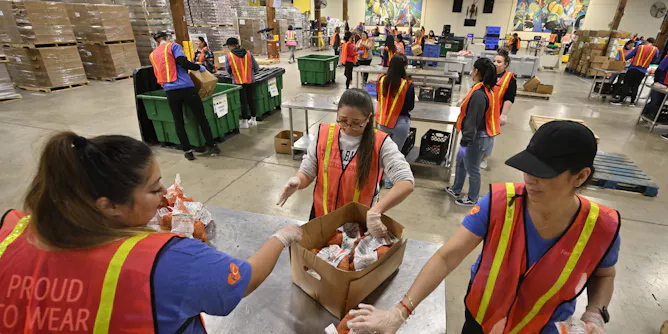
A little more than 1 in 10 Americans can’t get enough to eat – around the same share of the country that was experiencing food insecurity before the COVID-19 pandemic.
Articles on Food insecurity
Displaying 101 - 120 of 267 articles
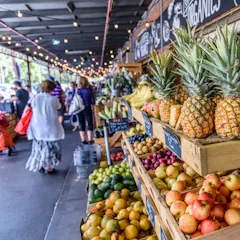
Nearly two-thirds of suburbs in one major part of Sydney have no food stores at all. And in those that do, unhealthy food outlets outnumber healthy ones by more than six to one.

The emotional stress of growing up in a poor household may contribute to obesity.

Skewed reportage on the land debate contributes to entrenching the injustices of colonialism and apartheid.

Through articles written by academic experts in the course of the year, The Conversation Africa takes a second look at Nigeria in 2022.
A country of plenty like Australia should be able to ensure no one is denied their right to adequate food. But food insecurity is on the rise, and we aren’t even properly monitoring the problem.

Inflation is driving up food prices and could have a severe impact on the health of Canadians. When the cost of food increases, it restricts the availability of nutritious foods for low-income people.

Despite the impact of flooding on food security, it is not recognised as a threat by policymakers.

Deprivation in childhood is a strong predictor of obesity, gambling, smoking and addiction in adulthood.

Affordability is a question of political and policy priorities. If we want a fair and adequate social security system, we cannot continue cutting the resources of those who already have the least.

Food insecurity is often talked about as an issue of individual responsibility. But our research suggests most people struggling to put food on the table are not the agents of their own misfortune.

Food insecurity is a social justice issue tied to social determinants of health. Historically marginalized people like 2SLGBTQ+ youth are at risk, and more likely to be food insecure during COVID-19.

The emission reduction targets outlined for Canadian fertilizer use will not lead to food shortages and food insecurity.

One 11-year old girl told us she knows once rent is paid, there is almost nothing left over. So she never takes school excursion notes home, in case the cost is too much.

About a third of American adults in Generation Z lack the money or resources needed for reliable access to nutritious food.
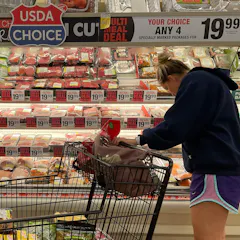
Soaring inflation in the US has been driven in part by large increases in the price of groceries – a burden that falls disproportionately on lower-income families.

Our research shows that although climate change is a key factor in starting conflict in eastern Africa, it’s not always the most important one.

Counties have better knowledge of the impact of food insecurity on households but lack the will and capacity to tackle it.

Higher Social Security benefits can significantly reduce the odds of an older person’s being food insecure.

While decent housing and food are fundamental human rights, they are often treated separately, and primarily as commodities. How can we tackle housing and food insecurity together, and better?
Top contributors
-

Associate Professor of Political Science, University of Richmond
-
Professor of Economics, Baylor University
-
Professor of Social Development Studies, University of Johannesburg
-
Professor of Human Development and Family Sciences, University of Connecticut
-
Senior Lecturer in Nutrition and Dietetics, University of Wollongong
-
Professor of Health Studies, Queen's University, Ontario
-
Senior Researcher, Associate Professor: Economic Management Sciences, University of Pretoria
-
Assistant Professor of Nutrition, Texas State University
-
Associate Professor of Allied Health Sciences, University of Connecticut
-
Assistant Professor of Public Health, Indiana University
-
Assistant Professor of Dietetics and Nutrition, University of Dayton
-
Professor of Nutritional Sciences, University of Toronto
-
DSTI/NRF Research Chair in Welfare and Social Development, University of Johannesburg
-
Research Program Coordinator, Food Insecurity, University of Toronto
-
Associate Professor of Nutrition Science, Purdue University