
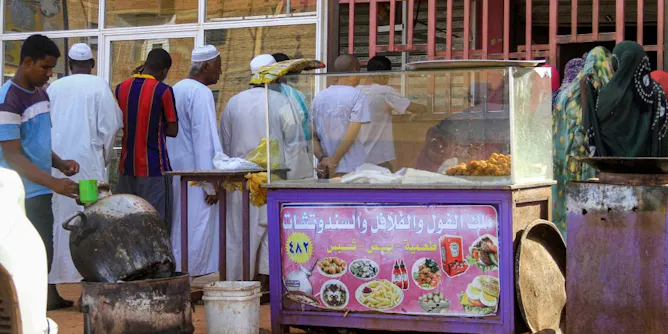
There is a high risk of famine in multiple regions of Sudan if immediate action is not taken.
Articles on Food insecurity
Displaying 61 - 80 of 267 articles
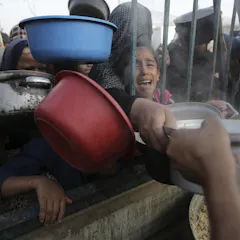
Hunger, stress, trauma, inadequate sanitation and other factors are converging to create a widespread humanitarian disaster with consequences that could last for generations.
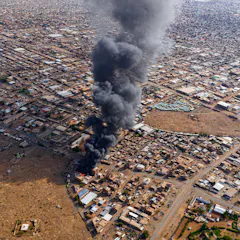
Rural households are especially hard hit by food shortages due to disrupted farming, limited access to markets and soaring food prices.

Researchers and co-chairs of the Canadian Association for Food Studies’ School Food Working Group explain what Ottawa should prioritize to ensure its national school food program succeeds.

Muslims internationally fast during the day in the holy month. But largely-Islamic nations are feeling the effects of climate change, making life harder both during and outside of Ramadan.

Parents told us how the ever-present juggle of budgets and the realities of family life strained relationships and increased their mental load.

South Africa’s national survey of food and nutrition security identifies the areas most in need.

During the Tudor period, religious beliefs shaped people’s attitudes towards food and food waste.
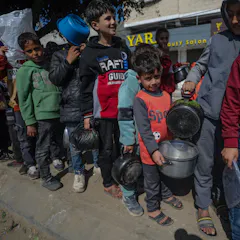
Children are particularly at risk from malnutrition as food supplies in Gaza run out.

A selection of our coverage of the conflict in Gaza from the past fortnight.
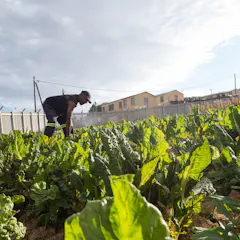
Community-centred approaches to urban agriculture have been successful in various parts of the world.

With food insecurity at an all-time high and food banks buckling under high demand as we head into this holiday season, experts say we need to focus on long-term solutions to tackle the issue at its root.
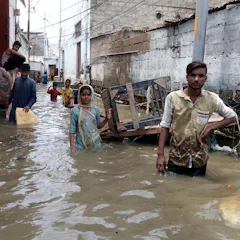
The effects of climate change on health are getting more political traction. But there’s still more to do, particularly as the health harms of climate change are only getting more serious.

Questions about food insecurity can be less straightforward than they appear.

The food theft crisis is framed as a threat to paying customers. This furthers the divide between those who can still afford groceries and those who cannot.
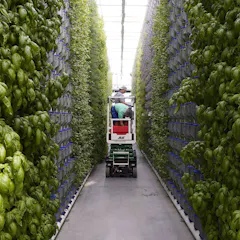
Digital twin technology is a huge boon for indoor farming and may hold the key to addressing rising global food scarcity.

As global acute food insecurity increases, severe wasting — which already affects 13.6 million children — is expected to rise with it. Treating wasting requires specialized nutrition and medical care.

Food insecurity is an issue felt particularly acutely by Inuit across Northern Canada. Culturally appropriate food systems may be the solution.

The persistence of food insecurity in Canada is a policy choice. By not doing more to improve the adequacy and stability of household income, governments are choosing to let food insecurity fester.
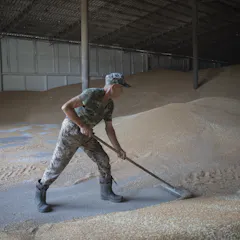
The Ukraine war’s impact on food insecurity is critical, but there is more to the picture. The main problem is that capitalism allows food and other basic needs to become precarious commodities.
Top contributors
-

Associate Professor of Political Science, University of Richmond
-
Professor of Economics, Baylor University
-
Professor of Social Development Studies, University of Johannesburg
-
Professor of Human Development and Family Sciences, University of Connecticut
-
Senior Lecturer in Nutrition and Dietetics, University of Wollongong
-
Professor of Health Studies, Queen's University, Ontario
-
Senior Researcher, Associate Professor: Economic Management Sciences, University of Pretoria
-
Assistant Professor of Nutrition, Texas State University
-
Associate Professor of Allied Health Sciences, University of Connecticut
-
Assistant Professor of Public Health, Indiana University
-
Assistant Professor of Dietetics and Nutrition, University of Dayton
-
Professor of Nutritional Sciences, University of Toronto
-
DSTI/NRF Research Chair in Welfare and Social Development, University of Johannesburg
-
Research Program Coordinator, Food Insecurity, University of Toronto
-
Associate Professor of Nutrition Science, Purdue University