

For many gig workers, app-based work is no longer just about extra cash but economic need, a new survey finds.
Articles on Supplemental Nutrition Assistance Program (SNAP)
Displaying 1 - 20 of 63 articles
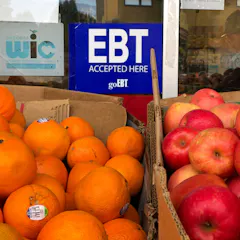
Nearly 14,000 people in one Pittsburgh-area county could lose a benefit that’s long been considered one of the country’s most effective anti-poverty tools.

A new policy could deny an immigration application based in part on the use of government benefits by a close relative.
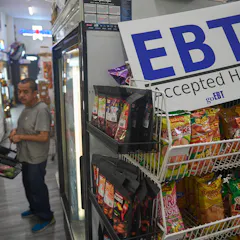
Many convenience stores, corner markets, bodegas and other small stores will have to make changes if they want to continue to accept SNAP benefits.

Colorado’s minimum wage has increased, but not nearly enough to cover the rising cost of food.

Getting SNAP benefits can already be hard, and due to legal changes Congress approved in 2025 it could get harder for many Americans.

A combination of Colorado state tax credits for low-income families is predicted to lift more than 50,000 children out of poverty.

Every dollar spent on community health education through SNAP-ED saved an estimated $10.64 in Medicaid spending by the government before the program was shut down.
Farm bills – famously complex legislative and spending balances between farm subsidies, food assistance, conservation and more – have tended to be passed about every five years since 1933.

A few hundred extra dollars a month would go a long way for many Coloradans.
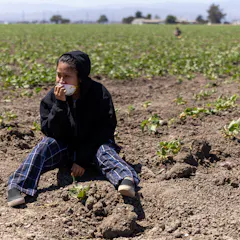
Despite the administration’s claim of streamlining the government to make its operations more efficient, a range of recent federal policies have, in fact, exacerbated food wastage.
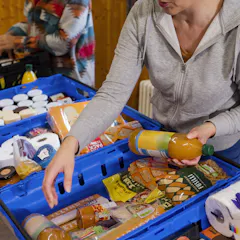
Free food may fill your stomach, but it doesn’t always satisfy the desire to feel fully human.
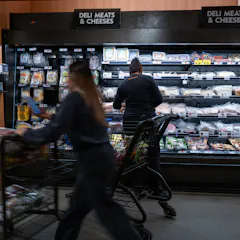
Having stable access to nutritious food sets children up for better mental and physical health into adulthood.
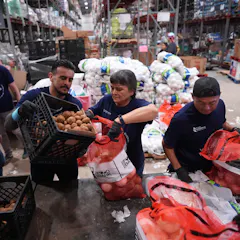
As the government shutdown wore on in October, calls began surging, signaling that Americans are very concerned about paying their bills and feeding their families.
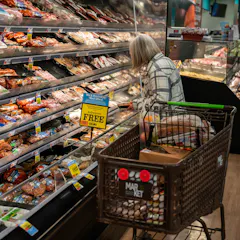
Nearly 60% of Americans enrolled in the Supplemental Nutrition Assistance Program are either children under 18 or adults who are 60 or older.

Starting Nov. 1, 2025, Supplemental Nutrition Assistance Program benefits will stop being distributed in Pennsylvania due to the federal government shutdown, which began Oct. 1.
There are few, if any, alternative sources of food insecurity data that don’t rely on the survey the government is ending.

The measure enables broad tax cuts that disproportionately favor wealthy households while forcing its costs on the most economically vulnerable Americans.

The government, because it takes the lead in implementing official policies, is in a unique position to collect and store sensitive data collected over long periods of time.

Work requirements will expand and exemptions from them will recede. How much states have to pay will be tied to the prevalence of mistakes, not fraud.
Top contributors
-

Associate Professor of Political Science, University of Richmond
-
Professor of Economics, Baylor University
-
Executive Director, Swette Center for Sustainable Food Systems, Arizona State University
-
Assistant Professor of Community Health, Tufts University
-
Grace Melo is a Friend of The Conversation.
Assistant professor of Agricultural Economics, Texas A&M University
-
Associate Professor of Social Work, University of Denver
-
Assistant Professor of Dietetics and Nutrition, University of Dayton
-
Venable Professor of Law, University of Baltimore
-
Assistant Professor of Nutrition, Texas State University
-
Assistant Professor of Food and Nutrition, Meredith College
-
Teaching Assistant Professor of Public Policy, University of Denver
-
Professor of Public Policy and Economics, University of California, Berkeley
-
Assistant Professor of Sociology, Mississippi State University
-
Ph.D. Student in Public Policy, Harvard Kennedy School
-
Assistant Professor of Nutritional Sciences, University of Michigan