
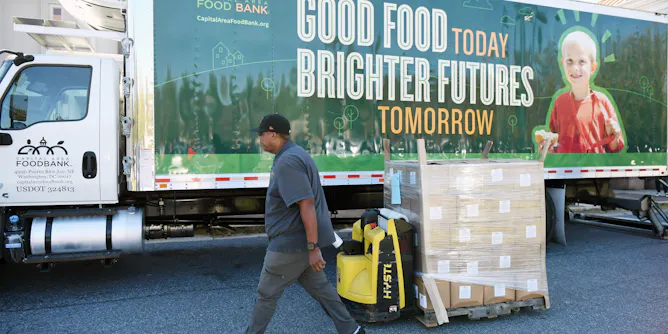
Picking up food more frequently from supermarkets doesn’t close the gap between what’s donated and could be donated, a supply chain scholar explains.
Articles on Food banks
Displaying 1 - 20 of 92 articles
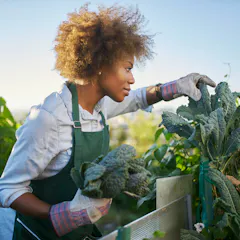
Dominant nutrition wellness narratives wrongly focus on individual behaviour and personal responsibility, which obscures the structural causes of hunger and delays policy changes.
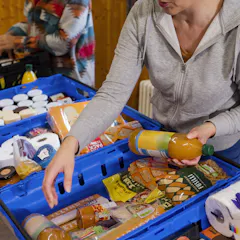
Free food may fill your stomach, but it doesn’t always satisfy the desire to feel fully human.
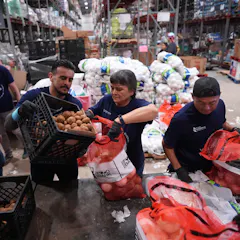
As the government shutdown wore on in October, calls began surging, signaling that Americans are very concerned about paying their bills and feeding their families.

The more than $1 billion cut hits already strapped schools and food banks.

While Iowa is a big food producer, many people in the state need help getting enough to eat.

Teachers’ main justification for running a food bank was the moral imperative to support families who needed it.
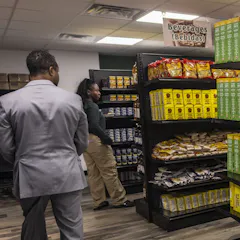
Supply chain improvements could help lower the food insecurity rate and reduce food waste while boosting profits for retailers.
This trend may surprise you, given the attention the public, policymakers, politicians and the media paid to food insecurity at the height of the pandemic.

Tackling food insecurity in Canada needs a more systemic, structural approach that moves beyond relying on reactive, short-term solutions like food banks.

The introduction of breakfast clubs for all primary school children is welcome, but the government should go further in providing free school meals.

A study in Detroit finds large areas without pet resources, mainly in lower-income and minority neighborhoods. Better access to supplies and services could help owners and animals thrive together.

Schools are running food banks because they are faced with growing poverty and families struggling financially.

With food insecurity at an all-time high and food banks buckling under high demand as we head into this holiday season, experts say we need to focus on long-term solutions to tackle the issue at its root.

Donors and grantmakers often pressure nonprofits to spend as little as possible on fundraising and overhead.

Our study shows the UK must prepare for, and respond to, the risks associated with future food shortages.

Low-income mothers with infants are struggling with food insecurity, which can lead to long-term health impacts for both mothers and children.
Food banks help millions of people, but have serious limitations.

Initiatives like the federal government’s new grocery rebate are only a small step towards ending food insecurity in Canada. A broader guaranteed basic income is long overdue.
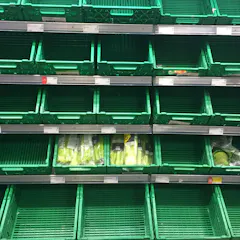
The food aid supply chain relies on surplus.
Top contributors
-

Lecturer in Social Policy, University of Salford
-
Professor of Health Studies, Queen's University, Ontario
-
Professor of Human Development and Family Sciences, University of Connecticut
-
Associate Professor of Nutrition Science, Purdue University
-
Lecturer in Nutrition, King's College London
-
Assistant Professor of Dietetics and Nutrition, University of Dayton
-
Associate Professor of Health Equity, Deakin University
-
Professor of Anthropology, University of South Florida
-
Associate Professor, Women's and Gender Studies, School of Nutrition and Dietetics
-
Research Fellow in the Department of Health Sciences, University of York
-
Assistant Professor of Supply Chain and Health Sciences, Northeastern University
-
Professor of Food Policy, City St George's, University of London
-
President, Food Secure Canada
-
Associate Professor of Sociology and Education, University of Bristol
-
Associate Professor of Food, Nutrition and Health, University of British Columbia