

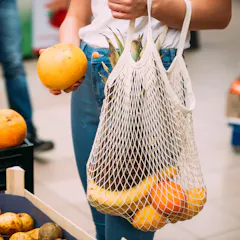
When people taking part in 22 pilot programs across the US got free fruits and vegetables, their health improved.
Articles on Food insecurity
Displaying 81 - 100 of 267 articles
Food banks help millions of people, but have serious limitations.

Fixing Nigeria’s food inflation goes beyond declaring a state of emergency.

When the roads flooded around Lismore, it left supermarket shelves empty for months. Keeping everyone fed took a huge community effort. Now we need to make food supply secure.

For many Americans, a healthy diet of fruits, vegetables and whole grains is beyond their reach.

Two formidable forces have converged to push Nigeria’s food security to the brink: climate change, with its unpredictable weather patterns, and terrorism.

Canada’s National Food Policy is slated for renewal later this year. Employment and Social Development Canada must be involved to develop income supports that reduce food insecurity.

Everyone should have the right to have, or not have, a child and to parent with dignity in a safe environment – but food insecurity makes this difficult.

A guaranteed basic income is a promising tool for contributing to sustainability and justice across agriculture and fishing sectors.

A team of economists looked at what happened after Supplemental Nutrition Assistance Program work requirements were reinstated in Virginia in 2013.

Andrea Magalhaes hasn’t demanded vengeance since her son was murdered — she’s called for expanding the social safety net to address the root causes of crime. Public officials should listen to her.
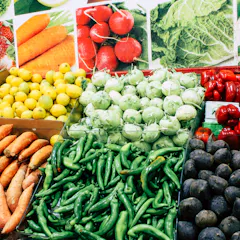
The inequitable distribution of the benefits and harms of the food system is a violation of the constitutional right to food.

Initiatives like the federal government’s new grocery rebate are only a small step towards ending food insecurity in Canada. A broader guaranteed basic income is long overdue.

Food insecurity remains a major health problem. And poorer households are disproportionately affected.
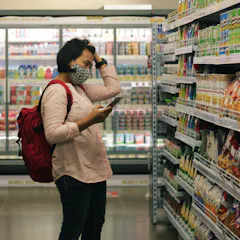
Food insecurity is a problem of income inadequacy. The 2023 federal budget’s “grocery rebate” has the right idea, but falls short.

A drop in food prices might immediately address the lack of economic access to food but will not address the root causes of food insecurity.

Better food supply, a reduction in population growth rate, and greater integration into global markets are three key steps Niger must take.
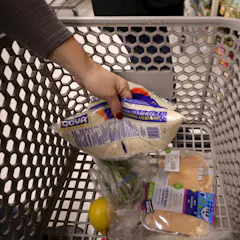
More than 41 million people rely on the Supplemental Nutrition Assistance Program to buy their groceries. When the COVID-19 pandemic began, the program ramped up.
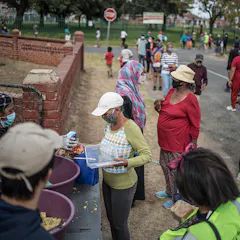
Social grants are the largest source of support for many vulnerable groups. They are the government’s primary response to poverty, food insecurity and inequality.

The end of an era of cheap food.
Top contributors
-

Associate Professor of Political Science, University of Richmond
-
Professor of Economics, Baylor University
-
Professor of Social Development Studies, University of Johannesburg
-
Professor of Human Development and Family Sciences, University of Connecticut
-
Senior Lecturer in Nutrition and Dietetics, University of Wollongong
-
Professor of Health Studies, Queen's University, Ontario
-
Senior Researcher, Associate Professor: Economic Management Sciences, University of Pretoria
-
Assistant Professor of Nutrition, Texas State University
-
Associate Professor of Allied Health Sciences, University of Connecticut
-
Assistant Professor of Public Health, Indiana University
-
Assistant Professor of Dietetics and Nutrition, University of Dayton
-
Professor of Nutritional Sciences, University of Toronto
-
DSTI/NRF Research Chair in Welfare and Social Development, University of Johannesburg
-
Research Program Coordinator, Food Insecurity, University of Toronto
-
Associate Professor of Nutrition Science, Purdue University