

International refugee law must be overhauled to consider climate change and include “deadly environments” as a form of persecution.
Articles on Food insecurity
Displaying 141 - 160 of 267 articles

COVID-19 greatly disrupted local market dynamics at landing sites, within the communities, and connections to more distant markets.

Even in the absence of a moral motive to alleviate famine, there is a strong rationale for the West to do whatever’s necessary to alleviate hunger in Afghanistan this winter.

Our food systems are failing to feed all of us.
In this episode of Don’t Call Me Resilient, we pick apart what is broken and ways to fix it with two women who battle food injustice.
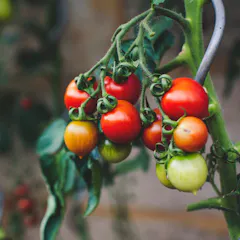
The COVID-19 pandemic has highlighted the problem of food insecurity for many people, especially racialized and Indigenous households.

With the high cost of infant formula, food-insecure mothers who cannot breastfeed are struggling to feed their babies.

The network collectively applied ingenuity to provide essential care and support to vulnerable people.
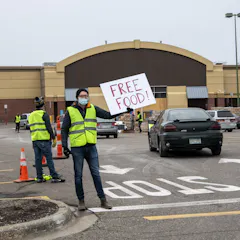
Congregations can help bridge gaps left by government programs, especially for many immigrants and others who are not eligible for SNAP benefits.
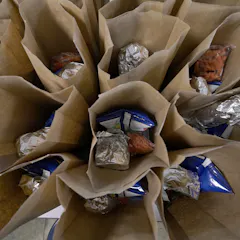
A recent survey finds that the pandemic made it harder for many US households to put food on the table. It also changed the ways in which people buy and store food.

There’s a crucial need to connect the most vulnerable people with public services in order to tackle systemic poverty and disadvantage. An integrated approach is key.
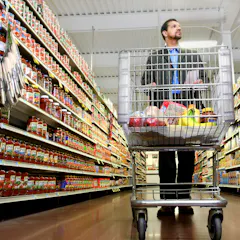
Long-term increases like this are unusual. So is the fact that this increased governmental generosity began with a measure approved by Congress when Republicans held majorities in both chambers.

Food insufficiency rates rose across the board, researchers who analyzed government data found.

A scholar of nutrition opens up with a personal take on food insecurity in America.
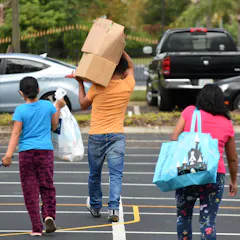
While the food insecurity rate held steady in 2020, the racial hunger gap increased.

Parents and caregivers are central to promoting child safety. Improving their ability to prevent injury to children is key.
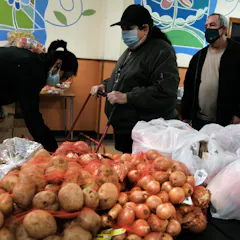
Early estimates US poverty rate estimates indicate that policies intended to soften the blow of economic upheaval made a big difference.

An economist explains what it would cost to give SNAP benefits to all Americans in households earning up to about $100,000 per year – and why it would be worth it.

Detecting food insecurity requires more than assessing what’s in your refrigerator or measuring the distance between your home and the closest supermarket.

Hunger is not the cause of the current social upheaval. But, taken along with other deep-rooted structural inequalities, it provides additional fuel for socio-political conflagration.

Experts explain the significance of this new ‘allowance.’
Top contributors
-

Associate Professor of Political Science, University of Richmond
-
Professor of Economics, Baylor University
-
Professor of Social Development Studies, University of Johannesburg
-
Professor of Human Development and Family Sciences, University of Connecticut
-
Senior Lecturer in Nutrition and Dietetics, University of Wollongong
-
Professor of Health Studies, Queen's University, Ontario
-
Senior Researcher, Associate Professor: Economic Management Sciences, University of Pretoria
-
Assistant Professor of Nutrition, Texas State University
-
Associate Professor of Allied Health Sciences, University of Connecticut
-
Assistant Professor of Public Health, Indiana University
-
Assistant Professor of Dietetics and Nutrition, University of Dayton
-
Professor of Nutritional Sciences, University of Toronto
-
DSTI/NRF Research Chair in Welfare and Social Development, University of Johannesburg
-
Research Program Coordinator, Food Insecurity, University of Toronto
-
Associate Professor of Nutrition Science, Purdue University