
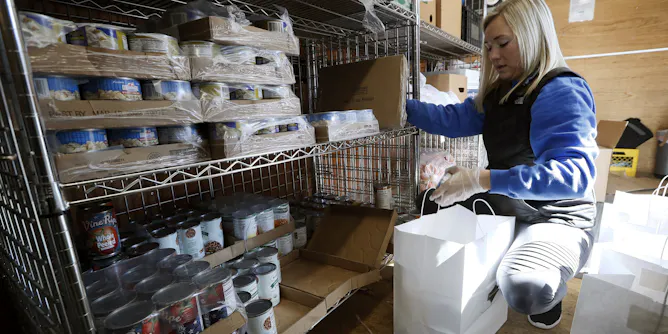
While Iowa is a big food producer, many people in the state need help getting enough to eat.
Articles on Food insecurity
Displaying 41 - 60 of 267 articles
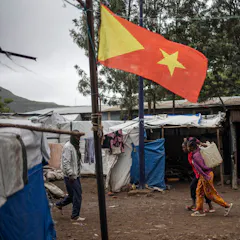
The 2020-2022 war and its lingering effects have thrown the Tigray region into chaos.

With funding for a government food voucher program ending and Parliament prorogued, many Inuit children in Nunavut may soon go hungry.

The link between household food insecurity and child malnutrition is stark: 28.8% of South African children under five suffer from stunting.
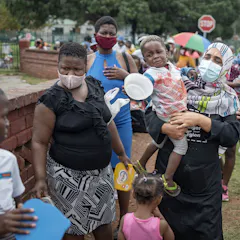
Food shortages are not the cause of hunger in South Africa. The country produces and imports all the food it needs.
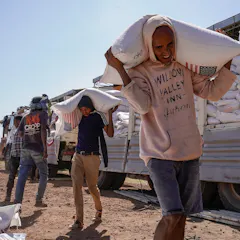
Talk of the Trump administration closing USAID, the largest provider of food assistance, has sparked concerns on how it might impact global hunger.

Burundi’s government must balance strict climate regulations alongside promoting voluntary behaviour changes.

Global hunger is still as much of an issue now as it was when Band Aid released its charity single in 1984.

The economic policies of both candidates would have a dramatic impact on the health of Americans.

Heart-healthy diets are vital in cardiac rehab, but cost, complex guidelines and cultural barriers can make them hard to follow. Community support and personalized, affordable plans can help.

Women play a significant role in Liberia’s agriculture. But many don’t have enough to eat.
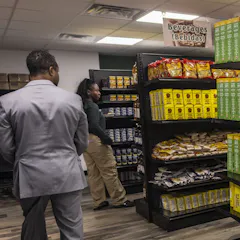
Supply chain improvements could help lower the food insecurity rate and reduce food waste while boosting profits for retailers.

Minnesota Gov. and vice presidential contender Tim Walz has championed his state’s free school meals policy.

About 1 in 9 Americans are facing poverty today. But more than half of the people residing in the US will experience poverty at some point in their adult lives.

This trend may surprise you, given the attention the public, policymakers, politicians and the media paid to food insecurity at the height of the pandemic.

Tackling food insecurity in Canada needs a more systemic, structural approach that moves beyond relying on reactive, short-term solutions like food banks.
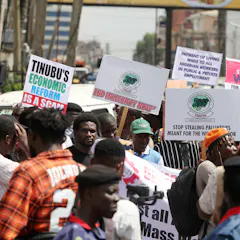
Nigeria has been faced with economic despair and social unrest. Scholars explain the issues and possible solutions.
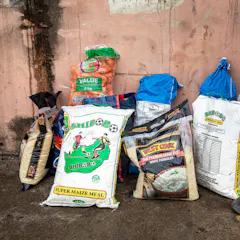
Households in South Africa’s second biggest city, Tshwane, aren’t getting adequate nutrients in their diets.

The government is reducing the scope and scale of the free school lunch programme. But evidence suggests expanding it would be good for children, communities and local businesses.
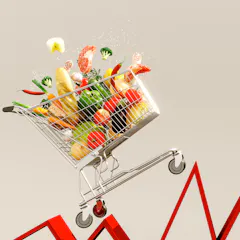
Healthy eating is increasingly out of reach for struggling families. Since 2014, prices on fruit and vegetables have increased by around 45%, while processed foods have seen just a 14% rise.
Top contributors
-

Associate Professor of Political Science, University of Richmond
-
Professor of Economics, Baylor University
-
Professor of Social Development Studies, University of Johannesburg
-
Professor of Human Development and Family Sciences, University of Connecticut
-
Senior Lecturer in Nutrition and Dietetics, University of Wollongong
-
Professor of Health Studies, Queen's University, Ontario
-
Senior Researcher, Associate Professor: Economic Management Sciences, University of Pretoria
-
Assistant Professor of Nutrition, Texas State University
-
Associate Professor of Allied Health Sciences, University of Connecticut
-
Assistant Professor of Public Health, Indiana University
-
Assistant Professor of Dietetics and Nutrition, University of Dayton
-
Professor of Nutritional Sciences, University of Toronto
-
DSTI/NRF Research Chair in Welfare and Social Development, University of Johannesburg
-
Research Program Coordinator, Food Insecurity, University of Toronto
-
Associate Professor of Nutrition Science, Purdue University