
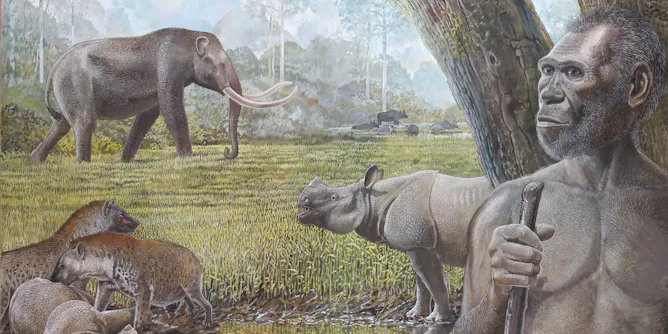
Several theories have suggested either humans, climate change or both drove megafauna extinctions in Southeast Asia. Our newest work suggests otherwise.
Articles on Extinction
Displaying 201 - 220 of 421 articles
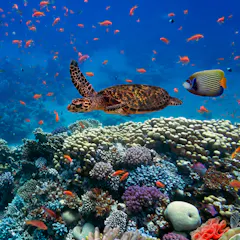
The world missed all 20 targets for stemming the tide of biodiversity loss. But there has been some progress over the last decade.
Microfossils offer up an array of information to scientists, like the time periods in which they lived and how environments have changed.
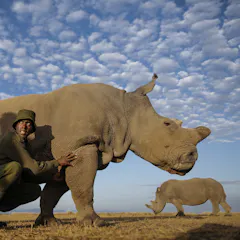
A conservation scientist interviewed on the programme says Sir David tells it like it is.
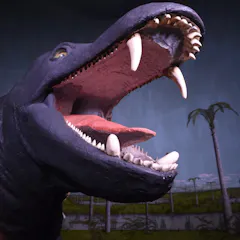
Museums around the world have been grappling with the issue of diorama removal.
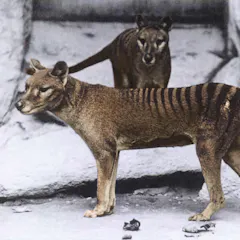
The “Tasmanian tiger” was hunted to extinction based on its perceived size as a predator big enough to take sheep. But it seems this was just a tall tale, and the thylacine weighed just 16.7kg.

Twenty of these freshwater fish species have a 50% or greater probability of extinction within the next 20 years.

Recent reports of dramatic declines in insect populations have sparked concern about an ‘insect apocalypse.’ But a new analysis of data from sites across North America suggests the case isn’t proven.
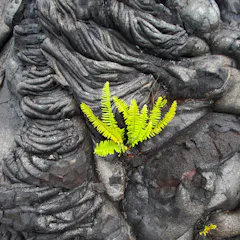
When the dinosaurs went extinct, some species took over the world. Adaptability, not survivability, explains why.
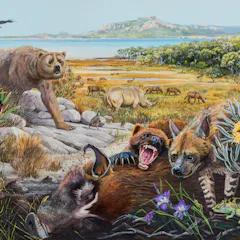
The teeth and limb bones we studied help to understand the role and lifestyle of these species in extinct ecosystems.

Frogs are harvested as food by the millions every year. A new study shows that uncontrolled frog hunting could drive some populations to extinction by midcentury.
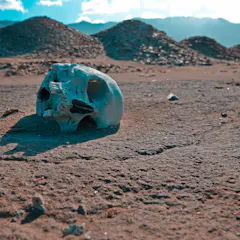
Large numbers, huge ranges, and adaptibility make the human species very difficult to eradicate

What drives people to garden isn’t the fear of hunger so much as hunger for physical contact – and a longing to engage in work that is real.
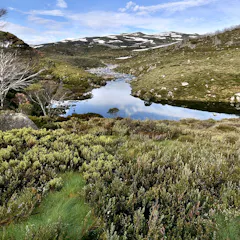
The NSW government is soon expected to grant environmental approval to Snowy 2.0. But that process should be halted.
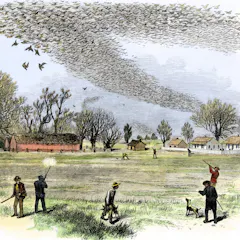
For decades, the extinction of passenger pigeons has been explained by two theories of human impact. New research shows one of these theories is now more compelling than the other.
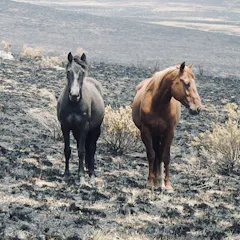
Without an emergency cull of feral horses in Kosciuszko National Park, the land cannot recover from the bushfires – and threatened species are at grave risk of being annihilated.
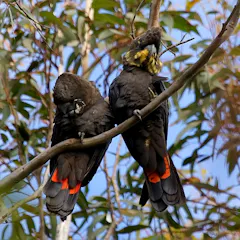
The destruction of recent fires is challenging our belief that with enough time, love and money, every threatened species can be saved. But there is plenty we can, and must, now do.
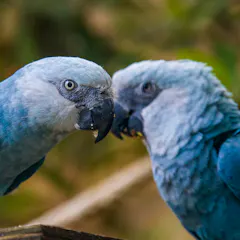
While Hail Mary conservation efforts can pull birds back from the brink, an extinction wave still looms.
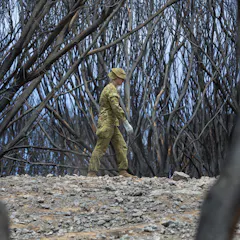
The ecological costs of huge, repetitive, high-severity wildfires on ecosystems could be colossal.

Once you include insects, snails, worms and other small creatures, it’s clear the fires could cause one of the biggest extinction events of the modern era.
Top contributors
-

Professor of Conservation Biology, Charles Darwin University
-
Professor in Wildlife Ecology and Conservation, School of Life & Environmental Sciences, Deakin University
-
Professor of Conservation and Sustainable Livelihoods, Charles Darwin University
-
Matthew Flinders Professor of Global Ecology and Node Leader in the ARC Centre of Excellence for Indigenous and Environmental Histories and Futures, Flinders University
-
Professor in Conservation Science, School of the Environment, The University of Queensland
-
Professor of Wildlife Conservation, Australian National University
-
Distinguished Professor of Ecology, Fenner School of Environment and Society, Australian National University
-
Associate Professor in Vertebrate Palaeontology, Flinders University
-
Professor in Conservation Science, School of Ecosystem and Forest Science, The University of Melbourne
-
Professor, Urban Ecology and Biodiversity, The University of Melbourne; RMIT University
-
University Fellow in Biodiversity, Charles Darwin University
-
Professor of Environmental Management, The University of Queensland
-
Lecturer in the School of Applied Sciences, Edinburgh Napier University
-
Honorary Research Fellow, University of Sydney
-
Distinguished Research Professor and Australian Laureate, James Cook University