
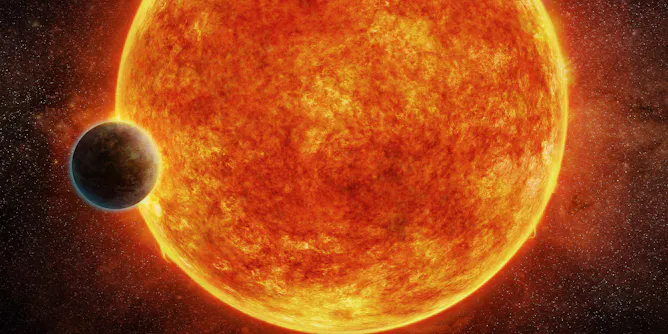
The exoplanet LHS 1140b may have a temperature that could allow for liquid water on its surface. Just possibly, it could support the existence of life.
Articles on James Webb Space Telescope (JWST)
Displaying 1 - 20 of 105 articles
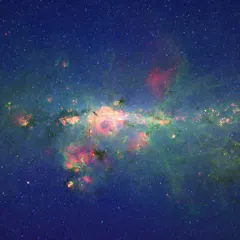
From supernovae in distant galaxies to the packed centre of the Milky Way, the new Roman telescope will help us see and understand the ever-changing cosmos.
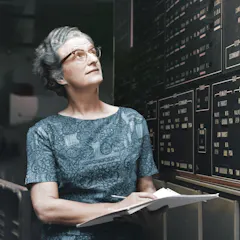
The US astronomer battled discrimination in a male dominated field.
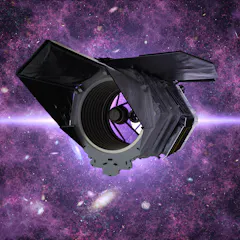
The Nancy Grace Roman Space Telescope will take a broad survey of space and use it to create a map of the universe.
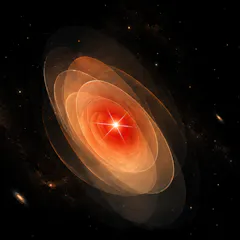
It turns out these little red dots might actually be evidence of supermassive black holes.
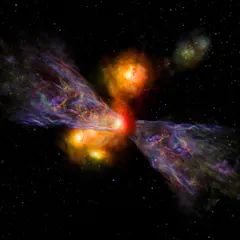
All things die, even galaxies.
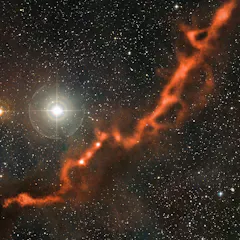
Discoveries of molecules in space that suggest extraterrestrial life are exciting, but they need to be taken with a grain of salt – an astrochemist explains why.

Aristotle believed the planets revolved around Earth and God could not have created other worlds. Today, scientists scour the surface of Mars for ‘biosignatures’ of microbial life.

The black holes could be relics from a time before the Big Bang.
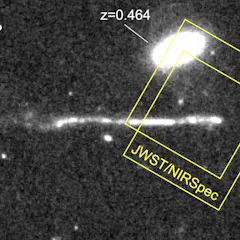
Astronomers have spotted runaway black holes screaming through space, leaving trails of stars in in their wake.
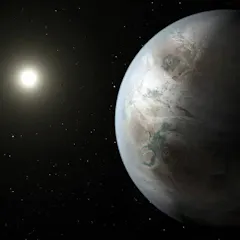
Observatories could identify gases potentially associated with life in the atmospheres of other worlds.
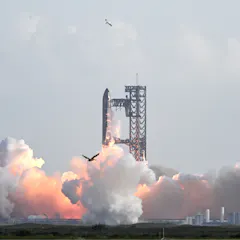
NASA, SpaceX and Blue Origin have all successfully launched superheavy-lift rockets. These massive vehicles are designed to carry a much heavier load.
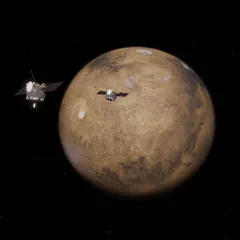
What’s better – many small space missions, or a few large, sweeping ones? Space scientists are asking this question as they face budget uncertainties.
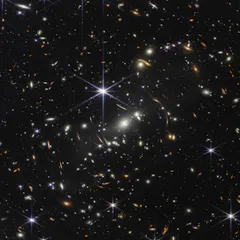
Some unique ‘stars’ might be fueled by dark matter annihilation.
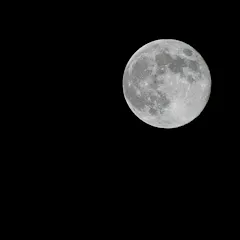
Richard Fishacre challenged the scientific orthodoxy of his day, and contemporary astrophysics has vindicated his position.
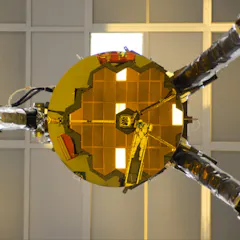
The only Australian hardware on board the legendary telescope is starting to fulfil its duties.

A failed star just taught us something new about the search for alien life.
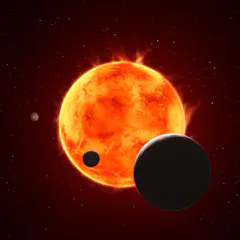
The largest telescope in space has been trained on a rocky exoplanet.

How researchers are working what out the incredible optical phenomena in Earth’s skies can tell us about other planets.
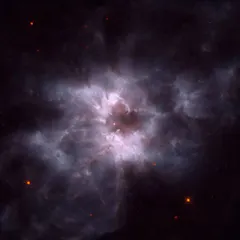
Could tiny stars a fraction the size of our solar system’s Sun have habitable planets orbiting them? A new study says it’s possible.
Top contributors
-

University Distinguished Professor of Astronomy, University of Arizona
-
ARC Laureate Fellow & Distinguished Professor, Centre for Astrophysics & Supercomputing, Swinburne University of Technology
-
Professor of Astrophysics and Space Science, University of Leicester
-
Senior lecturer, University of Sydney
-
Associate Dean for Research and Professor of Astronomy and Planetary Sciences, University of Arizona
-
Regents Professor of Astronomy, University of Arizona
-
Senior Lecturer in Physics, Nottingham Trent University
-
ARC Future Fellow / Associate Professor, Swinburne University of Technology
-
Associate Professor in Astronomy, Monash University
-
Host, The Conversation Weekly Podcast, The Conversation
-
Professor of Astrophysics, The Open University
-
Astrophysicist/Cosmologist, Australian National University
-
Professor (Astrophysics), University of Southern Queensland
-
Research Fellow, School of Physics and Astronomy, University of Nottingham
-
Associate Science Editor & Co-Host of The Conversation Weekly Podcast, The Conversation