
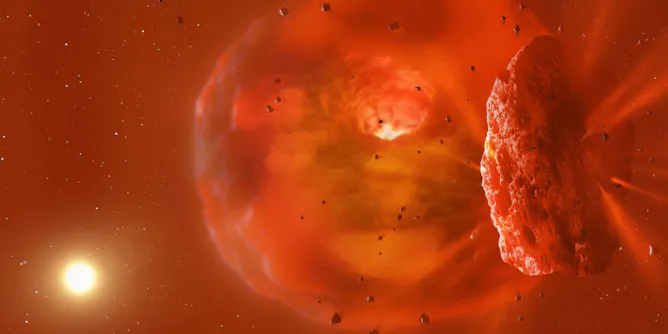
The discovery provides a way to study the birth of an entirely new planet in real time.
Articles on Exoplanets
Displaying 41 - 60 of 228 articles
Months after a military officer made sensational claims about unexplained objects in the skies, NASA released a report loosely outlining a scientific approach for analyzing UAP reports.
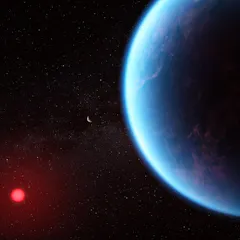
The results are intriguing, but analysing the atmospheres of exoplanets is no easy task.
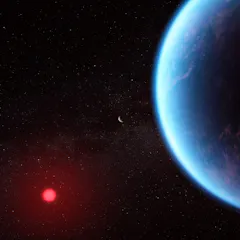
The James Webb Space Telescope has detected key carbon-bearing molecules on the potential ocean world K2-18b, including tantalising hints of a substance produced by tiny plankton on Earth.
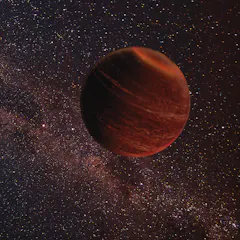
Astronomers have detected the coldest star ever found to emit radio waves using the Australian SKA Pathfinder telescope.
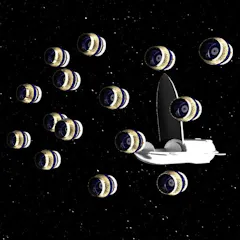
Space telescopes are limited in size due to the difficulties and cost of getting into orbit. By revamping an old optical technology, researchers are working on a lightweight and thin telescope design.
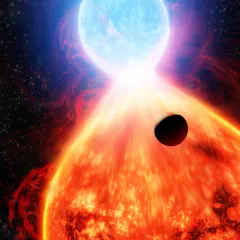
The planet Halla looks like it should have been devoured by its host star, a red giant called Baekdu – but a secret in the star’s past may hold the answer to the planet’s present.
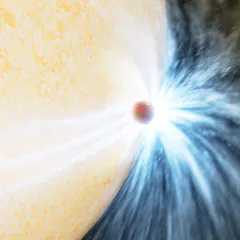
Stars begin to expand when they run out of fuel and can become thousands of times larger, consuming any planets in the way. For the first time, astronomers have witnessed one such event.
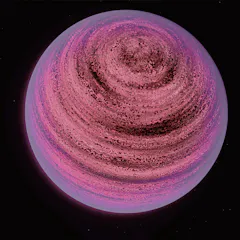
Astronomers are hot on the search for new exoplanets – planets that lie beyond our Solar System – which might show potential for sustaining life.
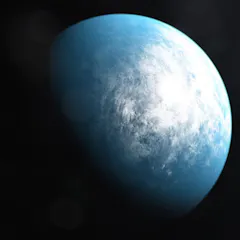
With more than 5,000 known exoplanets, astronomers are shifting their focus from discovering additional distant worlds to identifying which are good candidates for further study.
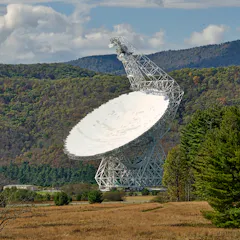
Can artificial intelligence transform the search for alien intelligence?
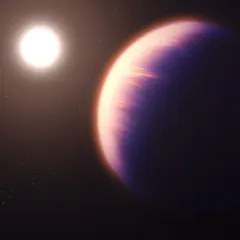
The James Webb space telescope is making the headlines again – this time completing its first chemical inventory of a distant, exotic world.
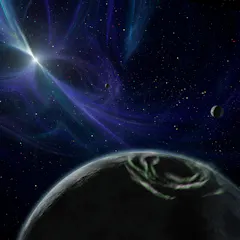
A handful of zombie planets have been spotted – thought to have been born after the death of their host stars.
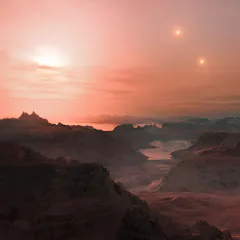
New telescope allows us to study the atmospheres of planets orbiting stars other than our Sun in unprecedented detail.
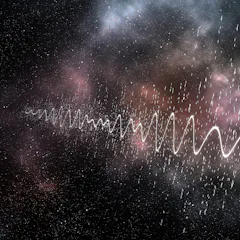
The technology of an advanced alien civilization is likely to produce many signs that could be detected across the vastness of space. Two astronomers explain the search for technosignatures.
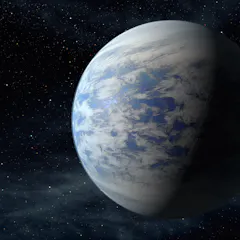
Newly discovered super-Earths add to the list of planets around other stars that offer the best chance of finding life. An astronomer explains what makes these super-Earths such excellent candidates.
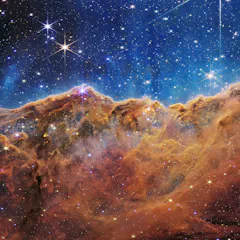
We may have a stolen planet in our own Solar System.
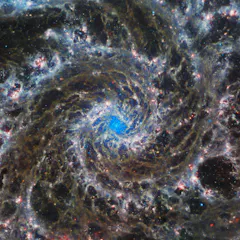
Research on exoplanets over the next couple of decades could help us more accurately estimate how many intelligent alien civilisations there are in our galaxy.
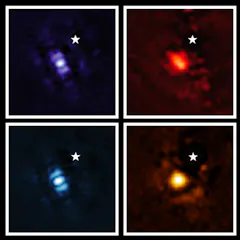
The James Webb Space Telescope just released its first-ever exoplanet image. Here’s what’s so exciting about it, and what we can stand to learn.
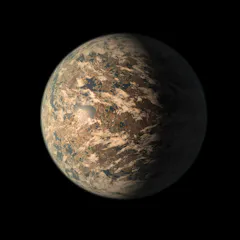
Life on Earth has dramatically changed the chemistry of the planet. Astronomers will measure light that bounces off distant planets to look for similar clues that they host life.
Top contributors
-

Professor (Astrophysics), University of Southern Queensland
-
University Distinguished Professor of Astronomy, University of Arizona
-
Professor of Astrophysics Education, The Open University
-
Professor (Physics), University of Southern Queensland
-
Associate Dean for Research and Professor of Astronomy and Planetary Sciences, University of Arizona
-
Lecturer, University of Southern Queensland
-
Postdoc astrophysicist, Mississippi State University
-
Associate Professor, Japan Aerospace Exploration Agency (JAXA)
-
Professor of Planetary Geosciences, The Open University
-
Ernest Rutherford Fellow, The Open University
-
PhD Candidate, University of Southern Queensland
-
Senior Lecturer in Physics, Nottingham Trent University
-
Senior Curator (Astronomy), Museums Victoria Research Institute; The University of Melbourne
-
W J McDonald Postdoctoral Fellow, The University of Texas at Austin
-
Professor and Associate Dean (Research), UNSW