
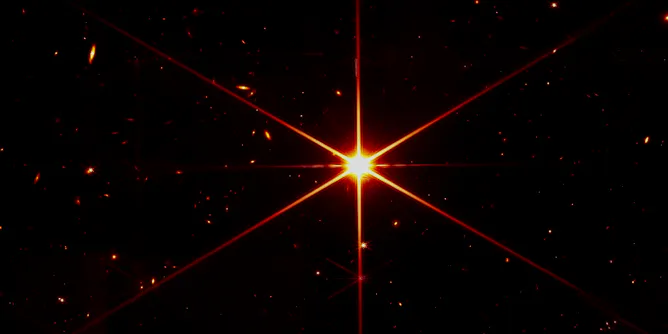
It has taken eight months to test and calibrate all of the instruments and modes of the James Webb Space Telescope. A scientist on the team explains what it took to get Webb up and running.
Articles on Exoplanets
Displaying 61 - 80 of 228 articles
A glimpse of a distant Jupiter-sized exoplanet sheds light on how gas giants form.
The astronomy and astrophysics decadal survey for the 2020s lays out plans to search for life on distant planets, understand the formation of galaxies and solve deep mysteries of physics.
Scientists have mapped the entire atmosphere of ultra-hot exoplanet WASP-121b.
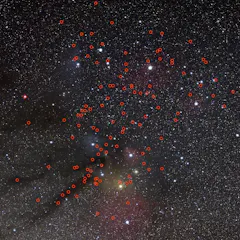
Some planets are rejected by the Solar System that gave birth to them.
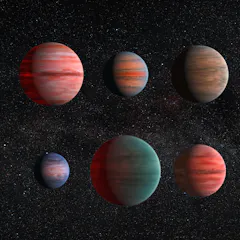
Clouds, hellish temperatures, endless nights? Characterizing the atmosphere of exoplanets, planets that orbit stars other than the sun, is a formidable task.
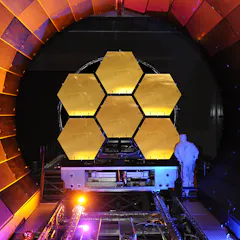
JSWT may be able to discover signs of life on planets around other stars.
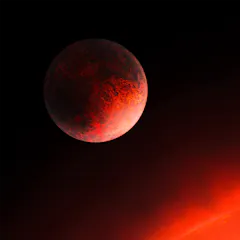
Most of what we know about planets outside our Solar System relates to gas-giant planets. A new study has identified and characterised a smaller exoplanet.
AI loves to cheat, but new research shows it doesn’t do so when analysing the atmospheres of exoplanets.
On the ultra-hot exoplanet WASP-76b, metal is vaporized in the heat. Studying the atmosphere of extreme planets will reveal more wild and weird weather.
Astronomers hunting extraterrestrials were excited to discover an intriguing signal, but closer inspection has revealed it wasn’t aliens.
In 5 billion years the Sun will collapse. A new discovery suggest some planets may still survive afterwards.
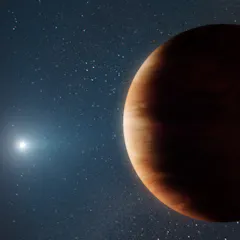
For the first time ever, astronomers have astrophysical evidence that Jupiter and many other planets will survive the death of the Sun.
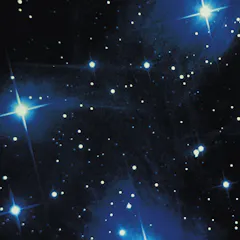
Scientists have a good estimate on the staggering number of stars in the universe.

The largest orbital telescope ever made will allow astronomers to study the atmospheres of alien planets, learn about how stars form in the Milky Way and peer into the farthest reaches of the universe.
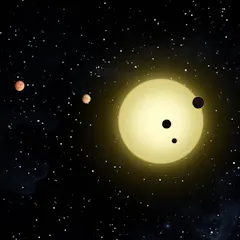
By studying the chemical makeup of binary stars, astronomers found many planetary systems are far less peaceful than ours.
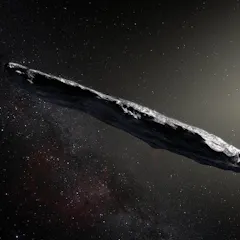
Can the Galileo Project find alien technology?
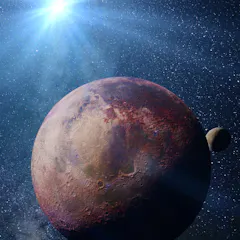
Billions of galaxies are in the universe, with billions of stars in every galaxy. Could billions of planets be out there too?
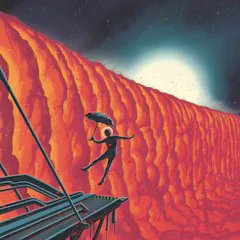
Weather on other planets and moons can be much more extreme than on Earth.

Astronomers just measured the largest flare ever from Proxima Centauri, humanity’s closest neighboring star. These flares could be bad news for life trying to develop on a planet orbiting the star.
Top contributors
-

Professor (Astrophysics), University of Southern Queensland
-
University Distinguished Professor of Astronomy, University of Arizona
-
Professor of Astrophysics Education, The Open University
-
Professor (Physics), University of Southern Queensland
-
Associate Dean for Research and Professor of Astronomy and Planetary Sciences, University of Arizona
-
Lecturer, University of Southern Queensland
-
Postdoc astrophysicist, Mississippi State University
-
Associate Professor, Japan Aerospace Exploration Agency (JAXA)
-
Professor of Planetary Geosciences, The Open University
-
Ernest Rutherford Fellow, The Open University
-
PhD Candidate, University of Southern Queensland
-
Senior Lecturer in Physics, Nottingham Trent University
-
Senior Curator (Astronomy), Museums Victoria Research Institute; The University of Melbourne
-
W J McDonald Postdoctoral Fellow, The University of Texas at Austin
-
Professor and Associate Dean (Research), UNSW