
Historical events hold lessons about collaboration and competition in space that could inform how experts plan for the discovery of life beyond Earth.
Articles on Extraterrestrial life
Displaying 1 - 20 of 159 articles
Biology allows us to speculatively map out an alien’s energy needs.

The nature of space, time and the evolution of life on Earth mean it’s unlikely extraterrestrial life has visited our home planet.
Astronomers should not try to message E.T. before international consultation has occurred.
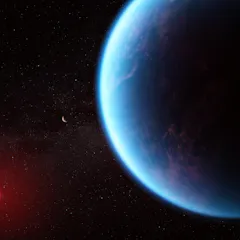
Only 6.6% of surveyed astrobiologists agreed that scientists had probably found extraterrestrial life on exoplanet K2-18b.
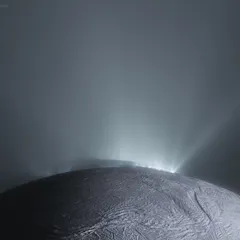
Future missions may be able to take only a small, damaged sample from space back to Earth. A simple analysis tool could help determine whether its contents suggest the presence of life.
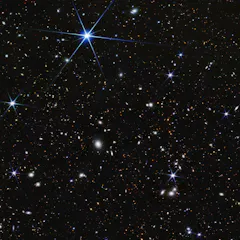
To travel between solar systems, a spacecraft would need extremely sophisticated – if not impossible – technology.

A new release of US government documents offers more detail about ‘unidentified anomalous phenomena’ but explanations are hard to find.

Aristotle believed the planets revolved around Earth and God could not have created other worlds. Today, scientists scour the surface of Mars for ‘biosignatures’ of microbial life.
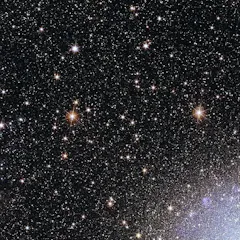
The fictional biologist in ‘Project Hail Mary’ claims that potential alien organisms might not be made of carbon or require water, unlike life on Earth.
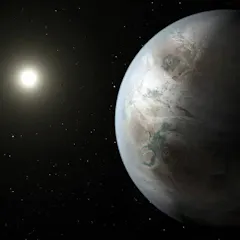
Observatories could identify gases potentially associated with life in the atmospheres of other worlds.
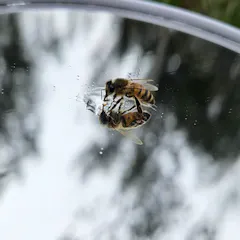
Humans and bees can both work with mathematics. Could aliens do the same?
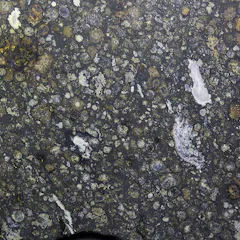
A new machine learning model explores the boundary between biological and nonbiological chemistry.
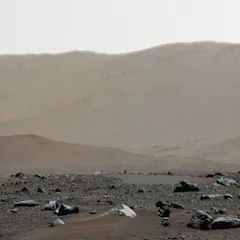
The Viking missions paved the way for future Mars missions and helped researchers understand the red planet’s climate and geology.
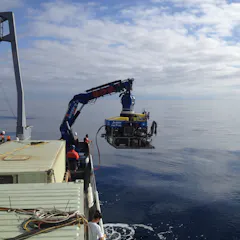
Microbes hidden deep in ocean volcanoes could resemble life on other planets or moons.
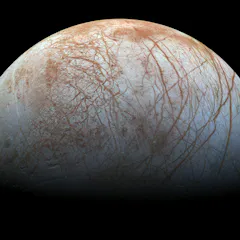
As NASA rolls out more powerful telescopes in the future, scientists will need a way to determine where to point them. A new approach could help.
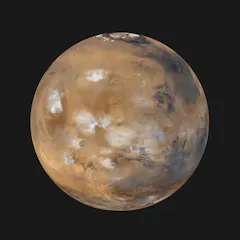
There is growing evidence for the existence of life on other planets.
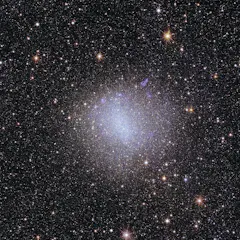
An astronomer breaks down 3 key components that allow researchers to make groundbreaking discoveries – and decide when results aren’t significant.
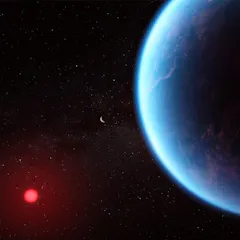
The exoplanet K2-18b could harbor a massive ocean, but scientists will need to study the planet more to see if it’s really likely to host life.
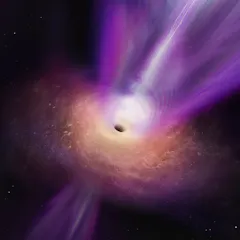
Whether a galactic environment has the right conditions for habitable planets to form could depend on how the black hole in that galaxy is rotating.
Top contributors
-

Professor of Planetary Geosciences, The Open University
-
Professor (Astrophysics), University of Southern Queensland
-
Professor of Physics, Deputy Director (Solar System) at the Mullard Space Science Laboratory, UCL
-
University Distinguished Professor of Astronomy, University of Arizona
-
Professor (Physics), University of Southern Queensland
-
Lecturer, University of Southern Queensland
-
Professor of Planetary and Space Sciences, The Open University
-
Professor of Astronomy and Astrophysics, Penn State
-
Honorary Fellow, Space and Astronomy, CSIRO; Western Sydney University
-
Professor and Director of the Australian Centre for Astrobiology, UNSW
-
Professor in Philosophy of Science, Durham University
-
Senior research fellow, Curtin University
-
Senior Instrument Scientist, Australian Nuclear Science and Technology Organisation
-
James Martin Research Fellow, Future of Humanity Institute & Oxford Martin School, University of Oxford
-
Sir Bernard Lovell chair of Astrophysics, University of Manchester