

A newly discovered, rare species of moth appears to live only in the Florida scrub. Scientists hope that naming it will allow it to be protected.
Articles on Evolution
Displaying 41 - 60 of 1206 articles
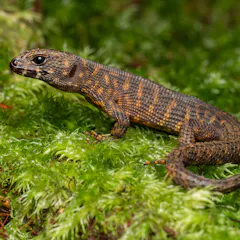
A new study finds the incredible diversity of lizards in Australia relates to a major upheaval in the continent’s climate more than 20 million years ago.

Most genetic studies focus on people from European ancestry. But Africa has the richest diversity and must be included in genetic databases.
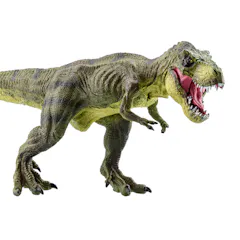
If humans had the same arm proportions as a T. rex, a 6-foot-tall person would have arms about 11 inches long.
The future of artificial intelligence might not be as much a story about engineering as a story about evolution.
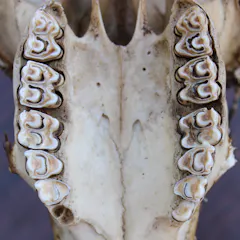
Through fossilized tooth enamel, scientists are reconstructing the diets and landscapes that existed millions of years ago. We really are what we eat.
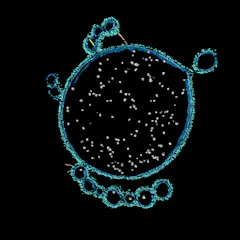
Stromatolites might look like rocks. But they are living relics of ancient systems that thrived on Earth billions of years ago.
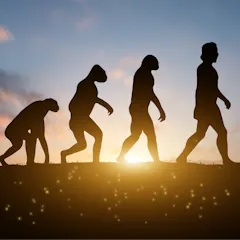
Many aspects of human anatomy are just “good enough” solutions – functional, but far from perfect.
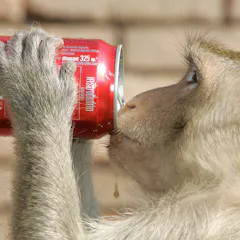
Cities breed smart wildlife because it takes savvy to survive there.
A recent article published and widely read in Science revealed that Neanderthal men preferred “Sapiens” women, but it fails to tell the whole story.

Did Earth’s major diversification event really happen in one sudden explosion? Our fossil discovery suggests not.
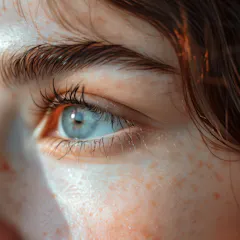
The now extinct worm-like animal first lost paired eyes, then re-evolved them.

Once-lethal insecticides now require concerningly high concentrations to effectively kill mosquitoes. Some mosquitoes are already immune to all classes of insecticides used to control malaria.
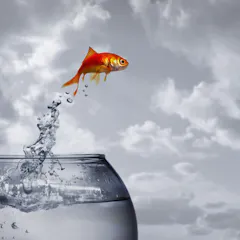
Animals evolved to life on land in several separate waves.

Deserts seem unforgiving. However, the fragile flowers of cacti are evolving quickly.
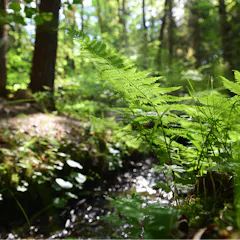
Plants changed the atmosphere, built soil and created ecosystems that allowed animals like us to thrive. But first they had to make their way from the water to the land.
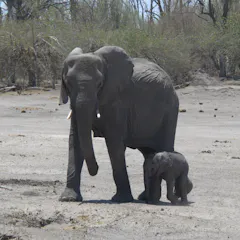
Animals on land and sea use sound for different purposes – and alterations in their environment can change the effect it has

The appendix has independently evolved at least 32 times across 361 mammalian species. What makes it an evolutionary darling when it’s more of a medical liability today?

The newly discovered fish fossil fills a key gap in our understanding of the evolution of vertebrate diversity.

What you probably don’t know about the humble daisy.
Top contributors
-

Scientia Professor of Evolution, UNSW
-
Emeritus Strategic Professor in Palaeontology, Flinders University
-
Senior Research Scientist, South Australian Museum; Flinders University
-
Honorary Associate Professor, UNSW
-
Professor of Evolutionary Palaeobiology at the Milner Centre for Evolution, University of Bath
-
Senior Lecturer in Paleontology and Evolutionary Biology, Life Sciences at the University of Bath, University of Bath
-
Associate Professor, Department of Physiology, Monash University
-
Associate professor in Vertebrate Palaeontology, University of the Witwatersrand
-
Principal Lecturer in Wildlife Conservation, Nottingham Trent University
-
Research Associate in the College of Science and Engineering, Flinders University
-
Jenny Graves is a Friend of The Conversation.
Distinguished Professor of Genetics and Vice Chancellor's Fellow, La Trobe University
-
Adjunct Research Associate, Monash University
-
Mark Elgar is a Friend of The Conversation.
Emeritus Professor of Evolutionary and Behavioural Ecology, The University of Melbourne
-
Professor, School of Biological Sciences, Monash University
-
Professor of Earth System Science, UCL