
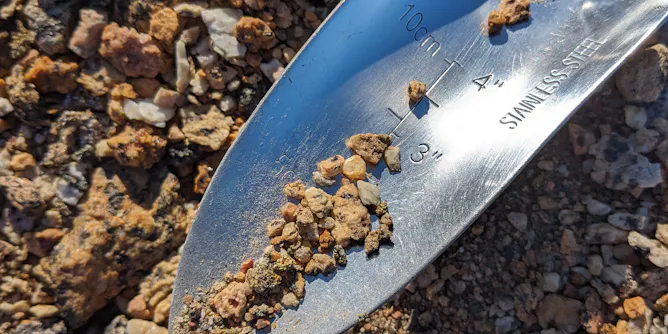
Existence is hard in the frozen Antarctic soil – and microbes use ‘horizontal gene transfer’ to share the tools that keep them alive.
Articles on Evolutionary biology
Displaying 1 - 20 of 187 articles
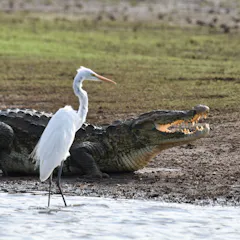
New research suggests crocodiles used to have hot blood and fast metabolisms, but gave it all up to lurk underwater waiting for prey.
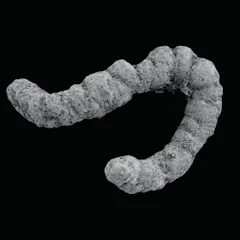
Is the evolution of excrement the reason we exist?
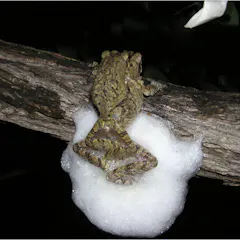
Mating with many males means more viable nests and improved offspring survival or performance for African Grey Foam-Nest Treefrogs.
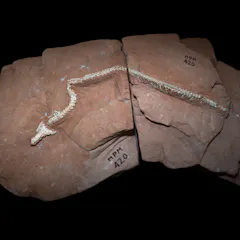
Snakes lost their limbs millions of years ago to become undulating, scaly tubes of muscles. Scientists are finally figuring out why.
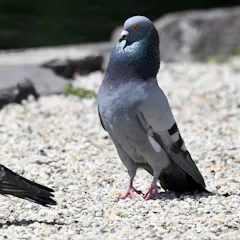
Dune flies have 41 different dance moves. Changing even one of them is rarer than you’d think.
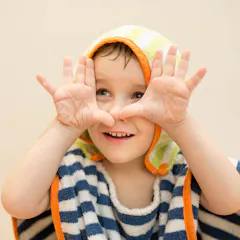
Listen to the The Conversation’s Curious Kids podcast to hear evolutionary biologist Tom Smulders explain.

The appendix has independently evolved at least 32 times across 361 mammalian species. What makes it an evolutionary darling when it’s more of a medical liability today?

Coffee wilt disease has continually devastated farms around the world. Understanding the fungus’s genetics can help protect everyone’s cup of joe.
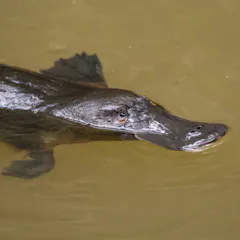
All species alive today, from chimpanzees to bacteria, are cousins that each have equally long lineages, rather than ancestors or descendants of one another.
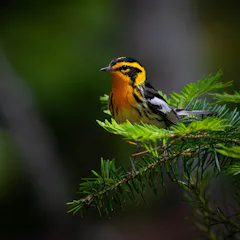
Interbreeding across species lines is one way helpful genes can spread into a bird population.

Is an organism a sum of its parts, or should they be considered as a whole? New research on ferns shows how the way scientists understand evolution affects how they study life.
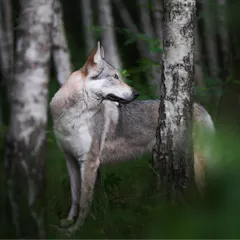
Today’s wolves and dogs share a common ancestor. But a deeper look at their genes reveals that interbreeding since dogs were domesticated 20,000 years ago hasn’t been as rare as scientists assumed.

New data reveals differences in gene activity in the brains of men and women. They start in the womb and evolved millions of years ago
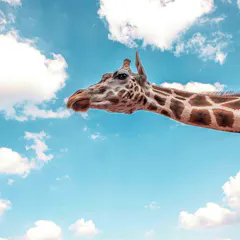
Giraffes might be about as tall as a land animal can get.
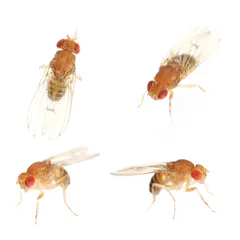
Variability in traits and increased individuality in behaviors is something that can evolve in response to selection, definitely in the lab and potentially also in nature.
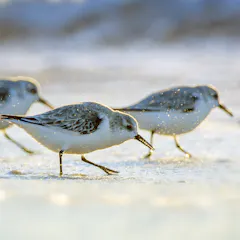
Birds can seem amazingly social as they fly and roost together. But why do they really hang out? Let’s take a closer look at the social lives of birds.
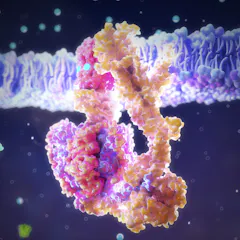
A protein historian and evolutionary biochemist found that a protein sequence present across all known life didn’t form as researchers previously thought it did.
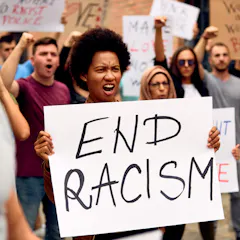
There is no genetic or biological basis for dividing the human race into distinct “races.”

Seasonality sets the rhythms of life – and can have surprising consequences for ecology and evolution
Top contributors
-

Emeritus Strategic Professor in Palaeontology, Flinders University
-
Honorary Associate Professor, UNSW
-
Senior Lecturer, Centre for Behaviour and Evolution, Newcastle University
-
Mark Elgar is a Friend of The Conversation.
Emeritus Professor of Evolutionary and Behavioural Ecology, The University of Melbourne
-
Jenny Graves is a Friend of The Conversation.
Distinguished Professor of Genetics and Vice Chancellor's Fellow, La Trobe University
-
Postdoctoral Researcher , The University of Melbourne
-
Senior lecturer, School of Biological Sciences, University of Bristol, University of Bristol
-
Professor of Avian Behavioural Ecology, Macquarie University
-
PhD Researcher, Nature and Function of Human Nonverbal Vocalisations, University of Sussex
-
Lecturer, Macquarie University
-
Postdoctoral Researcher of Evolutionary Biology, University of Pennsylvania
-
Research fellow, University of Sydney
-
Sexual health researcher, The University of Melbourne
-
Professor of Evolutionary Biology, Université du Québec à Rimouski (UQAR)
-
Associate Professor, School of Psychology, The University of Queensland