
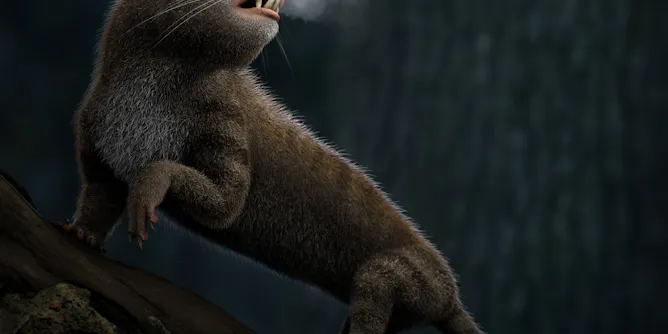
Warm-bloodedness is the key to what makes mammals what they are today. That’s why working out when it emerged in mammal ancestors matters.
Articles on Evolution
Displaying 381 - 400 of 1206 articles
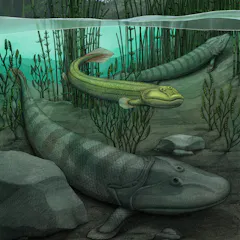
The newly discovered species – Qikiqtania – highlights evolution’s twisty, tangled path.
A biologist explains how researchers nail down the age of ancient fossils thanks to a physical process called radioactive decay.
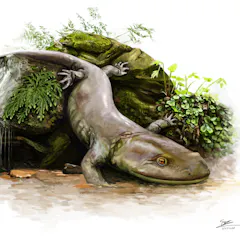
The discovery shakes up what scientists thought they knew about salamander evolution.
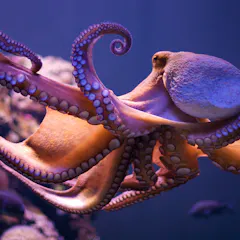
DNA analysis is beginning to reveal how wrong the long-accepted evolutionary tree is.

The Black Death evolved around Kyrgyzstan, according to new research.
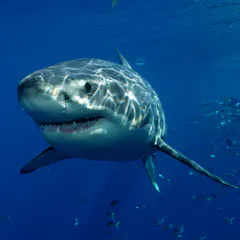
As the oceans warmed, great whites were more adaptable.
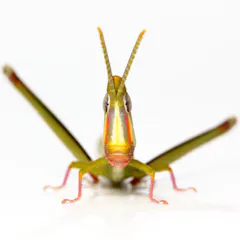
Few animals have babies without sex, so biologists assumed asexual reproduction must have evolutionary drawbacks. But a self-cloning Australian grasshopper shows things might be more complicated.

Evolution by natural selection is a potent agent of change, allowing species to adapt to new and changing environments. But is it sustainable?
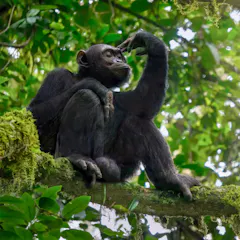
Human brains seem to be wired differently to those of chimps or macaques.
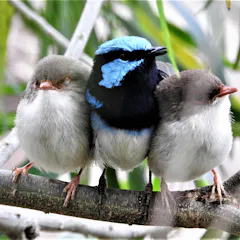
A long-term study of wild animal populations shows each generation is on average almost 20% genetically ‘better’ than their parents at surviving and reproducing.

A first-of-its-kind study investigated what’s going on in other people’s minds during your nail-biting moments.
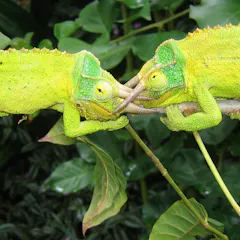
Researchers wanted to understand what happens when chameleons – animals that display dynamic colour change – find themselves in an environment without their natural predators.
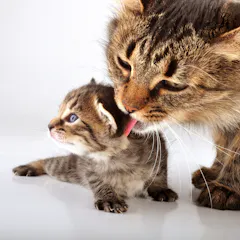
Live birth has evolved independently more than 150 times. The underlying biophysical processes all look quite similar, but new research shows they use completely different genetic tools.
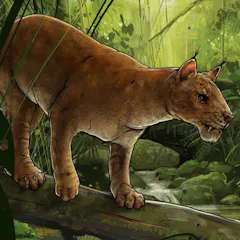
The first sabre-toothed cat-like predator was not much larger than a bobcat, but it had long teeth and a strong jaw to cut through thick skin.
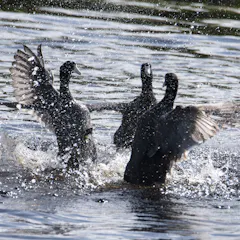
Birds will shriek and dive at each other over food, territory or mates, but only a small number of species sport actual weapons. The reason: Flying matters more for their survival than fighting.

Macaque tooth wear was identical to our ancestors, throwing into question the long held belief that tool use caused the markings on hominin tooth fossils.

New research sheds light on why predators don’t evolve to become so aggressive that they eat all their prey – and then go extinct themselves.
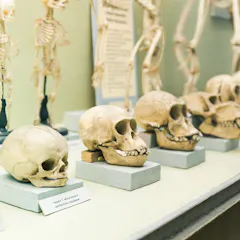
We’ll probably be less aggressive and more agreeable, but have smaller brains – a bit like a Golden Retriever, we’ll be friendly, but maybe not that interesting or bright.
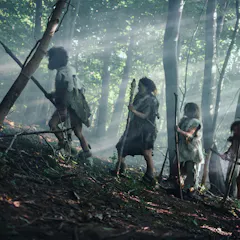
How we’re linking together genetic material from thousands of people - modern and ancient - to trace our ancestors and the history of our evolution.
Top contributors
-

Scientia Professor of Evolution, UNSW
-
Emeritus Strategic Professor in Palaeontology, Flinders University
-
Senior Research Scientist, South Australian Museum; Flinders University
-
Honorary Associate Professor, UNSW
-
Professor of Evolutionary Palaeobiology at the Milner Centre for Evolution, University of Bath
-
Senior Lecturer in Paleontology and Evolutionary Biology, Life Sciences at the University of Bath, University of Bath
-
Associate Professor, Department of Physiology, Monash University
-
Associate professor in Vertebrate Palaeontology, University of the Witwatersrand
-
Principal Lecturer in Wildlife Conservation, Nottingham Trent University
-
Research Associate in the College of Science and Engineering, Flinders University
-
Jenny Graves is a Friend of The Conversation.
Distinguished Professor of Genetics and Vice Chancellor's Fellow, La Trobe University
-
Adjunct Research Associate, Monash University
-
Mark Elgar is a Friend of The Conversation.
Emeritus Professor of Evolutionary and Behavioural Ecology, The University of Melbourne
-
Professor, School of Biological Sciences, Monash University
-
Professor of Earth System Science, UCL