
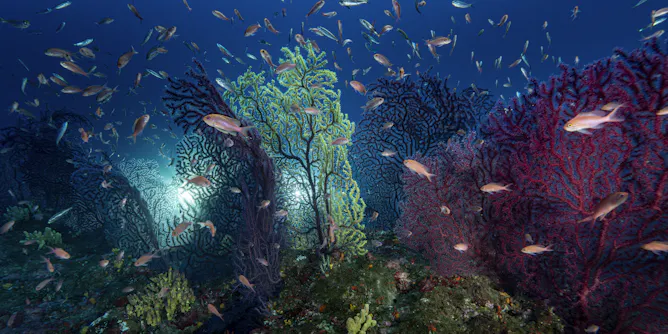
In the Mediterranean, heat waves are decimating underwater forests that are essential to ecosystems. The gorgonians seem to be better able to resist in the depths, but this refuge may only be temporary.
Articles on Corals
Displaying 21 - 40 of 107 articles
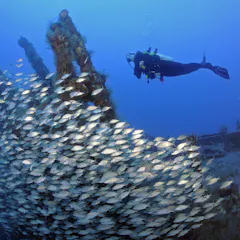
When ships sink, they add artificial structures to the seafloor that can quickly become diverse, ecologically important underwater communities.
In the vast St. Lawrence River, an impressive variety of animals live on the seabed. This group of organisms is called benthos or benthic invertebrates.
While the Great Barrier Reed needs nutrients to support the ecosystem, it is possible to have too much of a good thing.
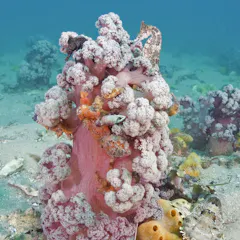
After a chance discovery in the lab, this team used IVF to make hundreds of coral babies for restoration projects in New South Wales. So far the IVF babies are doing well in the wild.
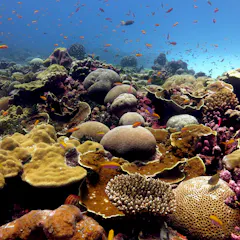
Exploring the often unseen, and poorly understood, nuances of diversity within coral reefs may prove essential for ensuring the long-term health of Earth’s oceans.
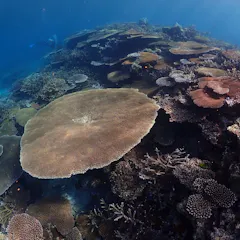
This may buy us time, but many reefs are still doomed without serious action on climate change.
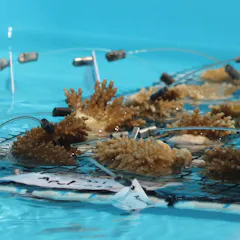
Ocean temperatures have hit record highs off the Florida Keys. Scientists and volunteer divers are racing to save these valuable creatures.
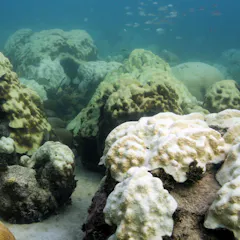
Water temperatures in the 90s off Florida in July are alarming, a NOAA coral scientist writes. Scientists in several North American countries have already spotted coral bleaching off their coasts.

Evidence in Earth’s natural archives, from tree rings to seafloor sediments, points to one trend. Some climate models suggest another.
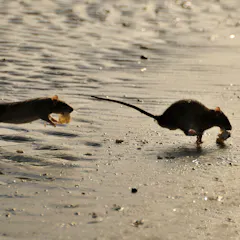
Rats are disrupting the flow of nutrients towards the sea on many tropical islands – this has consequences for fish behaviour and the wider ecosystem.
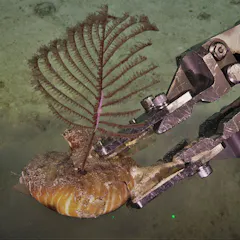
Black corals provide critical habitat for many creatures that live in the dark, often barren, deep sea, and researchers are learning more about these rare corals with every dive.
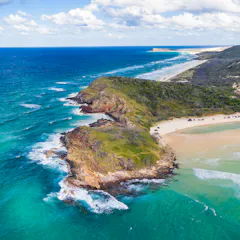
Establishing the age of K'gari (Fraser Island) confirms it emerged before the reef, despite the climate being suitable for coral growth long before then.
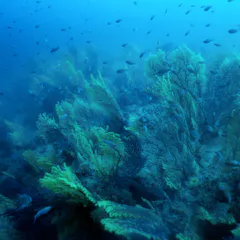
Forming tightly woven populations, these bush-like corals offer a refuge to a myriad of marine species.
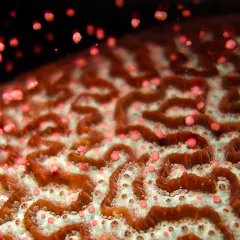
Corals in the Persian Gulf are tough - they can withstand temperatures that would kill corals elsewhere. And there’s good news: it’s easy to cross-breed their heat-tolerance genes into other corals.

Researchers found 16% of coral species have not been seen for many years. This finding is alarming, because local extinctions suggest global extinctions may be looming.
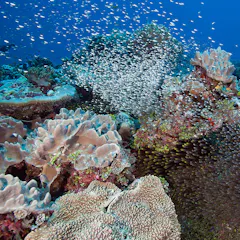
Scientists watched in real time as rising ocean heat transformed the sprawling reef. It was a harbinger for ecosystems everywhere as the planet warms.
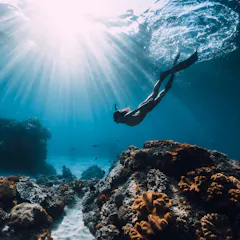
The Pacific Ocean produces oxygen, helps regulates the weather, provides food and livelihoods. It’s a place of fun, solace and spiritual connection. But its delicate ecology is under threat.

Sexual reproduction helps keep coral colonies diverse and resilient. Now, scientists are doing it in a lab to restock flagging reefs.
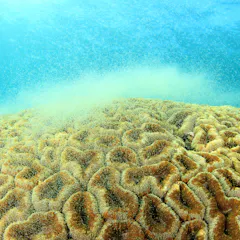
The largest reproductive event on the planet is under threat.
Top contributors
-

Associate Professor, Marine Ecology, School of Molecular and Life Sciences, Curtin University
-
Professor, School of the Environment, The University of Queensland
-
Distinguished Professor, James Cook University
-
Research Program Director, Australian Institute of Marine Science
-
Postdoctoral Research Associate in Climate Change Ecology and Evolution, Newcastle University
-
Senior Lecturer, School of Biological Sciences, The University of Queensland
-
Professor of Coastal Oceanography, The University of Western Australia
-
Postdoctoral Associate in Biological Sciences, Florida International University
-
Senior Research Fellow in Marine Biology, Southern Cross University
-
Professor & ARC Laureate Fellow, Thriving Oceans Research Hub, School of Geosciences, University of Sydney
-
Professor of Marine Biology, University of Sydney
-
Associate Professor of Biology, Penn State
-
Associate Professor, Coral Reef Laboratory, University of Southampton
-
CSIRO Research Group Leader Ecosystem Modelling and Risk Assessment, CSIRO
-
Research Fellow, ARC Centre of Excellence for Coral Reef Studies, James Cook University