
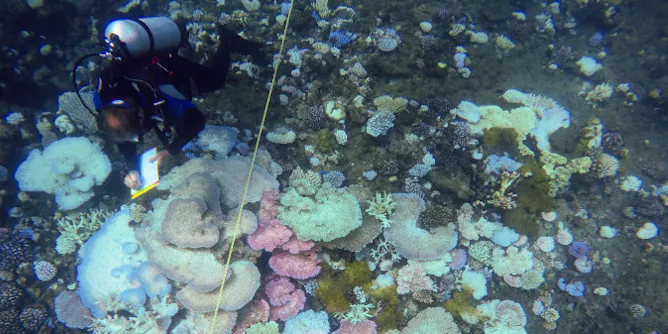
Bleaching has hit a huge swathe of the Great Barrier Reef, with many corals in the reef’s remote northern reaches now expected to die as a result of warm waters linked to this summer’s El Niño.
Articles on Corals
Displaying 61 - 80 of 107 articles
By artificially going ‘back in time’ to more alkaline ocean conditions, researchers have shown the damage that ocean acidification is already doing to the Great Barrier Reef.
Ocean acidification will hurt some parts of the Great Barrier Reef more than others.
Without action to curb the rising acidity of our seas, corals will start to develop deformed skeletons at a crucial young stage of their lives.

With the United Nations set to decide on whether to list the Great Barrier Reef as officially in danger, we look at the various threats to the reef’s survival, starting with the biggie… climate change.
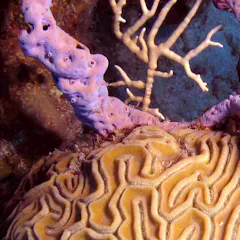
With their natural predators removed, sponges are free to take over coral reefs.
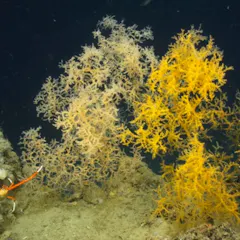
A flock of scientists turned their focus to understand the Deepwater Horizon’s impact, including one team that studied deep-sea corals.
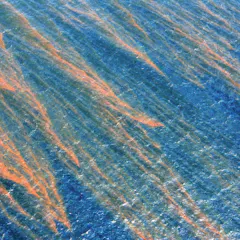
Five years after the Deepwater Horizon oil spill, scientists are researching how much oil dropped to sea floor, hitchhiking via ‘marine snow.’

Five years after the Deepwater Horizon oil spill, scientists find dispersants meant to clean up oil spill are toxic to deep-sea corals.
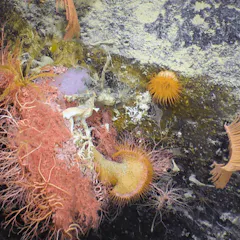
The Perth Canyon, off Australia’s west coast, is twice the size of the Grand Canyon. But only now, with the help of remote-controlled submarines, are researchers finding out what lives in its depths.
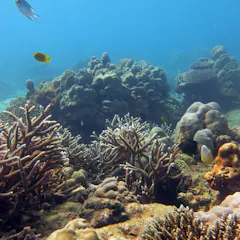
Coral reefs are the poster child for the damage people are doing to the world’s oceans. Overfishing, pollution and declining water quality have all taken their toll on reefs around the world. Perhaps the…

Welcome to tropical Sydney, where colourful surgeonfishes and parrotfishes are plentiful, corals have replaced kelp forests, and underwater life seems brighter, more colourful and all-round better. Or…
Humans and coral share the same biomechanical pathway responsible for activating cellular self-destruction. Destruction of…
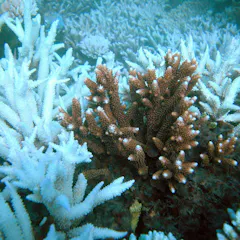
Australia’s coral reefs and mountain-top ecosystems are set to suffer from climate change, according to the Intergovernmental Panel on Climate Change’s latest summary of the research. The threats to these…
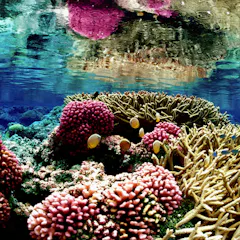
Greenhouse gas emissions have warmed the oceans in regions such as the Baltic by as much as 1.3°C. It is now thought that 90% of the heat added to the climate system by humans has been absorbed in the…
Shocks, such as tropical storms, could be used to restore damaged coral according to a new study conducted by Australian…
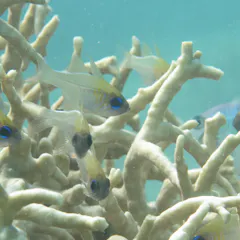
The fire coral (Millepora boschmai) is one of the rarest species of coral in the world. It is known only from a small number of locations in the Pacific Ocean, Panama and Indonesia, and it appears this…
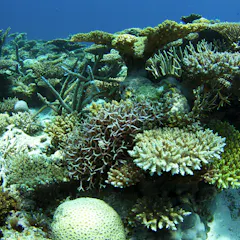
Earthquakes, volcanoes and movement of the Earth’s tectonic plates influence coral diversity patterns more than short-term environmental changes, a new study by Australian researchers has found. The study…
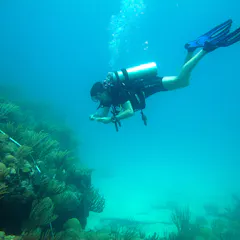
Tiny particles of air pollution can stunt the growth of coral reefs, according to a [new study in Nature Geoscience](http://dx.doi.org/10.1038/ngeo1780](http://dx.doi.org/10.1038/ngeo1780). Using coral…
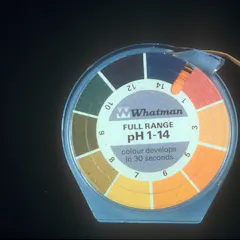
Ocean acidification - where the ocean becomes less alkaline as it absorbs excess CO2 from the atmosphere - has been described as the evil twin of global warming. Yet, remarkably, it is only over the past…
Top contributors
-

Associate Professor, Marine Ecology, School of Molecular and Life Sciences, Curtin University
-
Professor, School of the Environment, The University of Queensland
-
Distinguished Professor, James Cook University
-
Research Program Director, Australian Institute of Marine Science
-
Postdoctoral Research Associate in Climate Change Ecology and Evolution, Newcastle University
-
Senior Lecturer, School of Biological Sciences, The University of Queensland
-
Professor of Coastal Oceanography, The University of Western Australia
-
Postdoctoral Associate in Biological Sciences, Florida International University
-
Senior Research Fellow in Marine Biology, Southern Cross University
-
Professor & ARC Laureate Fellow, Thriving Oceans Research Hub, School of Geosciences, University of Sydney
-
Professor of Marine Biology, University of Sydney
-
Associate Professor of Biology, Penn State
-
Associate Professor, Coral Reef Laboratory, University of Southampton
-
CSIRO Research Group Leader Ecosystem Modelling and Risk Assessment, CSIRO
-
Research Fellow, ARC Centre of Excellence for Coral Reef Studies, James Cook University