

The backlash reveals a strain of snobbery that confuses manufactured fun with a lack of meaning and authenticity.
Articles on Consumption
Displaying 1 - 20 of 97 articles

Paul R. Ehrlich will be remembered as a scientist whose books about population and threats to the environment shaped the idea of limited growth in the modern era.

When times are tough, household brands and consumer rituals provide a source of comfort, reaffirming family identity and a sense of togetherness.

Consumers and companies need help engaging in reuse, repair and other circular practices, which have environmental and economic benefits.

Most Christmas trees are imported from other states, which drives up costs.

High rates of outright home ownership combined with tax-free super insulate older Australians from mortgage rate fluctuations.

There are environmental and personal reasons to consume less. Doing so may require an approach grounded in human behaviour, not a trend.

It is crucial to understand the fluidity of moral judgements about objects, rather than assuming objects have inherent or immutable moral value.

During times of economic uncertainty, some social media influencers become deinfluencers and encourage us to spend on less expensive versions of products.
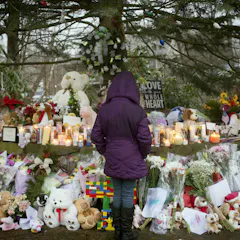
People spend less on groceries, restaurants and public activities for months after a fatal school shooting − costing communities millions.

Reports of TB date back to the time of Hippocrates, but the Kansas outbreak shows that the ancient disease is very much a modern-day scourge.
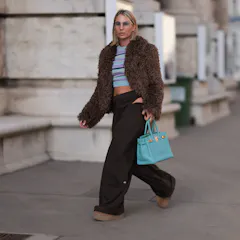
A handbag becoming a symbol of class strife aptly defines the mood of the online zeitgeist.

Renting clothes instead of buying them seems like a great idea for the environment. However, the reality is more complex, as not buying does not necessarily equate to responsible behaviour.

In an increasingly fierce war for attention, the temptation to shock in order to make an impression exists. But what are the results?

Many Australians are involved in Buy Nothing groups that allow locals to ask for and give away unwanted stuff for free. They bring circular economy principles to life, but depend heavily on women.

It’s never been easier to sign up for subscriptions – and they’ve never been harder to manage.
Personal action on climate still has a place – but it works far better with institutional backing

‘Underconsumption core’ is a trend that challenges overconsumption by encouraging people to maximize the utility of their purchases and buy only what they truly need.

Representing 2% of global GDP, the fashion industry must use its cultural reach to drive a shift towards a more sustainable and equitable industry.
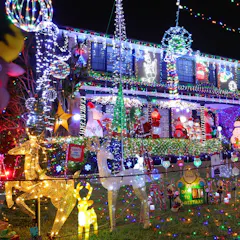
How much of anything do we need?
Top contributors
-

Professor, Management, University of Bath and Professor of Marketing, Concordia University
-
Academic Director, School for International Training, The University of Melbourne
-
Professor of Sustainable Development, Michigan State University
-
Associate Professor of Marketing, HEC Montréal
-
Founding Director, Institute for Sustainability, University of Surrey
-
PhD student in nutrition and health economics, Paris School of Economics – École d'économie de Paris
-
Deputy Director, Development Policy Research Unit, University of Cape Town
-
Professor of Economics, EM Normandie
-
Susman Professor in Sustainability and Professor of Marketing, Penn State
-
Senior Lecturer in English Literature, York St John University
-
Lecturer in Marketing, Newcastle University
-
Assistant Professor of Interior Architecture and Design, George Washington University
-
Economist - Paris School of Economics, Directeur de recherche, Inrae
-
Marlene and Morton Meyerson Centennial Professor of Business, Department of Marketing and Department of Business, Government and Society, The University of Texas at Austin
-
Postdoctoral Research Fellow, Swinburne Business School, Swinburne University of Technology