
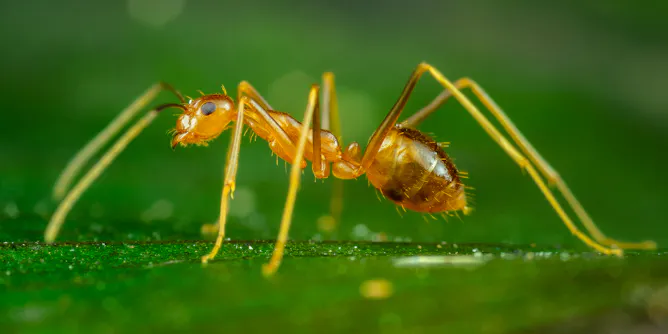
Biological invasions can severely harm the welfare of animals, causing them to suffer. AWICIS is a new framework that can be used to assess the severity of these impacts.
Articles on Conservation
Displaying 81 - 100 of 1585 articles
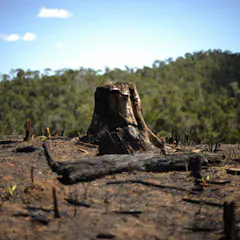
In the past 11 years, we’ve lost roughly 300 million hectares of forest. Three ecologists explain why our current conservation strategies aren’t working.
Data shows that almost all of B.C.’s endangered wildlife are not recovering quickly enough, if at all.
A new mapping tool allows local governments, conservation groups and landowners to understand how their land-use decisions affect wildlife and natural resources.

Over summer, several big jellyfish blooms were sighted in southern Australian waters. What might be behind these swarms?

Regenerative agriculture began as a grassroots movement led by farmers. It has been described in many different ways, but a common thread is a set of values.
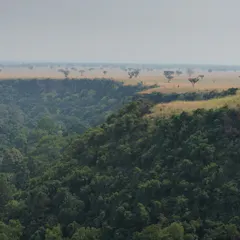
Carbon removal strategies may conflict with biodiversity conservation, but careful choices could bring benefits.
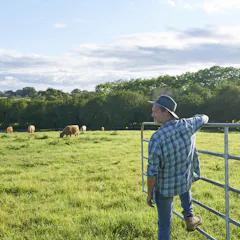
Nature and agriculture are often at odds. But an Australian study suggests farmers who plant more trees are better off – financially and environmentally.
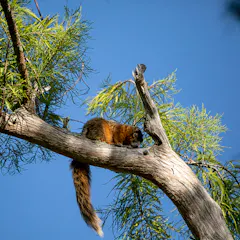
The Big Cypress fox squirrel is losing its habitat to urban and suburban development. But a few design changes could help to save this and other species.
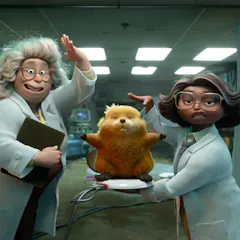
The new Disney/Pixar film Hoppers may seem like standard animated fare. But it reflects real scientific themes and philosophies.
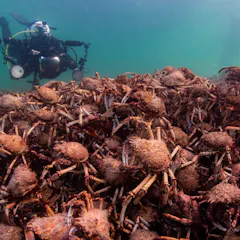
Citizen science relies on people like you. Here are five projects where science lives beyond the lab.
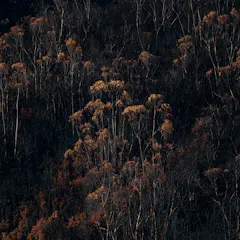
After almost 60 years, scientists have been able to prove an influential theory that wet eucalypt forest regrowth is more fire prone.

A global butterfly index could help track butterfly populations worldwide and how environmental changes are impacting them.
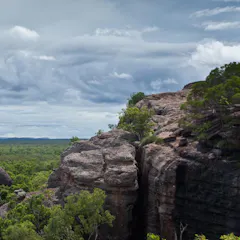
We’ve committed to protect 30% of our lands and waters by 2030. But our endangered species are still struggling, according to four environmental scientists.
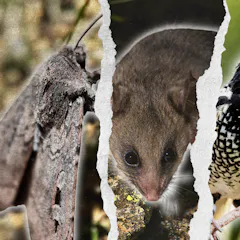
The federal government needs to drop the spin and get on with the hard work of addressing biodiversity loss.
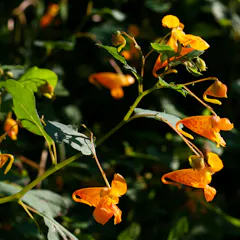
Genetic signatures help uncover the echoes of the past events in the histories of jewelweed populations, and understand their genetic implications for conservation.
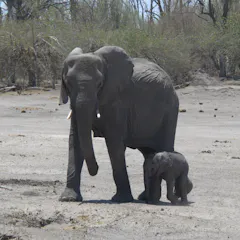
Animals on land and sea use sound for different purposes – and alterations in their environment can change the effect it has

Debates over responsibility for past species loss generate heat but little light. Moving forward requires context, evidence and Indigenous knowledge.
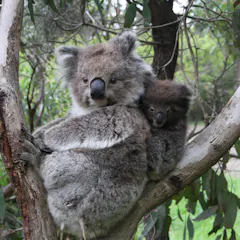
Population crashes are dangerous and can be irreversible. But new research shows they are not always an evolutionary dead end.

Australia’s huge diversity of reptiles could be at risk from new fungal diseases.
Top contributors
-

Professor in Wildlife Ecology and Conservation, School of Life & Environmental Sciences, Deakin University
-
Professor in Conservation Science, School of the Environment, The University of Queensland
-
Distinguished Professor of Ecology, Fenner School of Environment and Society, Australian National University
-
Professor, Conservation Biology, The University of Queensland
-
Professor of Environmental Management, The University of Queensland
-
Professor of Conservation Biology, Charles Darwin University
-
Professor of Conservation and Sustainable Livelihoods, Charles Darwin University
-
Distinguished Research Professor and Australian Laureate, James Cook University
-
Lecturer in the School of Applied Sciences, Edinburgh Napier University
-
Professor in Conservation Science, School of Ecosystem and Forest Science, The University of Melbourne
-
University Fellow in Biodiversity, Charles Darwin University
-
Professor in Ecology, Charles Sturt University
-
Professor in Terrestrial Ecology, Deakin University
-
Professor of Wildlife Conservation, Australian National University
-
Professor, Urban Ecology and Biodiversity, The University of Melbourne; RMIT University