

Parents provide the energy needed for their young to grow large brains. Climate change may negatively affect birds’ brain development as it impacts food supplies.
Articles on Brain
Displaying 221 - 240 of 731 articles

A new film changes its story based on the emotions expressed by the viewer.

Music, memories and emotions are all linked and certain songs can act as a direct line to our past.

We live in a world where we frequently do not get enough sleep, but we need sleep if our brains are going to stay healthy and function efficiently.
By learning what parts of the brain are crucial for imagination to work, neuroscientists can look back over hundreds of millions of years of evolution to figure out when it first emerged.

Studies show that contact with nature reduces the activity of the amygdala, a region of the brain linked to intense emotions, stress and anxiety.

Spontaneous trips down memory lane: why and how the mind wanders.

In birds, big brains aren’t associated with living in large social groups – instead, they’re linked to long stints of parental feeding.

Using a new equation based on today’s primates, scientists can take a few molar teeth from an extinct fossil species and reconstruct exactly how fast their offspring grew during gestation.

A new neuropsychology study on California wildfire survivors found chronic cognitive problems in addition to anxiety and PTSD.
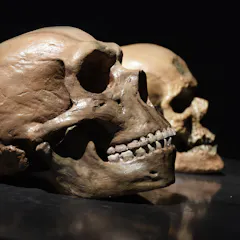
The way human brains develop is special – but not quite as special as you’d like to think, if we consider Neanderthals as well.
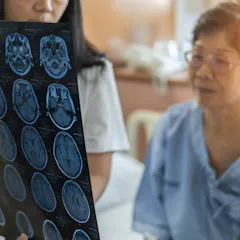
An 18-month treatment with lecanemab slows functional and cognitive loss by 27 per cent in people with mild Alzheimer’s disease. But this is only the first step towards a real cure.
Impaired insulin receptors in the blood vessels between the blood and the brain may contribute to the insulin resistance observed in Alzheimer’s disease.
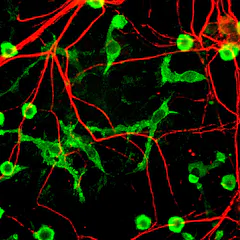
Microglia, immune cells disguised as brain cells, are known as the janitors of the brain. Dialing up their usual duties just enough could provide an avenue to treat neurodegenerative disease.

From warfare to entertainment and VR, brain-computer interface development has extended beyond prosthetics for patients with disabilities. Missing is full ethical consideration of the consequences.
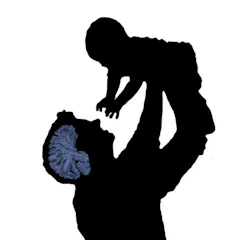
Neuroscientists know that pregnant mothers’ brains change in ways that appear to help with caring for a baby. Now researchers have identified changes in new fathers’ brains, too.

When we listen to music, our brain predicts what will happen next. This prediction then influences whether or not we enjoy a song.

People who had COVID were 55% more likely to develop epilepsy or seizures over the next six months than people who had influenza – but the overall risk is still small.

We found being a night owl increased the risk of having behavioural problems and delayed brain development in later adolescence.

During adolescence the brain experiences two opposing tendencies: its capacity for control is not fully developed but the reward system is very active.
Top contributors
-

Professor of Clinical Neuropsychology, University of Cambridge
-
Postdoctoral Research Associate, Cognitive Neuroscience, University of Cambridge
-
Senior Research Fellow, The Perron Institute for Neurological and Translational Science, and Faculty of Health Sciences, Curtin University
-
Professor of Science and Technology for Brain-Inspired Intelligence/ Computer Science, Fudan University
-
Professor of Music Psychology, Durham University
-
Postdoctoral Researcher in Cognitive Neurosciences, The University of Queensland
-
Lead, Cognition and Consciousness Imaging Group, Division of Anaesthesia, University of Cambridge
-
Penn State
-
Senior Lecturer (Adjunct), Nutritional neuroscientist, Adelaide University
-
Professor of Anatomy, Lancaster University
-
Professor of Chemistry and Senior Scientist of the Krembil Research Institute, University Health Network, University of Toronto
-
Researcher, The University of Melbourne
-
Postdoctoral Researcher in Neuroscience, University of Sussex
-
Professor of Behavioral Neuroscience, University of Richmond
-
Professeur agrégé de neurosciences computationnelles et neurophysiologie, L’Université d’Ottawa/University of Ottawa