
The mind is a powerful thing – it can generate both symptoms of illness and symptoms of healing. Here’s what this could tell us about consciousness.
Articles on Brain
Displaying 301 - 320 of 731 articles
Mouse brains produce random, strong bursts of dopamine and are able to control them. This may challenge many long-held ideas about learning and motivation.
An extract of a plant’s fruit in Nigeria could protect against seizure and prevent brain degeneration. It could therefore be studied further for the development of a new antiepileptic drug.

Our study is the first to show that the cortex regulates sleep.
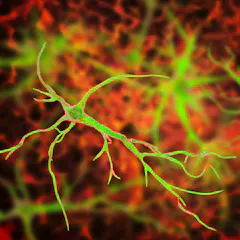
From the archive: new research helps unpick clues about the brain’s ability to change its structure. Listen to The Conversation Weekly podcast.

Lack of human touch can lead to greater stress, anxiety and loneliness – and that is what made the social distancing during the pandemic so hard for many.
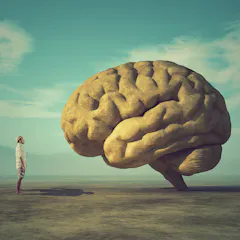
Drugs which act through the brain chemical dopamine may one day help restore consciousness in people who have lost it.

Mounting research shows that going for a swim can preserve memories, reduce mood disorders and increase mental acuity in all age groups.

A researcher who studies physical skills explains how getting your conscious thoughts out of the way lets your body do what it knows how to do, better.

When you lose focus or your mind goes blank, sections of your brain may be having a quick snooze.

In both ancient Greece and the Roman Empire, reflected images were thought to hold mysterious powers. Damaging a mirror was believed to invite the wrath of the gods.
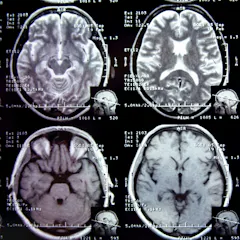
Even well-intended studies can cause harm through the nocebo effect.

Ready to party post-pandemic, but at the same time feeling shy? Here’s how social isolation affects the brain – and what research suggests about the effects of resocialization.

Experiment that creates altered states of consciousness sheds light on an old problem.

People with aphantasia, when asked to form an image in their minds, will report they cannot “see” anything.

Non-specific illnesses, such as headache and fatigue, are common, as are mental illnesses such as depression and anxiety.
Consciousness is sometimes referred to as ‘the ghost’ in the machinery of our brain. Is it time we gave up the ghost to focus on the machine?

Fetal brains are changing rapidly over the course of pregnancy, but so are the brains of mothers-to-be. Neuroscience research shows one way worry can start taking hold – and a simple way to help.

To tell you the truth, nobody really knows. But it’s probably got to do with the fact that signals from your nose and your eyes arrive in the same area of your brain.
We studied people’s brains while they held tools correctly and incorrectly.
Top contributors
-

Professor of Clinical Neuropsychology, University of Cambridge
-
Postdoctoral Research Associate, Cognitive Neuroscience, University of Cambridge
-
Senior Research Fellow, The Perron Institute for Neurological and Translational Science, and Faculty of Health Sciences, Curtin University
-
Professor of Science and Technology for Brain-Inspired Intelligence/ Computer Science, Fudan University
-
Professor of Music Psychology, Durham University
-
Postdoctoral Researcher in Cognitive Neurosciences, The University of Queensland
-
Lead, Cognition and Consciousness Imaging Group, Division of Anaesthesia, University of Cambridge
-
Penn State
-
Senior Lecturer (Adjunct), Nutritional neuroscientist, Adelaide University
-
Professor of Anatomy, Lancaster University
-
Professor of Chemistry and Senior Scientist of the Krembil Research Institute, University Health Network, University of Toronto
-
Researcher, The University of Melbourne
-
Postdoctoral Researcher in Neuroscience, University of Sussex
-
Professor of Behavioral Neuroscience, University of Richmond
-
Professeur agrégé de neurosciences computationnelles et neurophysiologie, L’Université d’Ottawa/University of Ottawa