

Music therapy offers a flexible and accessible way of supporting wellbeing and addressing traumatic experiences.
Articles on Brain
Displaying 201 - 220 of 731 articles
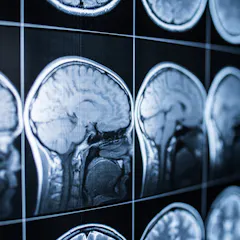
Mind uploading could allow human consciousness to live on long after their body dies.

TENS machines for period pain are all over social media. But what are they? And do they work?

It is becoming increasingly clear that ADHD comes with self-control problems, suggesting therapy should be offered alongside drugs.
New research may upend our understanding of the brain, showing that travelling waves of neuronal excitation dominate the activity associated with our thoughts and feelings.
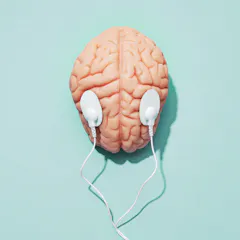
Transcranial alternating current stimulation, or tACS, is a type of brain stimulation that can change neural activity and improve memory, attention and executive function.

Brain injury survivors report the sport can give constant opportunities for learning and a way to reevaulate emotions.
Pain has long been subjectively measured, leading to frustrations for patients and doctors alike. Identifying neural biomarkers of pain could improve diagnosis and lead to better treatments of chronic pain conditions.

Brain scans have been used to interpret thoughts, but how far can this technology go?

One genetic study of over a quarter million people highlights the cognitive benefits of exercise, while another, based on 30 years of scientific literature, says the opposite. Who’s right and who’s wrong?

Adolescent brains are especially vulnerable to risk-taking and social pressure. But there are steps parents can take to steer their teen away from dangerous social media stunts.
Of the risks posed by AI, overtaking human intelligence isn’t an immediate concern.

People with aphantasia are unable to deliberately bring to mind mental images. Understanding the mechanisms of aphantasia reveals that different types of cognition exist.
Pinpointing where memories are stored in the brain and how they are transmitted could provide new targets to treat neurological diseases and serve as models for neuromorphic computing.
Learning new rules requires the suppression of old ones. A better understanding of the brain circuits involved in behavioral adaptation could lead to new ways to treat schizophrenia and bipolar disorder.

We often feel drained of energy after a long day of work or study. Here’s how we measure what’s going on in our brain.

Collections of self-organising nanowires behave a lot like the neurons and synapses in our brains, with startling results.

Neuroscientists have typically thought of energy supply to the brain as demand-based. A supply-limited view offers another perspective toward aging and why multitasking can be difficult.

But it could still save you from dementia.

Organ models that more accurately capture finer details could reduce surgical error and lead to personalized implants.
Top contributors
-

Professor of Clinical Neuropsychology, University of Cambridge
-
Postdoctoral Research Associate, Cognitive Neuroscience, University of Cambridge
-
Senior Research Fellow, The Perron Institute for Neurological and Translational Science, and Faculty of Health Sciences, Curtin University
-
Professor of Science and Technology for Brain-Inspired Intelligence/ Computer Science, Fudan University
-
Professor of Music Psychology, Durham University
-
Postdoctoral Researcher in Cognitive Neurosciences, The University of Queensland
-
Lead, Cognition and Consciousness Imaging Group, Division of Anaesthesia, University of Cambridge
-
Penn State
-
Senior Lecturer (Adjunct), Nutritional neuroscientist, Adelaide University
-
Professor of Anatomy, Lancaster University
-
Professor of Chemistry and Senior Scientist of the Krembil Research Institute, University Health Network, University of Toronto
-
Researcher, The University of Melbourne
-
Postdoctoral Researcher in Neuroscience, University of Sussex
-
Professor of Behavioral Neuroscience, University of Richmond
-
Professeur agrégé de neurosciences computationnelles et neurophysiologie, L’Université d’Ottawa/University of Ottawa