
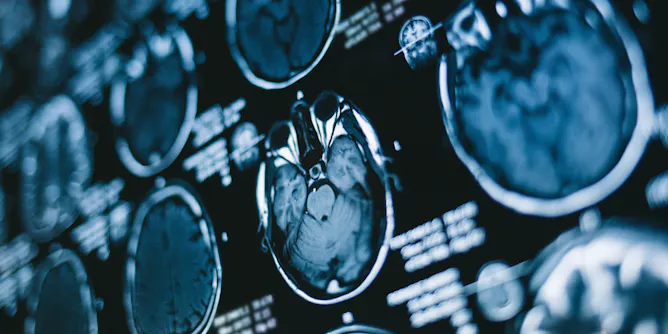
A new tool for seeing hotspots in the brain could help doctors detect neurological disorders.
Articles on Brain
Displaying 381 - 400 of 731 articles
The knowledge produced in designing and developing artificial neural networks may provide new insights into how our brains work.
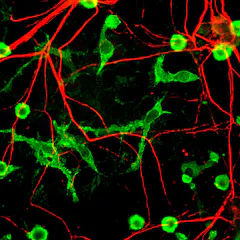
A new study raises hopes of better treatment for amnesia, Alzheimer’s and other conditions affecting memory.

We have a strong tendency to overreact emotionally and underreact behaviourally to news of infectious diseases.
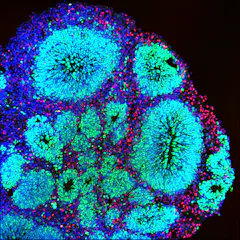
Brain organoids are tiny models that neuroscientists use to learn more about how the brain grows and works. But new research finds important differences between the model and the real thing.

When you read in the back seat of the car, your eyes tell your brain you’re still. But your ears can sense you’re moving. Your eyes and ears are having an argument that your brain is trying to settle.

The scientific understanding of our internal experiences is changing and it now seems likely that ‘Christmas cheer’ may be an emotion in itself.
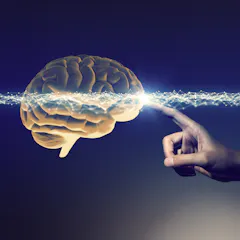
From dementia to depression to drug addiction, artificial brain stimulation has been hailed as a landmark medical technology for the future. But safeguards are needed if we want the benefits without the risks.

Cognitive neuroscience finds that regular consumption of pornography affects the centres of the brain responsible for will power, impulse control and morality.
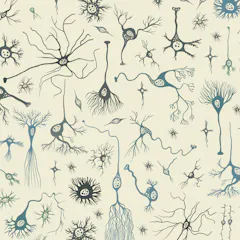
We have more neurons in our cortices than any other species, courtesy of an early technology – and along with them came our long, slow lives, with plenty of chances to gather around the dinner table.

Tryptophan, found in food, is an important ingredient in the neurotransmitter serotonin. But is that enough to support it as a possible mood booster? The research is decidedly mixed.

Sugar triggers dopamine “hits” in the brain, making us crave more of it. Sugar also disrupts memory formation.

Children between 12 and 16 years old with mild-to-moderate hearing loss showed differences in their brain responses.
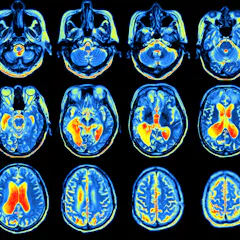
One day we will have a science of consciousness, but it won’t be science as we know it today
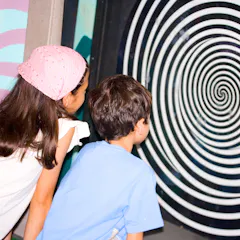
Sometimes our brain gets confused and misunderstands what the eyes tell it.
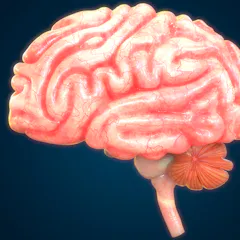
A scientist explains how the brain works, for younger readers.
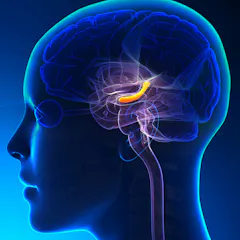
Researchers have discovered that the hippocampus and neocortex work together.
We are in a battle for our minds. And it isn’t clear we will win.
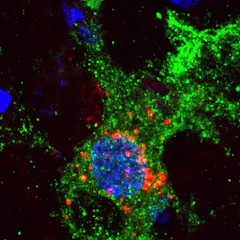
These tiny nanoparticles might provide a new way to see what’s happening in the brain and even deliver treatments to specific cells – if researchers figure out how to use them safely and effectively.

Your brain balances messages coming from lots of different places to help you see, imagine, remember and dream.
Top contributors
-

Professor of Clinical Neuropsychology, University of Cambridge
-
Postdoctoral Research Associate, Cognitive Neuroscience, University of Cambridge
-
Professor of Science and Technology for Brain-Inspired Intelligence/ Computer Science, Fudan University
-
Senior Research Fellow, The Perron Institute for Neurological and Translational Science, and Faculty of Health Sciences, Curtin University
-
Professor of Music Psychology, Durham University
-
Postdoctoral Researcher in Cognitive Neurosciences, The University of Queensland
-
Penn State
-
Professor of Anatomy, Lancaster University
-
Senior Lecturer (Adjunct), Nutritional neuroscientist, Adelaide University
-
Lead, Cognition and Consciousness Imaging Group, Division of Anaesthesia, University of Cambridge
-
Professor of Chemistry and Senior Scientist of the Krembil Research Institute, University Health Network, University of Toronto
-
Researcher, The University of Melbourne
-
Postdoctoral Researcher in Neuroscience, University of Sussex
-
Professor of Behavioral Neuroscience, University of Richmond
-
Professeur agrégé de neurosciences computationnelles et neurophysiologie, L’Université d’Ottawa/University of Ottawa