
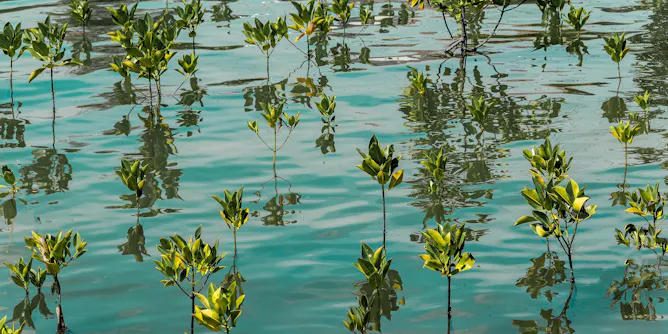
Blue carbon involves more than just counting carbon. It requires governance, finance, policy, and practice. Ultimately, success hinges on people and their skills.
Articles on Blue carbon
Displaying 1 - 20 of 45 articles
Nature-based solutions like mangrove restoration are key to climate action, but weak monitoring can overstate carbon storage, creating ‘ghost carbon’.
When sediment is stirred up, the effects ripple through the ecosystem.
Millions of jobs could be created from sustainable economic ocean development.
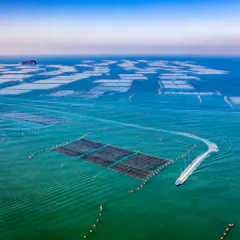
Farming seaweed, changing ocean chemistry, breeding corals and restoring mangroves could help fight climate change – if assessed and managed responsibly.
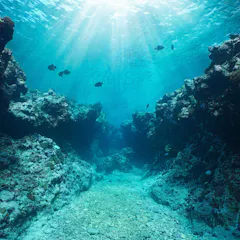
Computer modelling past ocean conditions can help predict the location and age of carbon-rich mud.
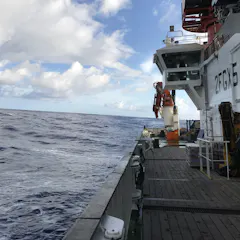
A thin layer at the ocean surface called the “ocean skin” increases CO₂ uptake by about 7%. That’s equivalent to the CO₂ absorbed by the entire Amazon rainforest each year.

Anna Turns sets sail from Plymouth Sound to explore the significance of blue carbon in marine habitats around the UK.
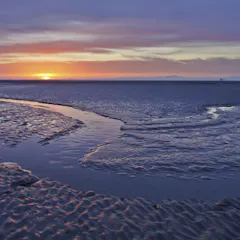
A new map collating important data could be used to introduce more robust protections for blue carbon in UK waters.

There is a diversity of life within our seabeds, capable of moving mountains of mud and slowing the effects of climate change.
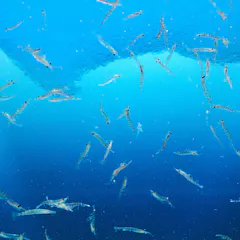
For the first time, we used a computer model of ocean currents to show that krill waste products don’t need to reach great depths to achieve carbon storage for at least 100 years.
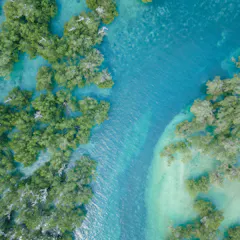
Indonesia could show global leadership by protecting more of the country’s rapidly disappearing, carbon-rich mangroves and seagrass meadows.
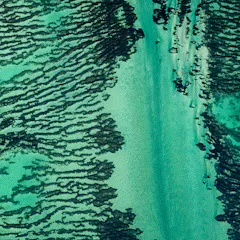
Blue carbon is stored in mangroves, seagrass and sediments. Discussions at the UN Ocean Decade conference reiterate the importance of preserving existing sea floor habitats, before it’s too late.
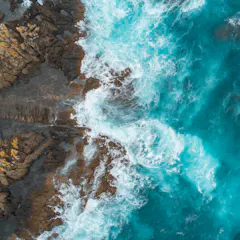
New Zealand’s new government has vowed to explore ‘blue carbon’ options for removing atmospheric CO₂ to meet net zero goals. But first we need a national strategy for this developing field of science.
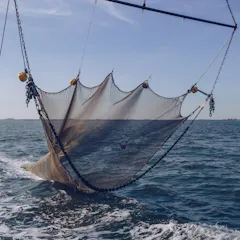
Most of the carbon disturbed by trawls is unreactive and difficult to convert to CO₂.
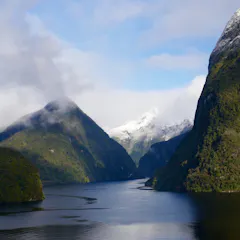
Marine sediments are the world’s largest store of carbon, and fiords in particular are a massive sink. But New Zealand doesn’t even have an oceans policy to develop blue carbon climate policy.
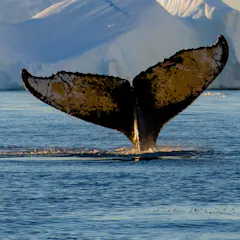
We want good news on climate change. But whales storing enough carbon needs more evidence.
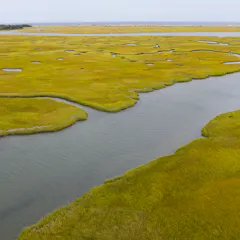
Mangroves and salt marshes pump out methane – but soak up carbon dioxide. Overall, the world’s coasts are a net greenhouse sink – and we must preserve them

By adapting and applying existing policies, South Africa can protect and restore its critical ‘blue carbon’ sinks.
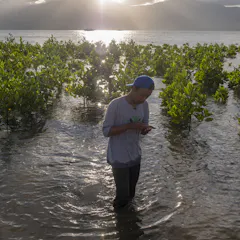
As the world’s largest archipelagic state, Indonesia has great potential to earn carbon credits to protect its endangered mangroves and seagrass – which now store around 17% of global “blue carbon”.
Top contributors
-

Professor, School of Natural Sciences, Macquarie University
-
Research Associate, Institute of Coastal and Marine Research, Nelson Mandela University
-
Professor in the School of Geography and Sustainable Development, University of St Andrews
-
Senior Research Fellow in Marine Ecology, University of Otago
-
Professor of Marine Botany, The University of Western Australia
-
Lecturer in Blue Carbon, Edinburgh Napier University
-
Assistant Professor, School of Energy, Geoscience, Infrastructure and Society // CEO MarFishEco Fisheries Consultant Ltd, Heriot-Watt University
-
Research Fellow in Marine Science and Manager Whales & Climate Program, Griffith University
-
Senior Lecturer in Aquatic Biology, King's College London
-
Professor of Forestry, Universitas Gadjah Mada
-
PhD student, School of Biological Sciences, The University of Western Australia
-
PhD student, University of Manchester
-
Strategic Advisor in International Policy and Oceans, Monash University
-
Associate Professor and Senior Global Futures Scientist, Arizona State University
-
Distinguished Professor of Marine Science, King Abdullah University of Science and Technology