

To survive dry spells, trees stop the water-rich process of photosynthesis. When nature’s natural carbon capture machine grinds to a halt entire forests end up producing more CO₂ than they absorb.
Articles on Carbon sinks
Displaying 1 - 20 of 87 articles
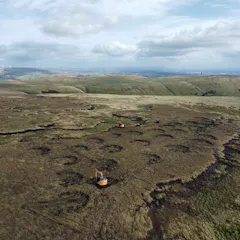
A new project is transforming badly affected peatlands from dark moonscapes to vibrant green moss-scapes.
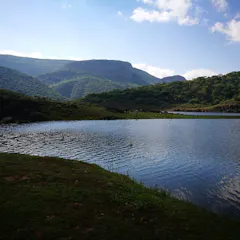
Sacred natural sites could contribute to conservation targets.
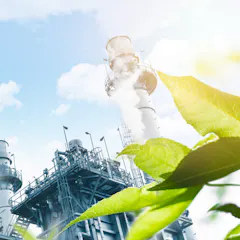
Atmospheric CO₂ concentrations are surging, even as emissions level out. Natural carbon sinks are showing signs of faltering as we continue to emit CO₂.
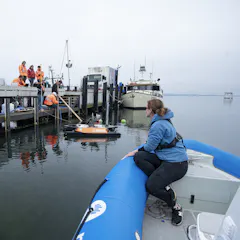
Efforts to reduce emissions and decarbonise industry must be combined with new technology that removes carbon dioxide from the atmosphere. Australia can build an industry around this service.
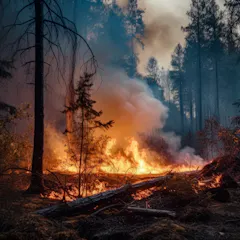
Removing enough carbon to offset emissions would require vast tracts of inhabited land.

Carbon lost during the 2018 fire season in Sweden could take 40 years to return to trees and soil.
Knowing which parts of Africa best help to store carbon means funding and policy efforts can be directed to protecting and increasing this carbon ‘land sink’.
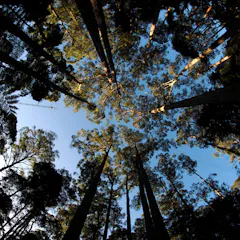
Our tallest trees are world champions when it comes to capturing and storing carbon, but they don’t like the heat. Climate change will trigger mass tree deaths in Tasmania. Here’s what can be done.
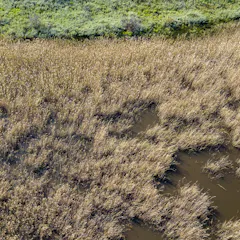
Wetlands can prevent flooding, trap carbon and support livelihoods, as long as they are protected and managed.
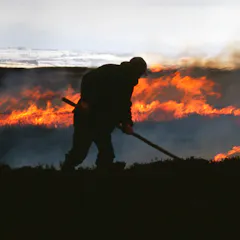
Nearly a third of all moorland burning in Scotland occurs on peat soil – a vital carbon sink.

Depending on the methods used, the measurement of forest carbon can vary by as much as 100%.
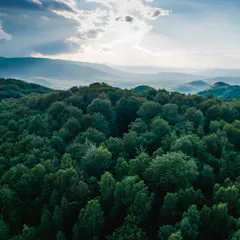
Climate modelling that best accounts for the processes that sustain plant life predicts plants could absorb up to 20% more CO₂ than the simplest version predicted.

Tracking both the amount of carbon and the time that it remains stored is key to unlocking the potential of nature-based carbon storage as a climate mitigation strategy.

New research shows that northern peatlands may not help regulate our climate by the end of the century.
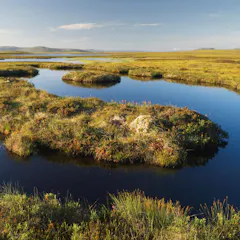
Peatlands have always had a place in art, writing and poetry. In times of global warming these cultural reflections can help open up debate about the biodiversity and climate crisis.

National strategies depend on natural methods to offset emissions – but acknowledge this may not be possible.
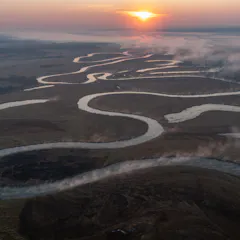
The Angolan Highlands are hydrologically and ecologically important - and the region’s newly mapped peatlands are valuable “carbon sinks”.

By adapting and applying existing policies, South Africa can protect and restore its critical ‘blue carbon’ sinks.

Peat is partially decomposed plant matter that has accumulated over thousands of years.
Top contributors
-

Chief Research Scientist, CSIRO Environment; Executive Director, Global Carbon Project, CSIRO
-
Royal Society Research Professor of Climate Change Science, University of East Anglia
-
Professor of Global Change Science at University of Leeds, UCL
-
Géochronologue et paléoclimatologue, chargé de recherches CNRS - Centre de recherches pétrographiques et géochimiques (Nancy) et Laboratoire de glaciologie (Bruxelles), Université de Lorraine
-
Senior Researcher, Center for International Climate and Environment Research - Oslo
-
Research Associate, Institute of Coastal and Marine Research, Nelson Mandela University
-
Research scientist, NASA
-
Snr research fellow in environmental sciences, James Cook University
-
University of Technology Sydney
-
Senior Researcher, Center for International Climate and Environment Research - Oslo
-
Géochimiste, chargé de recherche CNRS au Centre de recherches pétrographiques et géochimiques de Nancy, Université de Lorraine
-
Professor, Department of Earth System Science, and Chair of the Global Carbon Project, Stanford University
-
Postdoctoral Researcher, Tropical Peatlands, University of Leeds
-
Professor of Biology, University of Southern Denmark
-
Postdoctoral research associate, Charles Darwin University