
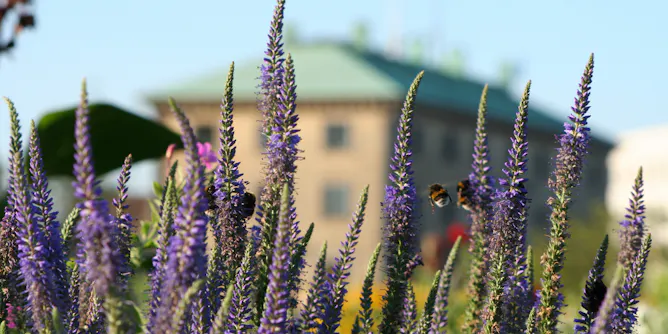
A biologist explains what to focus on if you’re designing a garden with pollinators in mind − and what you don’t need to worry about.
Articles on Biology
Displaying 81 - 100 of 495 articles
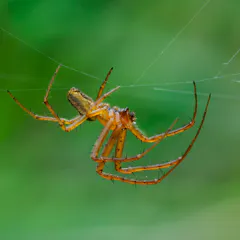
As spiders do not have antennae as insects, it’s long been a mystery how they can smell.

Amidst habitat destruction and ecological grief, let’s make a New Year’s resolution for nature — to care for beetles and butterflies, rainforests and reefs, ourselves, and future generations.
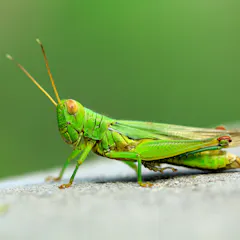
Countless engineering solutions are hiding in plain sight. We just have to look more closely at the natural world.
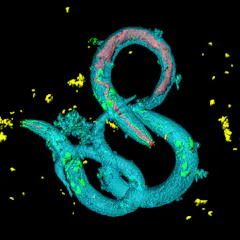
Going into a dormant phase may help animals coexist with competitors, experiments with nematode worms suggest.
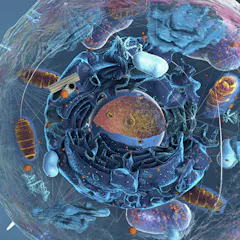
Membraneless organelles, also called biomolecular condensates, are changing how scientists think about protein chemistry, various diseases and even the origin of life.
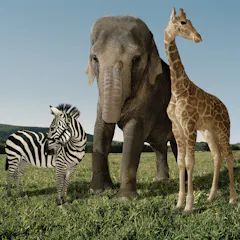
Understanding the differences in growth rate between animals can help clarify the mechanisms behind aging-related diseases and offer ways to treat them.
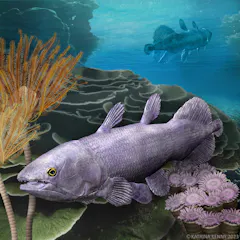
Researchers have discovered a new extinct species of coelacanth that lived 380 million years ago.

New techniques monitor the health of lakes in real time by analyzing their microbiome to anticipate and respond to environmental threats such as cyanobacteria.
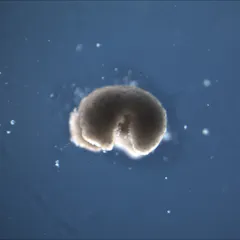
Given the right conditions, certain types of cells are able to self-assemble into new lifeforms after the organism they were once part of has died.
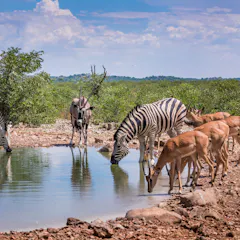
New theory forces us to rethink some deeply ingrained concepts, such as life, death and disease.

New research demonstrates that the dye that gives nacho cheese its yellow-orange color can also make mouse skin see-through.
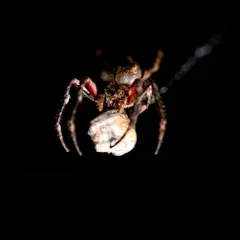
Bright lights at night may alter the brains of nocturnal arachnids, our new study shows. And we’re only just learning what this means for our ecosystems.
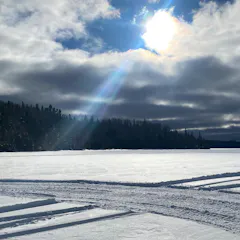
Canadians are no strangers to cold winters, when everything in nature appears to be frozen solid. However, under the ice cover of lakes, many animals remain active during the winter.
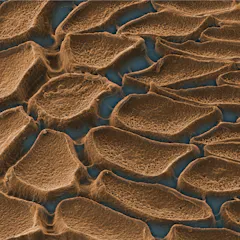
Researchers can use powerful microscopes to capture the tiny teeth in squid suckers.
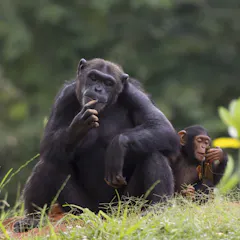
New research reveals that the human heart has evolved distinct structural and functional traits that set it apart from our closest great ape relatives.
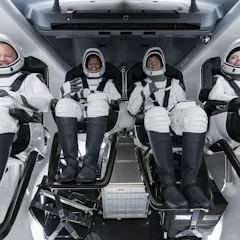
A set of papers published in Nature contain groundbreaking research into how even quick jaunts to space can affect an astronaut’s health.
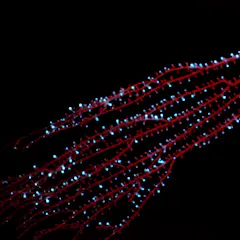
Dozens of animals, some on land but many in the ocean, can produce light within their bodies through chemical reactions. Scientists are still trying to understand when and why this trait developed.

Giraffe necks are a hot topic among biologists. A new study contradicts an older theory that says male giraffes need long necks to fight over mates.

Science has a need to verify results, but DeepMind’s protein prediction tool doesn’t work this way.
Top contributors
-

Doctoral Student in Biochemistry, University of Washington
-
ARC Future Fellow, Behavioural Ecology, Macquarie University
-
Emeritus Strategic Professor in Palaeontology, Flinders University
-
Investigador Científico, Estación Biológica de Doñana (EBD-CSIC); The University of Western Australia
-
Senior lecturer, School of Biological Sciences, University of Bristol, University of Bristol
-
Postdoctoral Fellow, EPFL – École Polytechnique Fédérale de Lausanne – Swiss Federal Institute of Technology in Lausanne
-
Biologist
-
Professor of Entomology, North Carolina State University
-
Principal Lecturer in Wildlife Conservation, Nottingham Trent University
-
Fellow, Keele University
-
Lecturer, Macquarie University
-
Senior Lecturer in Molecular Biology, University of Sydney
-
Professor of Biological Sciences, University of Maryland, Baltimore County
-
Chercheur à l’Institut de systématique, évolution, biodiversité (ISYEB), Muséum national d’histoire naturelle (MNHN)
-
Mark Elgar is a Friend of The Conversation.
Emeritus Professor of Evolutionary and Behavioural Ecology, The University of Melbourne