
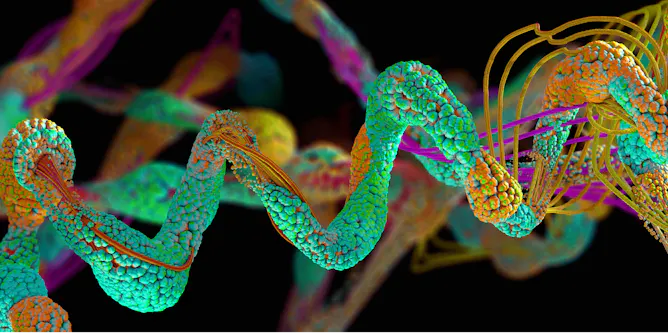
Tracing isotopes of carbon inside amino acid molecules has revealed the ‘metabolic fingerprints’ of how different animals store and use energy.
Articles on Biology
Displaying 141 - 160 of 496 articles
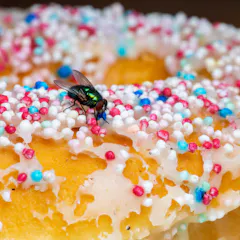
Flies often beat out competitors for food because of their specialized sensing organs called antennae.

‘Don’t Say Gay’ bills claim to use science to justify a binary definition of sex based on certain traits. But the biology of sex and gender is not so simple.
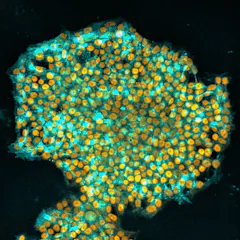
Stem cells could help regenerate diseased or damaged parts of the body – but first, scientists need to make the cells forget their own histories.
Humans have been making symbols for numbers for thousands of years. Different cultures developed their own symbols, but all use addition and multiplication, suggesting arithmetic is a universal truth.

A chemist explains how the structure of your hair follicles, your genetic code and environmental factors like humidity influence how hair behaves on a day-to-day basis.
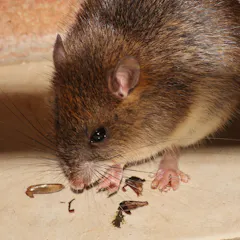
What happens when wild native bush rats meet cockroaches they’ve never seen before?

Gender disparities in sport extend to injuries too. Female soccer players are at greater risk for ACL tears than males and it is clear immediate action is needed to address the non-biological factors for the injury.
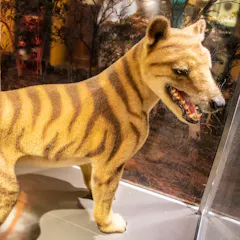
Brain samples of a thylacine that died in 1880 in Berlin were kept safe by researchers for decades. Now, they have finally been analysed.
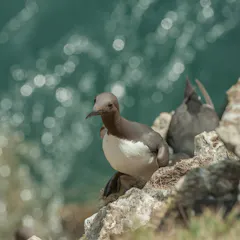
Studying a guillemot colony for 50 years has provided unique insights into how climate change and oil spills affect seabird populations.

Many of the amino acids that make up proteins are encoded by genetic material in more than one way. An information theorist explains how principles of nature may account for this variance.

Despite the prevalent view that people with large bodies should simply eat less and move more, it’s nearly impossible to fight our genetic heritage or other factors that are not within our control.

New research shows European lobsters are using the deposits of rocks and boulders at the base of wind turbines as shelter.

There’s no single reason many Asian animals spread to Australia but few went the other way – but climate, geography and the slow drift of tectonic plates all played a role.
Aging is a culmination of factors spanning from your cells to your environment. A number of interconnected processes determine how quickly your body is able to repair and recover from damage.
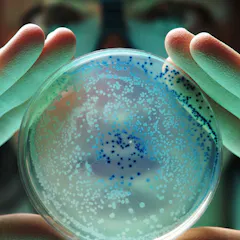
Researchers uncovered the foundations of biology by using E. coli as a model organism. But over-reliance on this microbe can lead to knowledge blind spots with implications for antibiotic resistance.
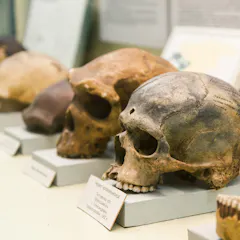
There are areas of biology that may be considered optional at younger year levels, such as botany, entomology and marine ecosystems. Evolution is not one of these.

Behavior-based interventions could boost conservation efforts, but raise their own set of tricky ethical issues.

Early life environments and adult social bonds both have strong effects on survival.
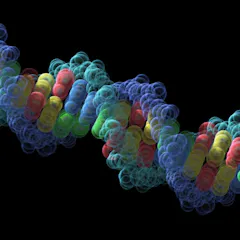
Studying the brief and tiny quantum effects that drive living systems could one day lead to new approaches to treatments and technologies.
Top contributors
-

Doctoral Student in Biochemistry, University of Washington
-
ARC Future Fellow, Behavioural Ecology, Macquarie University
-
Emeritus Strategic Professor in Palaeontology, Flinders University
-
Investigador Científico, Estación Biológica de Doñana (EBD-CSIC); The University of Western Australia
-
Senior lecturer, School of Biological Sciences, University of Bristol, University of Bristol
-
Postdoctoral Fellow, EPFL – École Polytechnique Fédérale de Lausanne – Swiss Federal Institute of Technology in Lausanne
-
Biologist
-
Professor of Entomology, North Carolina State University
-
Principal Lecturer in Wildlife Conservation, Nottingham Trent University
-
Fellow, Keele University
-
Lecturer, Macquarie University
-
Senior Lecturer in Molecular Biology, University of Sydney
-
Professor of Biological Sciences, University of Maryland, Baltimore County
-
Chercheur à l’Institut de systématique, évolution, biodiversité (ISYEB), Muséum national d’histoire naturelle (MNHN)
-
Mark Elgar is a Friend of The Conversation.
Emeritus Professor of Evolutionary and Behavioural Ecology, The University of Melbourne