
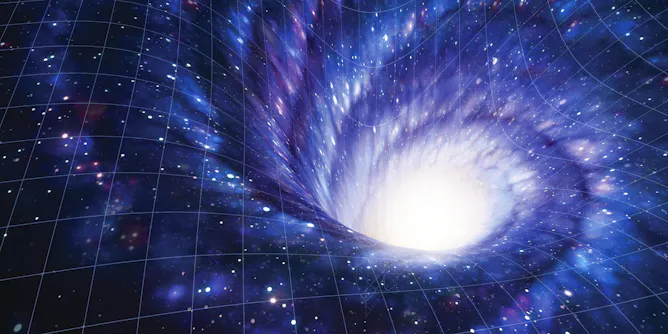
An astrophysicist explains what wormholes are and how these theoretical space-time tunnels have popped up in the solutions to a set of decadesold equations.
Articles on Astrophysics
Displaying 121 - 140 of 286 articles
Astronomers have discovered the first dormant black hole outside of the Milky Way. These black holes are not absorbing matter from a nearby star, making them incredibly hard to find.
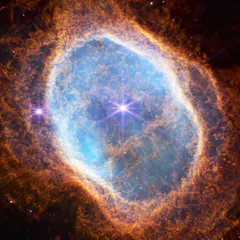
Why is the universe 13.8 billion years old, but 93 billion light-years across? It’s all about how light travels through the cosmos.
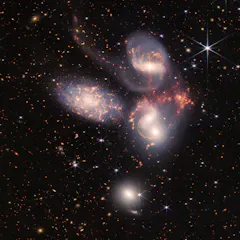
NASA released five new images from the James Webb Space Telescope, revealing incredible details of ancient galaxies, stars and the presence of water in the atmosphere of a distant planet.
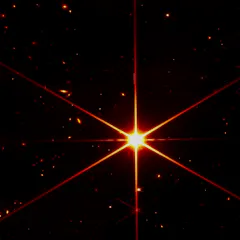
It has taken eight months to test and calibrate all of the instruments and modes of the James Webb Space Telescope. A scientist on the team explains what it took to get Webb up and running.
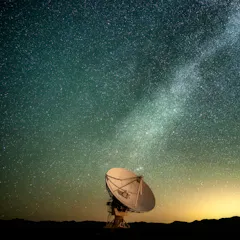
Astronomers studying fast radio bursts recently discovered one that repeats, has a persistent radio signal and originated in a galaxy much closer than it should have.
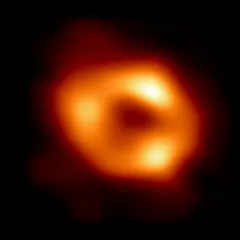
Sagittarius A* is a massive black hole at the center of the Milky Way. Now that astronomers have imaged it, they can begin to learn more about black holes within other galaxies across the universe.
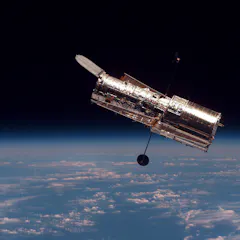
The astronomy and astrophysics decadal survey for the 2020s lays out plans to search for life on distant planets, understand the formation of galaxies and solve deep mysteries of physics.
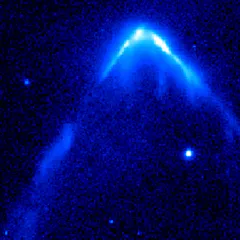
Hypervelocity stars were discovered only 15 years ago and are the closest things in existence to real shooting stars. They travel at millions of miles per hour, so fast that they can escape from galaxies.
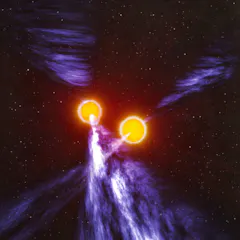
Astronomers watched a pair of pulsars for 16 years to test the theory of general relativity, which has stood unchallenged for over a century.
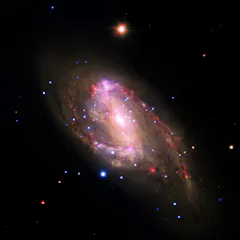
Advanced technologies and the information they collect have revealed how black holes form and behave.
We have to look back to the Big Bang to find out.
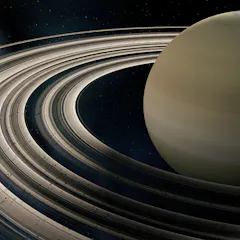
Saturn, Jupiter, Neptune and Uranus all have rings.
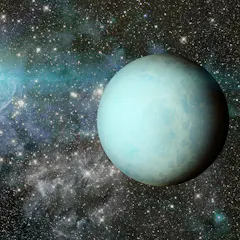
It can get very cold in space.
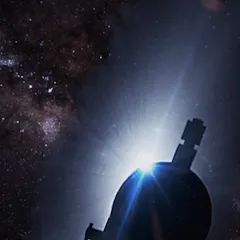
Such a mission could be developed soon, allowing astrophysicists to take selfies of the solar system and use the Sun’s gravity as a lens to peer deep into space.
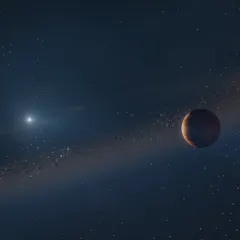
In 5 billion years the Sun will collapse. A new discovery suggest some planets may still survive afterwards.

The largest orbital telescope ever made will allow astronomers to study the atmospheres of alien planets, learn about how stars form in the Milky Way and peer into the farthest reaches of the universe.
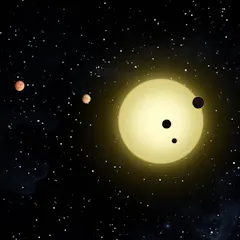
By studying the chemical makeup of binary stars, astronomers found many planetary systems are far less peaceful than ours.
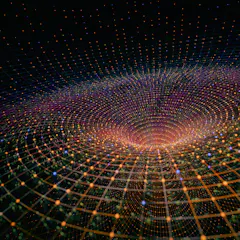
The universe has a finite age — 13.8 billion years to be exact. So if it had a beginning, why is it so difficult to say for sure whether it will have an end?
Astronomers know a lot about what’s in outer space – and think it’s possible it never ends.
Top contributors
-

Professor (Astrophysics), University of Southern Queensland
-
Professor of Astrophysics, University of Sydney
-
University Distinguished Professor of Astronomy, University of Arizona
-
Associate Dean of Innovation and Engagement, Swinburne University of Technology
-
ARC Laureate Fellow, Swinburne University of Technology
-
John Curtin Distinguished Professor (Radio Astronomy), Curtin University
-
Emeritus Professor, ARC Centre of Excellence for Gravitational Wave Discovery, OzGrav, The University of Western Australia
-
Professor of Physics, Penn State
-
Professor, Radio Astronomy, University of Sydney
-
ARC Australian Laureate Fellow, School of Physics, The University of Melbourne
-
Professor of Astrophysics, UNSW
-
Professor of Astrophysics, Macquarie University
-
Senior Lecturer and ARC Future Fellow, Monash University
-
Reader in Astrophysics, Keele University
-
Pro Vice-Chancellor Flagship Initiatives, Swinburne University of Technology