
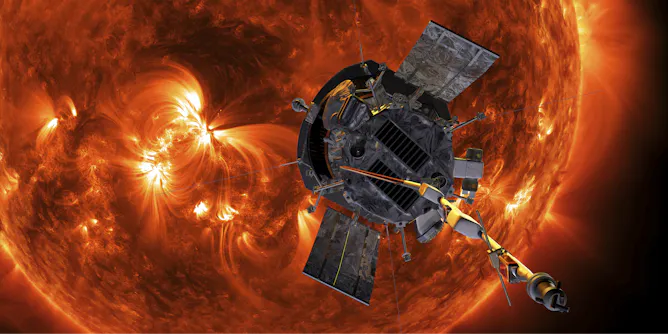
For years, researchers have wondered what energy source allows the solar wind − a projection of charged particles from the Sun − to rush by at hundreds of miles a second.
Articles on Astrophysics
Displaying 61 - 80 of 285 articles
If a star gets too close to a black hole, it gets shredded and produces a complex ball of light. These videos are the first time this dramatic event has been simulated in detail.
Space magnetism scrambles the paths of the universe’s most wayward particles – and scientists are finally discovering exactly how much.
The first International Astronomical Union General Assembly was held just over 100 years ago, in Rome, Italy.
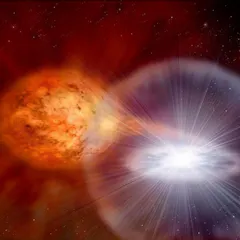
Your favorite TV show isn’t the only place where guest stars might appear. Keep an eye on the sky for the second half of 2024 and you might be able to witness a rare astronomical event.
X-rays emitted around black holes can tell astrophysicists about how fast they’re growing.
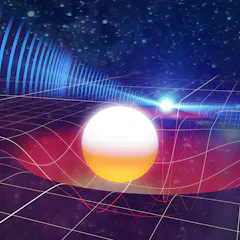
Neutron stars contain some of the universe’s most exotic states of matter – but there’s no easy way to peek inside.
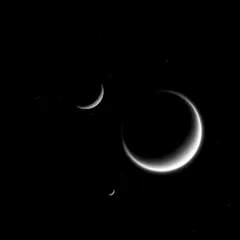
It’s not a competition, but if it were, Saturn would be winning.
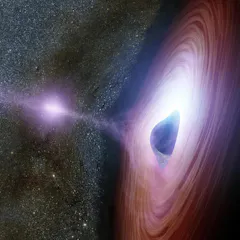
Studying theoretical, fast-spinning black holes is helping physicists understand more about the elusive black holes out in the universe.
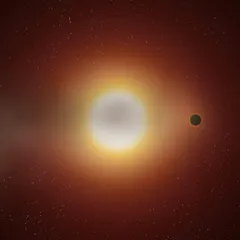
Research on one exoplanet that’s rapidly losing its atmosphere is hinting to scientists why exoplanets tend to look a certain way.
Back when Henk Hoekstra started his PhD, atmosphere turbulence and optical imperfections prevented us from accurately observing dark matter. He tells us why Euclid is a game changer.
Astrophysicist Jacco van Loon joins us on The Conversation’s Curious Kids podcast.
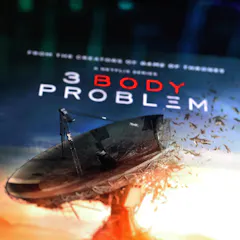
The Netflix series ‘3 Body Problem’ is based on Liu Cixin’s scifi novel that follows what happens to the alien residents of a planet that orbits two stars.
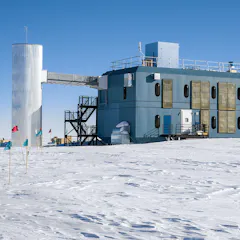
Tau neutrinos are notoriously difficult to spot in detectors like IceCube. But researchers have managed to isolate 7 candidates.
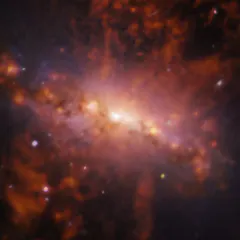
When astronomers focused on the galaxy NGC 4383, they didn’t expect the data to be so spectacular. This is the first detailed map of gas flowing from this galaxy as stars burst within.

Where specialized algorithms fail to classify star-borne pulses, human volunteers with just a little training can step in.

Astronomers caught the bizarre ‘awakening’ of an incredibly rare magnetic star.

Some ancient texts record what were likely dying stars, faintly visible from Earth. If close enough, these events can disturb telescopes and even damage the ozone layer.

The largest study yet of ‘twin stars’ shows planetary orbits may be less stable than we thought.
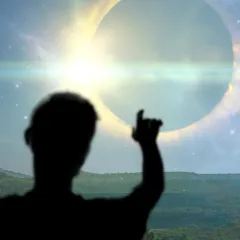
Eclipses have inspired myths, predictions and scientific discoveries. The total solar eclipse occurring on April 8 provides a once-in-a-lifetime opportunity to engage with science and the cosmos.
Top contributors
-

Professor (Astrophysics), University of Southern Queensland
-
Professor of Astrophysics, University of Sydney
-
University Distinguished Professor of Astronomy, University of Arizona
-
Associate Dean of Innovation and Engagement, Swinburne University of Technology
-
ARC Laureate Fellow, Swinburne University of Technology
-
John Curtin Distinguished Professor (Radio Astronomy), Curtin University
-
Emeritus Professor, ARC Centre of Excellence for Gravitational Wave Discovery, OzGrav, The University of Western Australia
-
Professor of Physics, Penn State
-
Professor, Radio Astronomy, University of Sydney
-
ARC Australian Laureate Fellow, School of Physics, The University of Melbourne
-
Professor of Astrophysics, UNSW
-
Professor of Astrophysics, Macquarie University
-
Senior Lecturer and ARC Future Fellow, Monash University
-
Reader in Astrophysics, Keele University
-
Pro Vice-Chancellor Flagship Initiatives, Swinburne University of Technology