
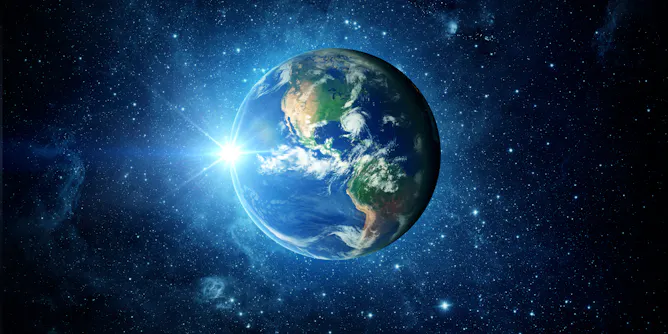
To answer this tricky question, we have to look back in time to when the Earth was born, 4.5 billion years ago.
Articles on Astrophysics
Displaying 181 - 200 of 286 articles
Pretty much as soon as we understood what galaxies were, we realised they are all moving away from each other. And the ones that are further away are moving faster. In short, the universe is expanding.
People long assumed all the elements we see now were created during the Big Bang. But on May 2, 1952, an astronomer reported spotting new elements coming from an old star and changed our origin story.
The famous cosmologist was closely identified with black holes due to his revolutionary theoretical work explaining some of their mysterious properties.
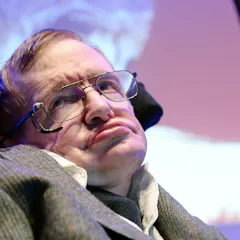
Stephen Hawking inspired people with his work on black holes and other mysteries of the universe. Many were quick to pay tribute to the theoretical physicist who died today in the UK, aged 76.
The precious metal is literally extra-terrestrial, produced in the heart of the stars. How and under what conditions? Scientists know more thanks to a double astrophysical observation.
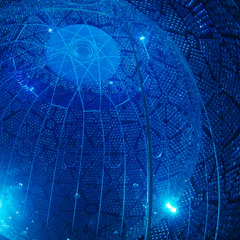
Deep underground, scientists research subatomic particles from space in a bid to understand the building blocks of our universe.
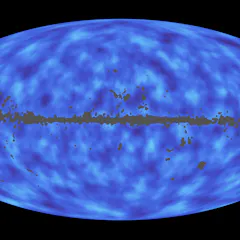
Cosmologists are heading back to their chalkboards as the experiments designed to figure out what this unknown 84 percent of our universe actually is come up empty.
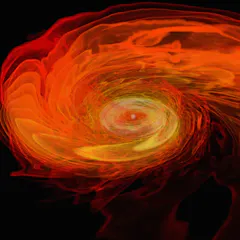
A LIGO team member describes how the detection of a gravitational wave from a new source – merging neutron stars – vaults astronomy into a new era of ‘multi-messenger’ observations.
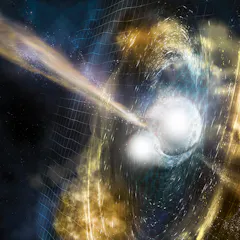
Astronomers have finally confirmed the source of the latest detected gravitational waves was the collission of a pair of neutron stars, what they’d been searching for all along.
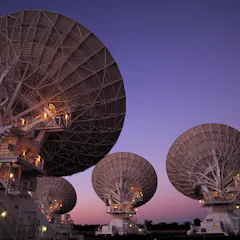
All it took was a single email alert to send the world’s astronomers searching for the source of the latest gravitational wave detected.
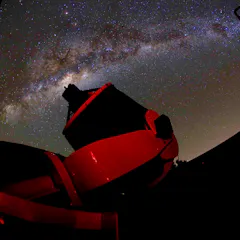
Efforts to see the afterglow from a neutron star merger were nearly thwarted by bad weather and a cyber attack on an Australian telescope.
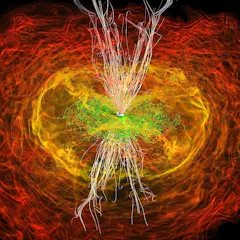
The gravitational wave itself is the least exciting part of the announcement from LIGO and Virgo. Observing this new source answers many longstanding questions.
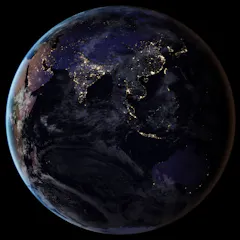
Imagine the Earth pulling everything it is made up of, all of its mass, towards its centre. This happens evenly all over the Earth, causing it to take on a round shape.

In five or seven billion years time, the Sun’s life will come to an end. And it will be really spectacular - if you’re watching from far enough away.
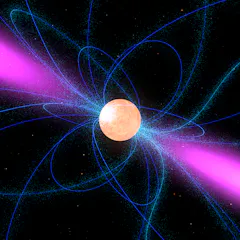
Studying mysterious neutron stars could uncover the secrets of exotic physics – and a way to navigate the stars.
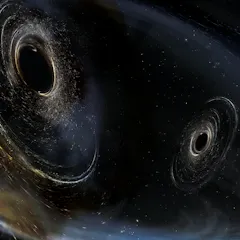
These ripples in the very fabric of the universe were hypothesized by Einstein a century ago. Now scientists have detected them for the third time in a year and a half – ushering in a new era in astrophysics.
Simon John James and Richard Bower chat about differing conceptions of what it is to travel through time.

Over the last 20 years, advances in the field of exoplanet discovery have excited the imaginations of scientists and enthusiasts alike. But we’re in position to know yet whether a planet is habitable.
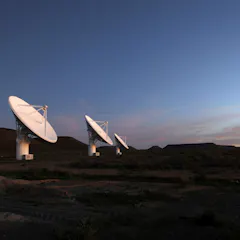
Very few African universities offer postgraduate degrees in astronomy. This gap in knowledge and training can be addressed through international partnerships and collaboration.
Top contributors
-

Professor (Astrophysics), University of Southern Queensland
-
Professor of Astrophysics, University of Sydney
-
University Distinguished Professor of Astronomy, University of Arizona
-
Associate Dean of Innovation and Engagement, Swinburne University of Technology
-
ARC Laureate Fellow, Swinburne University of Technology
-
John Curtin Distinguished Professor (Radio Astronomy), Curtin University
-
Emeritus Professor, ARC Centre of Excellence for Gravitational Wave Discovery, OzGrav, The University of Western Australia
-
Professor of Physics, Penn State
-
Professor, Radio Astronomy, University of Sydney
-
ARC Australian Laureate Fellow, School of Physics, The University of Melbourne
-
Professor of Astrophysics, UNSW
-
Professor of Astrophysics, Macquarie University
-
Senior Lecturer and ARC Future Fellow, Monash University
-
Reader in Astrophysics, Keele University
-
Pro Vice-Chancellor Flagship Initiatives, Swinburne University of Technology