
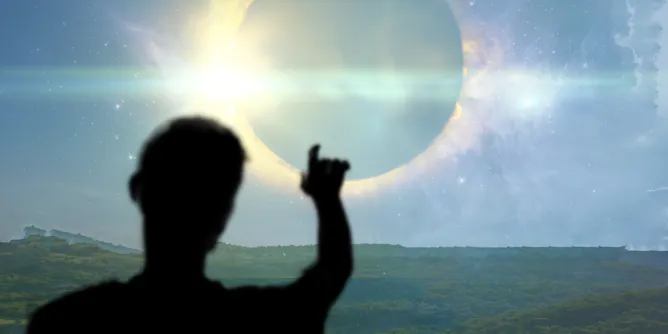
Eclipses have inspired myths, predictions and scientific discoveries. The total solar eclipse occurring on April 8 provides a once-in-a-lifetime opportunity to engage with science and the cosmos.
Articles on Astrophysics
Displaying 81 - 100 of 286 articles
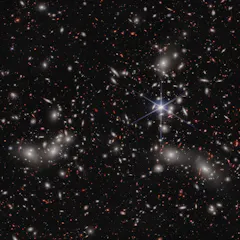
With the help of a magnifying glass 4 million lightyears wide, astronomers may have solved the riddle of what burned away the hydrogen fog that pervaded the early universe.
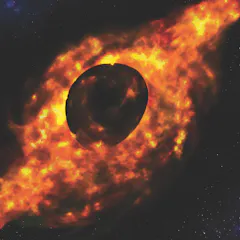
The black hole J0529-4351 is 500 trillion times brighter than the Sun.
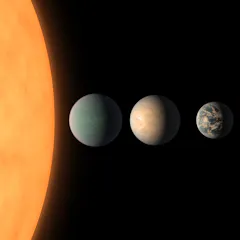
Orbital resonance is kind of like musical harmony, but systems that display it are far more rare than songs with harmonic melodies.
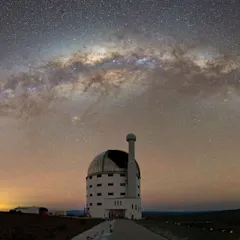
The astronomical community has thrived and world-class astronomical facilities have been established in South Africa.
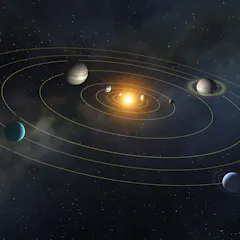
You might hate winter, but at least you know what to expect every year. Other planets have wobbly axes that lead to wild, unpredictable seasons.
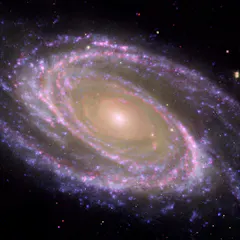
The nature of dark energy remains one of the biggest puzzles in cosmology.
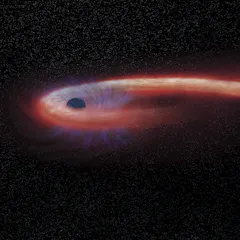
Pictures of black holes have a white outline around them when photographed, due to one of black holes’ unique and key features.
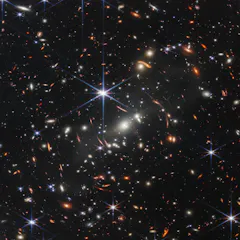
Sound needs matter to propagate, so the vast vacuum of space is not just empty − it’s silent.

With an evidence-based strategy and careful evaluation, gender parity in science is achievable.
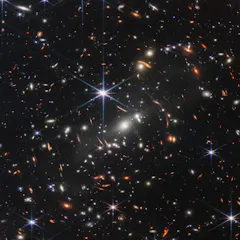
The universe is expanding faster than physicists would expect. To figure out what processes underlie this fast expansion rate, some researchers are first trying to rule out what processes can’t.
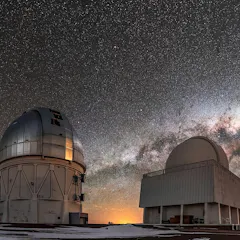
Controlled experiments are impossible in astronomy, as are direct measurements of physical properties of objects outside our solar system. So how do astronomers know so much about them?
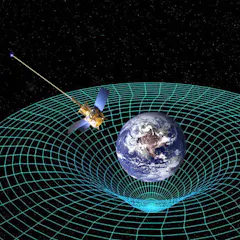
The gravitational field can affect space and time: the stronger gravity is, the slower time moves. This prediction of General Relativity can be used to reveal hidden forces acting on dark matter.
Measuring the ages of planets and stars is tricky. An observational astrophysicist describes the subtle clues that provide good estimates for how old different space objects are.
Massive flashes of energy known as ‘fast radio bursts’ have puzzled astronomers for years – and a new search for links to gravitational waves has so far found no connection.
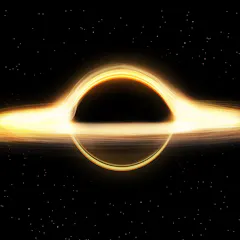
Black holes are known for pulling in all kinds of stuff – including light. Here’s how that actually works.

To detect dark matter, you need to build an ultra-sensitive detector and put it somewhere ultra-quiet. For one physics collaboration, that place is almost a mile under Lead, S.D.
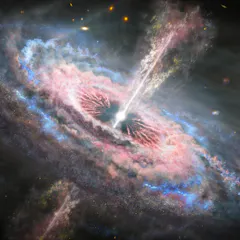
Bright, flickering galaxies called quasars were thought to pose a problem for our understanding of the cosmos – but new research shows Einstein was right yet again.
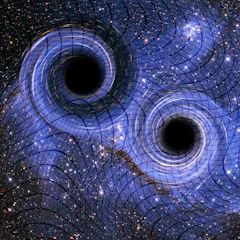
Astronomers have for the first time detected the background hum of gravitational waves likely caused by merging black holes.
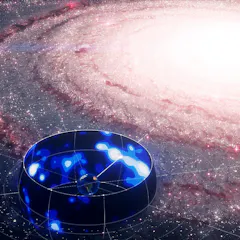
Neutrinos are some of nature’s most elusive particles, but new research has used them to create an image of our own galaxy.
Top contributors
-

Professor (Astrophysics), University of Southern Queensland
-
Professor of Astrophysics, University of Sydney
-
University Distinguished Professor of Astronomy, University of Arizona
-
Associate Dean of Innovation and Engagement, Swinburne University of Technology
-
ARC Laureate Fellow, Swinburne University of Technology
-
John Curtin Distinguished Professor (Radio Astronomy), Curtin University
-
Emeritus Professor, ARC Centre of Excellence for Gravitational Wave Discovery, OzGrav, The University of Western Australia
-
Professor of Physics, Penn State
-
Professor, Radio Astronomy, University of Sydney
-
ARC Australian Laureate Fellow, School of Physics, The University of Melbourne
-
Professor of Astrophysics, UNSW
-
Professor of Astrophysics, Macquarie University
-
Senior Lecturer and ARC Future Fellow, Monash University
-
Reader in Astrophysics, Keele University
-
Pro Vice-Chancellor Flagship Initiatives, Swinburne University of Technology