
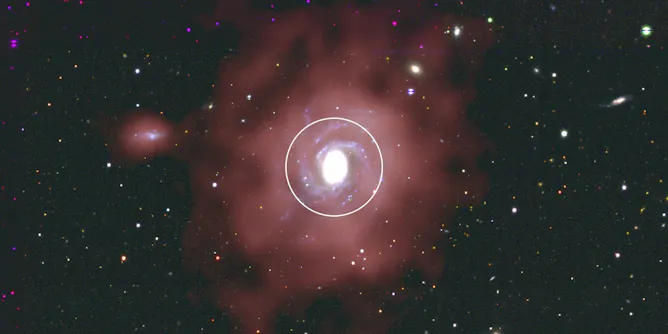
A new, more detailed study of 1,000 distant galaxies explains why some gas-rich galaxies don’t produce as many stars as you’d expect.
Articles on Astrophysics
Displaying 41 - 60 of 285 articles

The speed of light is the fastest anything can travel. What happens to a photon from a galaxy 25 million light years away on its journey toward Earth?
Scientists have conflicting theories on why the universe is expanding at an accelerating rate. New measurements from a massive collaboration complicate these ideas.
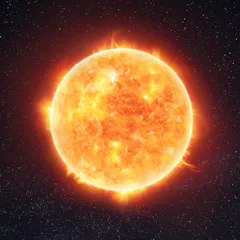
Stars are constantly vibrating because of ‘starquakes’. Listening to their sound can reveal a surprising amount of information.
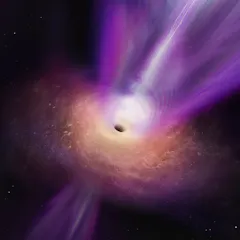
Whether a galactic environment has the right conditions for habitable planets to form could depend on how the black hole in that galaxy is rotating.

A project to map galaxies across the universe may have spied cracks in the foundation of our understanding of the cosmos.
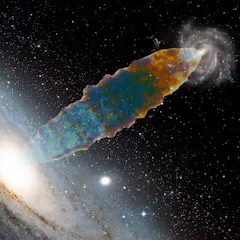
Understanding the evolution of radio galaxies is crucial for unravelling the broader processes that shape the universe.
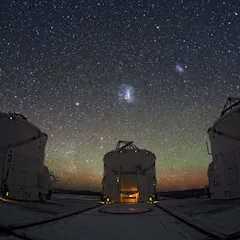
Scientists already knew how to study the chemical composition of the atmosphere of exoplanets. Now, they can also study details about their powerful winds.

In the search for elusive particles called neutrinos, researchers are stringing thousands of detectors in the depths of the Mediterranean.
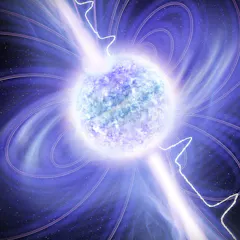
The slowest ‘cosmic lighthouse’ ever found challenges our understanding of how neutron stars work.
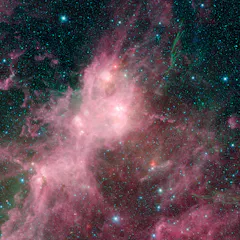
The universe is constantly expanding, but how do scientists think about what it’s expanding into?
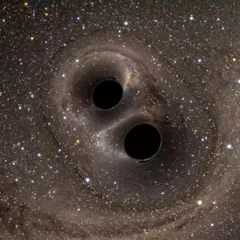
Most objects in the universe have been around for way longer than modern astronomy – digging into historical records can help scientists shed light on a cosmic mystery.
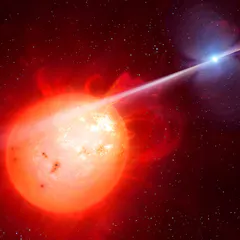
By searching sparsely populated regions of the galaxy, astronomers have for the first time found the source of a kind of signal that has puzzled them for years.
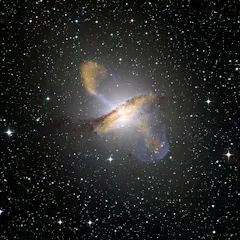
New analysis of radio telescope data links the shape of galaxies to the supermassive black holes they host.
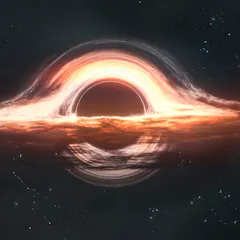
New research can help us understand how supermassive black holes formed – and why many of them appear to be more massive than expected.
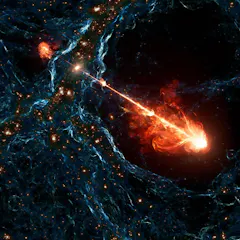
Astronomers have found a true colossus of a jet in the night sky, over 100 times larger than our galaxy. It’s almost perfectly straight, which presents a puzzle.
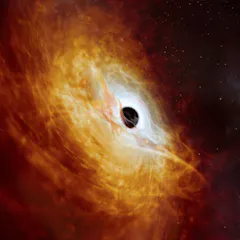
These small galaxies are either crammed with stars or they host gigantic black holes. The data astronomers have collected continues to puzzle them.
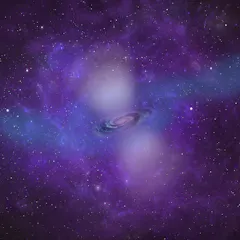
Today we’re able to finally reveal the first detailed picture of the gas shroud around a galaxy, extending 100,000 light years out into ‘empty’ space.
Sci-fi style spaceships could create gravitational wave bursts within range of future detectors, according to research.
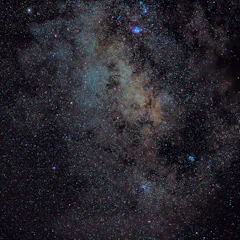
While space is mostly empty, it does have some matter and particles spread throughout it.
Top contributors
-

Professor (Astrophysics), University of Southern Queensland
-
Professor of Astrophysics, University of Sydney
-
University Distinguished Professor of Astronomy, University of Arizona
-
Associate Dean of Innovation and Engagement, Swinburne University of Technology
-
ARC Laureate Fellow, Swinburne University of Technology
-
John Curtin Distinguished Professor (Radio Astronomy), Curtin University
-
Emeritus Professor, ARC Centre of Excellence for Gravitational Wave Discovery, OzGrav, The University of Western Australia
-
Professor of Physics, Penn State
-
Professor, Radio Astronomy, University of Sydney
-
ARC Australian Laureate Fellow, School of Physics, The University of Melbourne
-
Professor of Astrophysics, UNSW
-
Professor of Astrophysics, Macquarie University
-
Senior Lecturer and ARC Future Fellow, Monash University
-
Reader in Astrophysics, Keele University
-
Pro Vice-Chancellor Flagship Initiatives, Swinburne University of Technology