
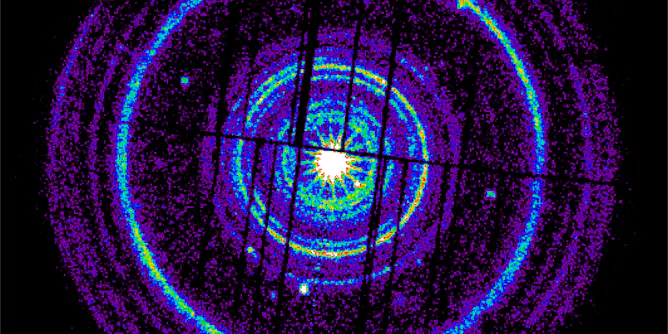
Radiation from the brightest cosmic explosion ever seen may have been mixing with gas and dust around its dying star – making the signal last longer.
Articles on Astrophysics
Displaying 101 - 120 of 285 articles
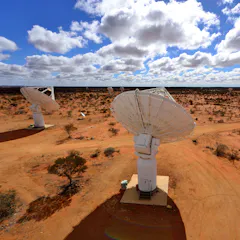
One of the few examples of a fast radio burst and the slow-moving, star forming gas in its origin galaxy has been linked together – thanks to observations from a CSIRO telescope.
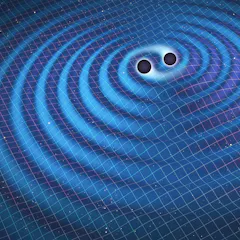
Upgrades to the hardware and software of the advanced observatory should allow astrophysicists to detect much fainter gravitational waves than before.
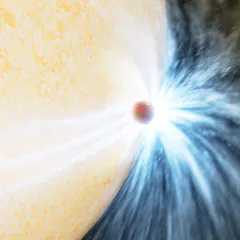
Stars begin to expand when they run out of fuel and can become thousands of times larger, consuming any planets in the way. For the first time, astronomers have witnessed one such event.

The current race to the Moon is opening up opportunities for lunar astronomy.
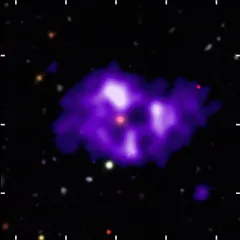
Machine learning is becoming an indispensable tool in astronomy by sorting through enormous datasets from telescopes.
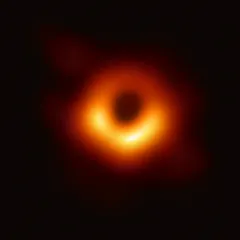
Beyond just looking at black holes, the next-generation Event Horizon Telescope collaboration is the first to bring together perspectives from across the sciences and humanities.
Some physicists think we live in a multiverse, surrounded by universes not quite like our own. What does that mean for life?
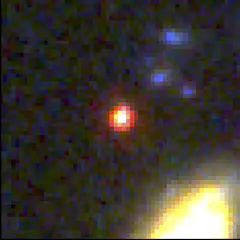
The discovery of massive, early galaxies could force scientists to rethink how the first galaxies formed after the Big Bang.
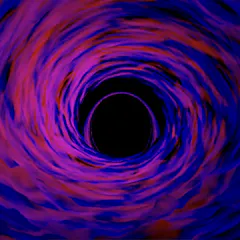
Astronomers have found that mysterious dark energy may originate in black holes.
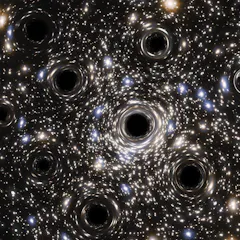
Black holes can have a mass equivalent to that of millions of suns. Other, smaller, black holes can combine the mass of Mount Everest into the size of an atom.
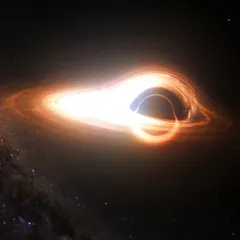
While we can’t see inside a black hole, we can spot the intensely bright glowing disc that surrounds one. Now, we might better understand why these discs appear to ‘twinkle’.
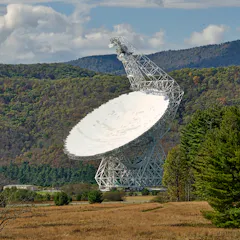
Can artificial intelligence transform the search for alien intelligence?
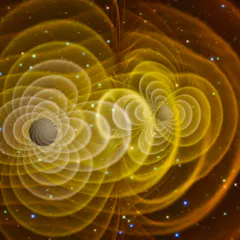
To understand this question, we need to travel back in time.
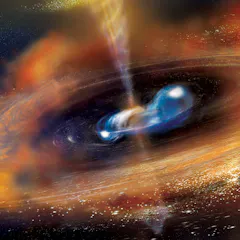
Gamma-ray bursts occur when a massive star explodes or when two neutron stars merge. A newly discovered burst has puzzled astronomers, as it lasted much longer than astronomers would have expected.

It has been one year since the launch of the James Webb Space Telescope and six months since the first pictures were released. Astronomers are already learning unexpected things about the early universe.
A new particle accelerator has just begun operation. It is the most powerful accelerator of its kind on Earth and will allow physicists to study some of the rarest matter in the universe.
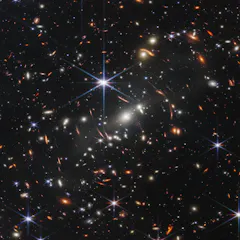
The theory of gravity may need to be altered.
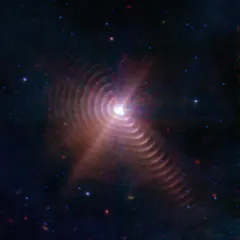
The binary star WR140 is surrounded by an astonishing array of nested shells of dust swirling into space.
An astrophysicist explains what wormholes are and how these theoretical space-time tunnels have popped up in the solutions to a set of decadesold equations.
Top contributors
-

Professor (Astrophysics), University of Southern Queensland
-
Professor of Astrophysics, University of Sydney
-
University Distinguished Professor of Astronomy, University of Arizona
-
Associate Dean of Innovation and Engagement, Swinburne University of Technology
-
ARC Laureate Fellow, Swinburne University of Technology
-
John Curtin Distinguished Professor (Radio Astronomy), Curtin University
-
Emeritus Professor, ARC Centre of Excellence for Gravitational Wave Discovery, OzGrav, The University of Western Australia
-
Professor of Physics, Penn State
-
Professor, Radio Astronomy, University of Sydney
-
ARC Australian Laureate Fellow, School of Physics, The University of Melbourne
-
Professor of Astrophysics, UNSW
-
Professor of Astrophysics, Macquarie University
-
Senior Lecturer and ARC Future Fellow, Monash University
-
Reader in Astrophysics, Keele University
-
Pro Vice-Chancellor Flagship Initiatives, Swinburne University of Technology