
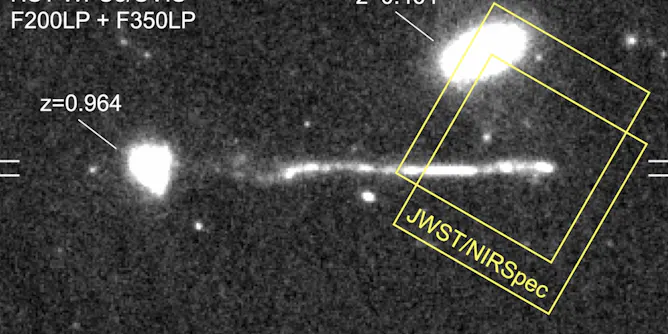
Astronomers have spotted runaway black holes screaming through space, leaving trails of stars in in their wake.
Articles on Astrophysics
Displaying 21 - 40 of 285 articles
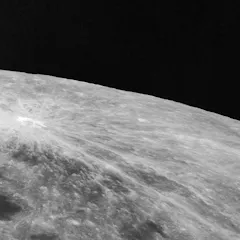
The US, China, India, Europe and Japan all have exciting missions on the horizon in 2026. Many of them are collaborative feats.
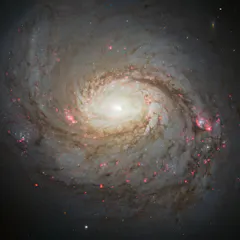
Normal matter – which makes up everything we see and touch – isn’t the only type of matter present in the universe.

Most of the universe is made up of dark matter and dark energy. The majority of everything else is dispersed throughout space as tiny particles.
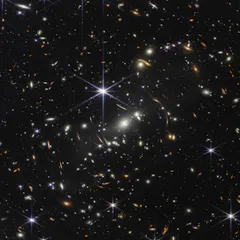
Some unique ‘stars’ might be fueled by dark matter annihilation.

Will the universe keep existing forever? An astrophysicist explains how scientists aren’t entirely sure, but they can make predictions.
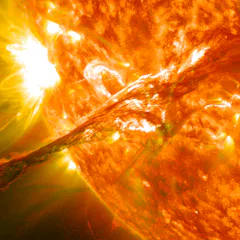
From communications outages to a brush with nuclear war, solar events like flares and coronal mass ejections have shaped human history.
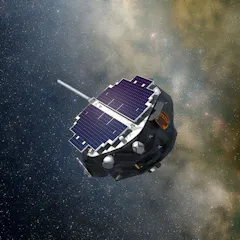
Studying the Sun helps researchers understand how space weather can affect technology back on Earth.
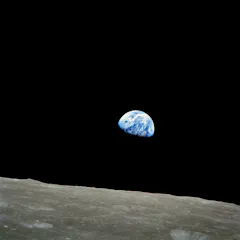
The Moon influences ocean tides – and ocean tides, in some ways, influence the Moon back.
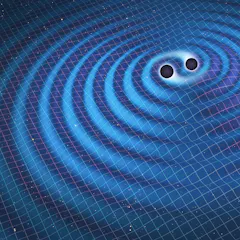
A decade after the first discovery, scientists have used these waves to find a unique merger, a massive binary system and a crystal-clear gravitational wave signal.
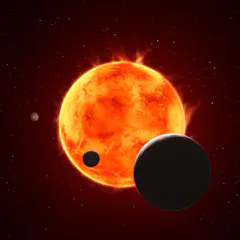
The largest telescope in space has been trained on a rocky exoplanet.
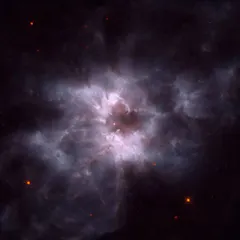
Could tiny stars a fraction the size of our solar system’s Sun have habitable planets orbiting them? A new study says it’s possible.
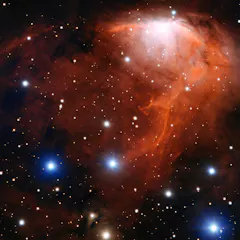
Two new studies challenge scientists’ previous theories on how the very first stars in the universe formed.
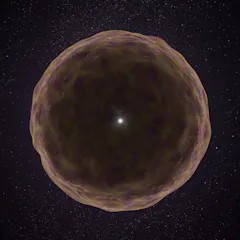
An ‘extremely stripped supernova’ confirms the existence of a key feature of physicists’ models of how stars produce the elements that make up the Universe.
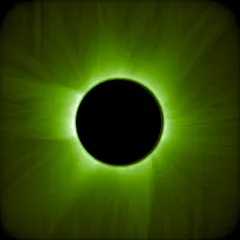
This solar eclipse was created by 2 satellites flying in formation, allowing astronomers to photograph the Sun’s corona.
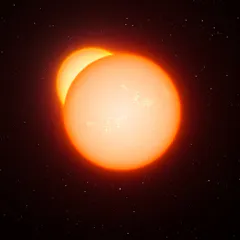
It takes a supercomputer weeks to output the properties of one stellar binary. A new study shows AI can do it in a fraction of the time.
If aliens did a flyby through the Solar System, would we even realise?
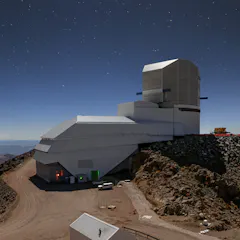
Vera C. Rubin’s research into stars in galaxies led to the modern understanding of dark matter.
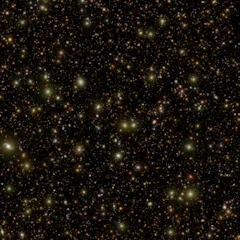
To make a truly realistic fake picture of a galaxy, you can model exactly how light particles travel through the atmosphere and telescope to reach its sensor.
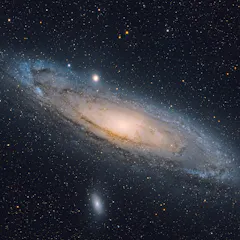
The odds of a galactic collision in our distant future are much lower than we thought, according to new simulations.
Top contributors
-

Professor (Astrophysics), University of Southern Queensland
-
Professor of Astrophysics, University of Sydney
-
University Distinguished Professor of Astronomy, University of Arizona
-
Associate Dean of Innovation and Engagement, Swinburne University of Technology
-
ARC Laureate Fellow, Swinburne University of Technology
-
John Curtin Distinguished Professor (Radio Astronomy), Curtin University
-
Emeritus Professor, ARC Centre of Excellence for Gravitational Wave Discovery, OzGrav, The University of Western Australia
-
Professor of Physics, Penn State
-
Professor, Radio Astronomy, University of Sydney
-
ARC Australian Laureate Fellow, School of Physics, The University of Melbourne
-
Professor of Astrophysics, UNSW
-
Professor of Astrophysics, Macquarie University
-
Senior Lecturer and ARC Future Fellow, Monash University
-
Reader in Astrophysics, Keele University
-
Pro Vice-Chancellor Flagship Initiatives, Swinburne University of Technology