
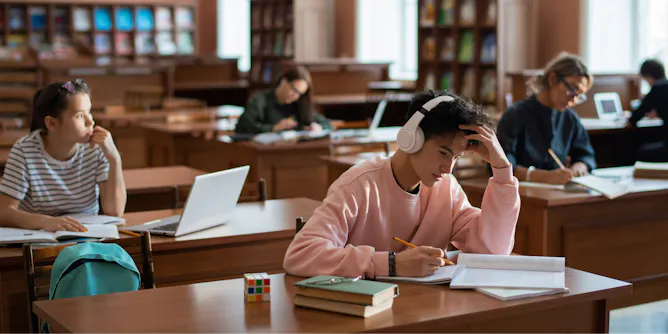
Classroom assessment is a major source of student stress. Research suggests redesigning assessments around psychological needs may improve well-being.
Articles on Assessment
Displaying 1 - 20 of 92 articles

If this new development – designed to show if a text is AI-generated – sounds too good to be true, that’s because it is.

In a case study, parents responded positively to their children being taught science in two languages.

National NAPLAN results are released today, putting the spotlight on students’ numeracy and literacy skills.

For some families, NAPLAN results will confirm what they already know. For others, they may contain surprises or raise concerns.

Assessments are often treated as culturally neutral when they are not.

A high proportion of South Africans complete grade 12 despite evidence of learning gaps – how is this possible?

Half of Year 6 students met or exceeded the national ‘proficient standard for ICT literacy’ in the latest round of testing.

Over two years of interviews with a cohort of STEM college students, many described feeling something personal was lost after using AI to improve their writing.

In many countries, national exams continue to reward memorisation, shaping what teachers teach and how students learn.

Standards-based grading provides a more transparent assessment of the extent the intended learning is happening in the classroom.

Whenever a major test suffers a glitch, questions are immediately asked about a return to pens and paper.

Students had to compile a portfolio and discuss it in an interview to demonstrate their understanding and ability to apply the knowledge.
Ensuring higher education remains a space for ethical decision-making means incorporating at least five principles into forms of assessment.
Whether you’re walking into a performance appraisal or anticipating a grade, recognizing that feedback is valuable is the first step towards growth.

Employers and societies demand graduates who can evaluate information and make sound judgments.

New research argues the problem of AI and assessment is way more difficult than media debates have been making out.

Study finds a gap between policy and textbook that skews literacy test results.
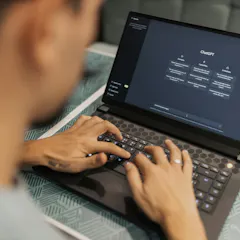
Simply setting rules around using AI is not enough. To ensure assessments are valid and fair, unis and teachers need to change the task itself.
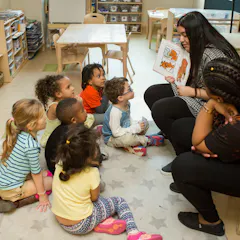
Results of a study suggest policy improvements are needed to provide educators with strategies to reduce bias around race, gender and socioeconomic status.
Top contributors
-

Associate Dean, School of Graduate Studies & Professor, Faculty of Education, Queen's University, Ontario
-
Distinguished Professor, Faculty of Education, Brock University
-
Professor and Co-Director, Centre for Research in Assessment and Digital Learning, Deakin University
-
Deputy Vice-Chancellor, Education, Murdoch University; Professor of Measurement, Assessment and Evaluation, Murdoch University
-
Senior Research Fellow in Child Neurodevelopment, Brain and Mind Centre, University of Sydney
-
Senior Lecturer in Educational Assessment, Macquarie University
-
Professor and Clinical Psychologist, Michael Crouch Chair in Child and Youth Mental Health, University of Sydney
-
Neurodevelopmental Paediatrician and Associate Professor, University of Sydney
-
Professor of Educational Technologies, University of Sydney
-
Associate Professor in Language, Literacy and TESL, University of Canberra
-
Research Fellow, Centre for Research in Assessment and Digital Learning, Deakin University
-
Consultant, Australian Council for Educational Research
-
Professor of Educational Psychology, University of Wollongong
-
Professor, Faculty of Education and Arts, Australian Catholic University
-
Head of Department and Senior Lecturer in Education and Social Justice, Lancaster University