

Educational experts offer tips for parents and teachers to help children manage test anxiety but find that overall, policy-makers need to re-think what matters in schools and what’s worth measuring.
Articles on Assessment
Displaying 61 - 80 of 92 articles

Authentic assessment is perceived as being harder to outsource, and has been adopted by many Australian university teachers. But that doesn’t mean students won’t still cheat on them.

Recent news that at least one Ontario university adjusts for grade inflation during the undergraduate application process is a call to action – for long-term educational change.

There are benefits and drawbacks to both formative and summative assessment. Both are important parts of a rigorous assessment program.

To assess problem-solving, creative and critical thinking skills on NAPLAN would fit with broader movements in education internationally, but there are some questions to address first.

Research shows that many students are excessively optimistic about course grades. Those with a stronger sense of personal control are also less likely to receive the grades they expect.

Assessment scales for ADHD have been developed using mostly male research samples. As a result, the behaviours indicating ADHD in girls may not be what you expect.

The discourse and structure of online learning can exclude English language minority students. Techniques such as video chats, “safe houses” and content-focused grading can support their success.
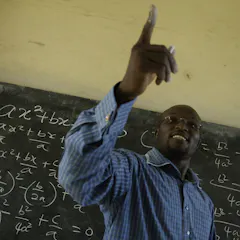
Math instruction is stuck in the last century. How can we change teaching methods to move past rote memorization and help students develop a more meaningful understanding – and be better at math?
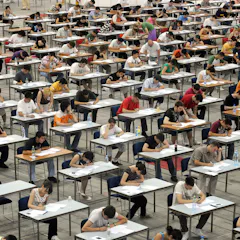
Assessment should be a part of teaching and learning at universities. It’s important because it will subvert exclusion and allow all students to take responsibility for their work.

In March 2018, all Australian universities will be submitting key performance indicators (KPIs) on their engagement and impact to the Australian Research Council. These measure how well universities engage…
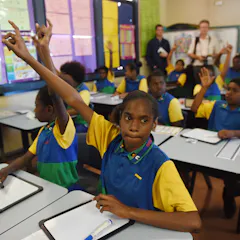
Teachers – get to really know your kids, their families, their community and its history, and what’s going on at home. While school policies are important, relationships are the real keys to success.

Our current way of assessing students doesn’t let them see the progress they are making over extended periods of time.

Despite significant reform agendas over the past decade, no real progress in outcomes has been achieved.

The role of private tuition plays a part in the overall success of students in Singapore, with around 80% of primary-school children having at least three hours of private tuition a week.

If we want excellence in our schools, we have to provide a system with the incentives, enablers and rewards for improvement built in.

Politicians need to stop meddling with education policy and invest in teachers if Australia’s science, mathematics and reading standards are to improve.

Rather than leaping to conclusions about a failing education system, we need to look at what the data tells us about student performance at a state level to help us make more informed decisions.
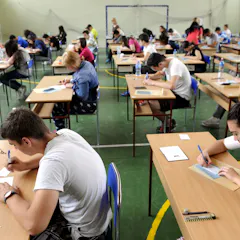
Exams do have a purpose, but they shouldn’t be used to assess the recall of meaningless facts.

Latest TIMSS report shows that students in Australia make very little – if any – progress in maths from Year 4 to Year 8.
Top contributors
-

Associate Dean, School of Graduate Studies & Professor, Faculty of Education, Queen's University, Ontario
-
Distinguished Professor, Faculty of Education, Brock University
-
Professor and Co-Director, Centre for Research in Assessment and Digital Learning, Deakin University
-
Deputy Vice-Chancellor, Education, Murdoch University; Professor of Measurement, Assessment and Evaluation, Murdoch University
-
Senior Research Fellow in Child Neurodevelopment, Brain and Mind Centre, University of Sydney
-
Senior Lecturer in Educational Assessment, Macquarie University
-
Professor and Clinical Psychologist, Michael Crouch Chair in Child and Youth Mental Health, University of Sydney
-
Neurodevelopmental Paediatrician and Associate Professor, University of Sydney
-
Professor of Educational Technologies, University of Sydney
-
Associate Professor in Language, Literacy and TESL, University of Canberra
-
Research Fellow, Centre for Research in Assessment and Digital Learning, Deakin University
-
Consultant, Australian Council for Educational Research
-
Professor of Educational Psychology, University of Wollongong
-
Professor, Faculty of Education and Arts, Australian Catholic University
-
Head of Department and Senior Lecturer in Education and Social Justice, Lancaster University