

Educators need to carefully consider ChatGPT and issues of academic integrity to move toward an assessment system that leverages AI tools.
Articles on Assessment
Displaying 41 - 60 of 92 articles

Parents and carers might be worried a child is slow to talk or can’t seem to maintain attention. But getting a proper assessment can take years and connecting to support, even longer.
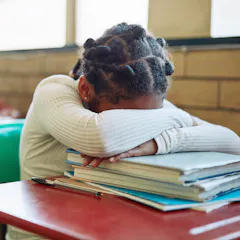
Teaching students techniques to cope with anxiety and stress can help them bounce back after a hurricane upends their life.

COVID-19 has challenged teachers’ abilities to provide students with chances to learn and to report on student learning.

500 million people live in 19 African countries deemed “water insecure”.
Scicomm is a hashtag, and there are many programs that claim to teach scientists how to be better communicators. But it’s hard to show exactly what they’re accomplishing.

The forced transition to online university learning will mean teaching practices will be permanently changed.

Independent assessments were meant to make access to the NDIS fairer. But disability groups disagree and want them stopped.
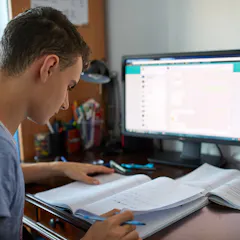
Take part in collaborative working and play to your strengths.

Equity and privacy problems with online proctoring reflect a larger issue: Students look to universities to set an example of integrity.
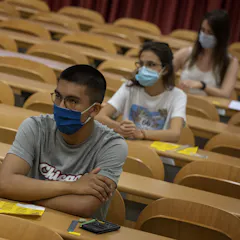
The COVID-19 pandemic has dramatically accelerated a growing shift to test-optional admissions policies or scrapping entrance tests altogether.

To concentrate best, we need to resist distractions. It can help to set some goals and check your progress as you study.
The outcry over exam results has exposed underlying problems in how we assess educational performance.
This controversy shows that assessment is not neutral: the system used can clearly benefit some groups of pupils over others – it requires more than technical processes to ensure justice.

Students in an information technology unit were given a chance to learn from their mistakes to score higher marks. But only the motivated showed an improvement.

It’s possible to be a test-taker who achieves a high score in English language tests, yet remain unable to function well in the language.

Are current forms of standardized literacy tests really measuring children’s capacity to read and interact with our rapidly-changing world?
How can parents and educators assist children and youth with dealing with everyday challenges and stresses?
Student assessments help children develop self-regulation skills, but teachers don’t have the time when class sizes are large.

A specialist in educational psychology says there are incremental risks associated with students developing an obsessive behaviour toward performance.
Top contributors
-

Associate Dean, School of Graduate Studies & Professor, Faculty of Education, Queen's University, Ontario
-
Distinguished Professor, Faculty of Education, Brock University
-
Professor and Co-Director, Centre for Research in Assessment and Digital Learning, Deakin University
-
Deputy Vice-Chancellor, Education, Murdoch University; Professor of Measurement, Assessment and Evaluation, Murdoch University
-
Senior Research Fellow in Child Neurodevelopment, Brain and Mind Centre, University of Sydney
-
Senior Lecturer in Educational Assessment, Macquarie University
-
Professor and Clinical Psychologist, Michael Crouch Chair in Child and Youth Mental Health, University of Sydney
-
Neurodevelopmental Paediatrician and Associate Professor, University of Sydney
-
Professor of Educational Technologies, University of Sydney
-
Associate Professor in Language, Literacy and TESL, University of Canberra
-
Research Fellow, Centre for Research in Assessment and Digital Learning, Deakin University
-
Consultant, Australian Council for Educational Research
-
Professor of Educational Psychology, University of Wollongong
-
Professor, Faculty of Education and Arts, Australian Catholic University
-
Head of Department and Senior Lecturer in Education and Social Justice, Lancaster University